Skip to content

Red Currant Jelly

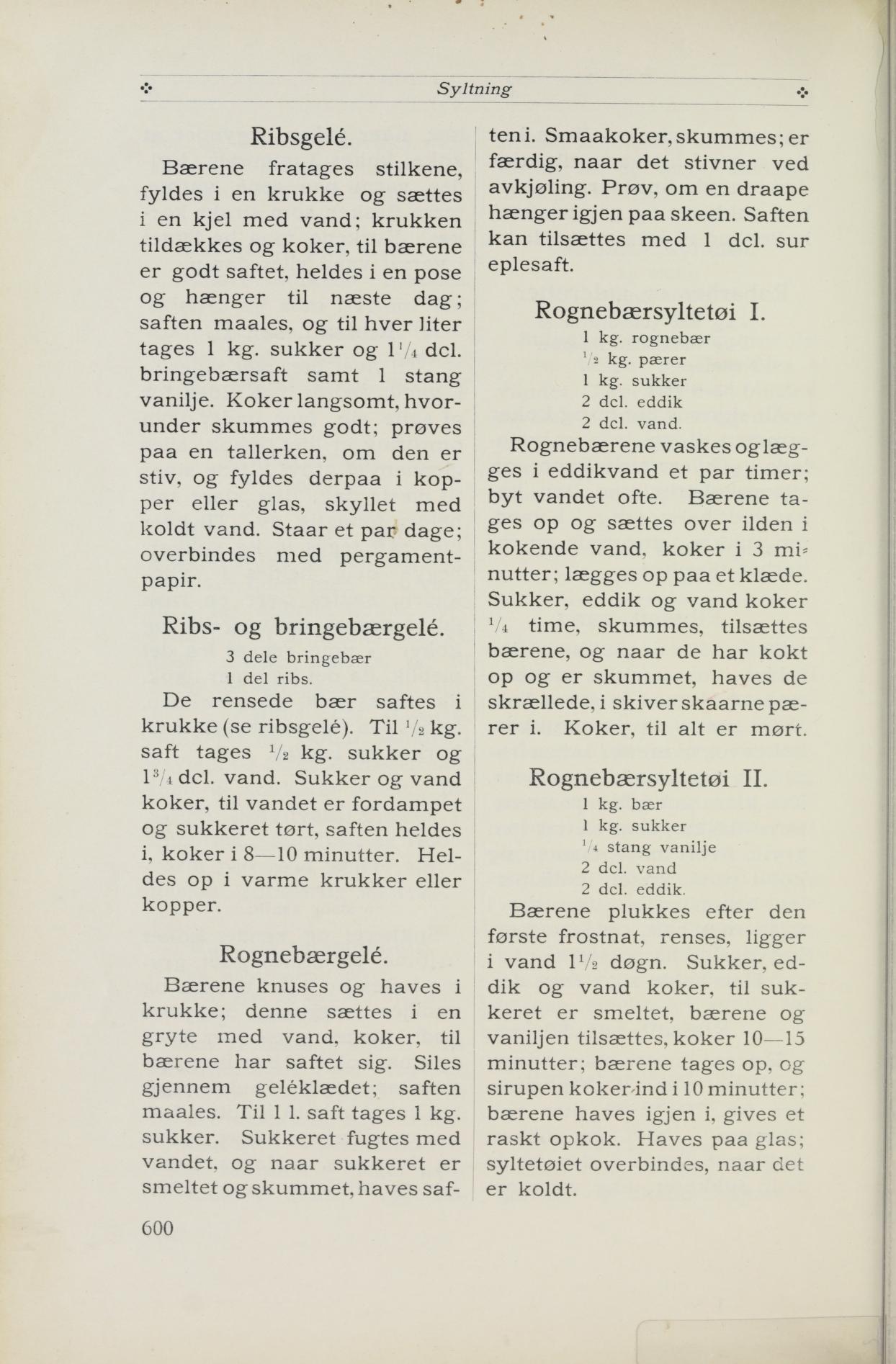
Erken's basic red currant jelly recipe from 1914: currants are juiced in a jar in a water bath, the juice is strained and measured, 1 kg sugar per liter of juice is melted with a little water, and the juice is boiled down until it sets. Tart apple juice may be added.

Source: Henriette Schønberg Erken, Stor kokebok, 1914-utg. s. 600 (falt i det fri)

Be the first to rate

About the dish

Red currant jelly is the base recipe in Erken's jelly chapter; several other jellies in the book refer back to it ("see red currant jelly"). The berries are juiced gently in a jar set in a water bath, so the juice comes out clear.

How to make it

  1. 1

    Juice the berries

    Crush the berries and put them in a jar. Set the jar in a pot of water and let it boil until the berries have released their juice.

  2. 2

    Strain the juice

    Strain the juice through a jelly cloth (straining cloth) and measure it.

  3. 3

    Melt the sugar

    Figure 1 kg sugar for every liter of juice. Moisten the sugar with a little water, let it melt, and skim off the foam.

  4. 4

    Cook the jelly

    Pour the juice into the melted sugar. Let it simmer and skim well as you go. The jelly is done when it sets on cooling – test whether a drop clings to the spoon.

  5. 5

    Fill and store

    Pour the jelly into rinsed jars or cups. The juice may be given 1 dl of tart apple juice for better setting.

Changes from the original

Amounts are estimated on the basis that about 2 kg of red currants yields roughly 1 liter of juice. "del." is converted to deciliters. The jelly cloth is described as a cloth/straining cloth. The method is broken into numbered steps in modern Norwegian.

Tidsmaskin – hva endret seg?

Velg to utgaver og se hva Henriette Schønberg Erken la til, fjernet eller endret mellom dem.

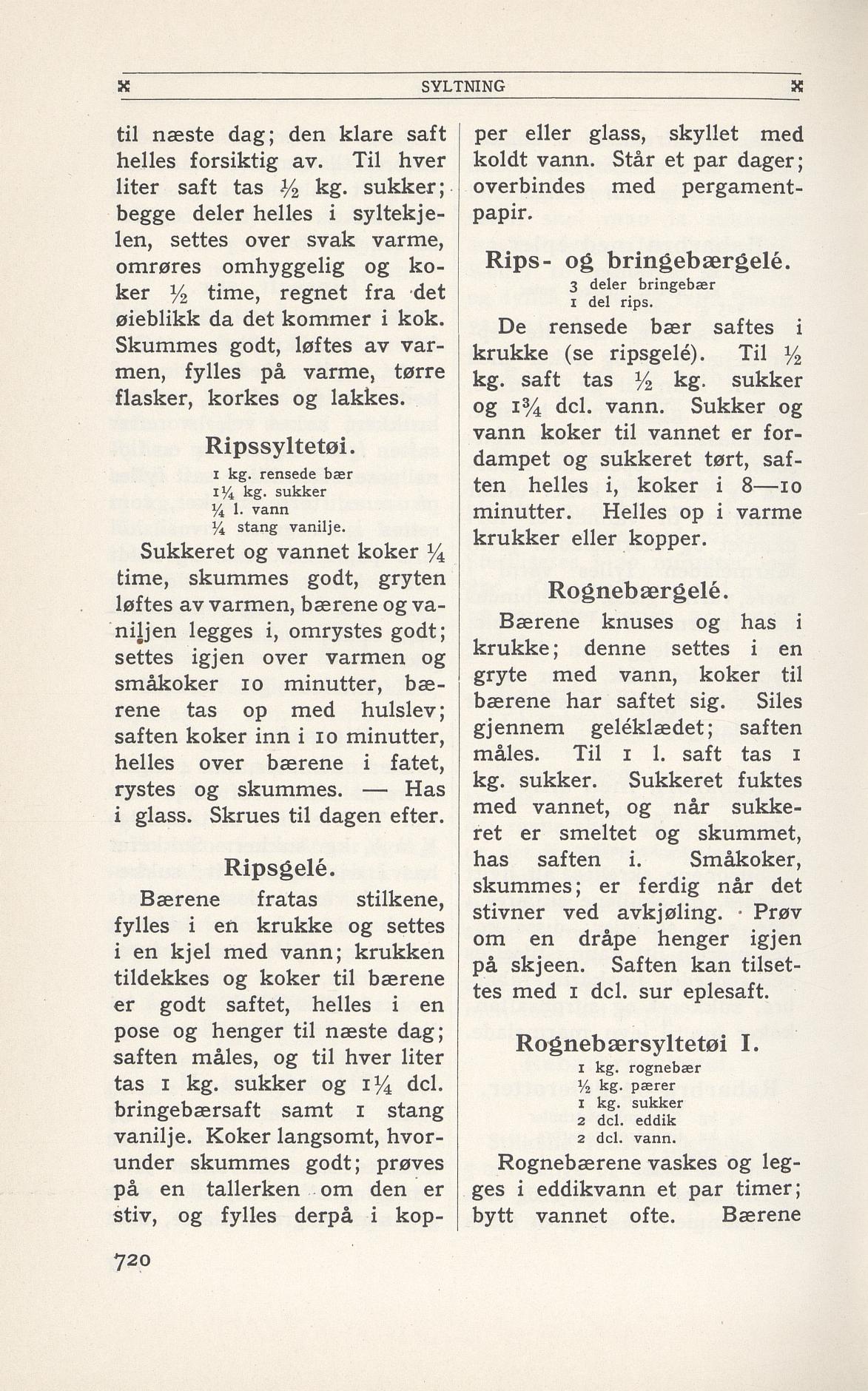
1914 (korrekturlest, s. 600)1949 (korrekturlest, s. 720)~92% av teksten endretfjernetlagt til
Ribs sukker (1 kg. til hver liter saft) lidt vand evt. 1 del. sur eplesaft. Bærene knuses og haves fratas stilkene, fylles i krukke; denne sættes en krukke og settes i en gryte kjel med vand, koker, vann; krukken tildekkes og koker til bærene har saftet sig. Siles gjennem geléklædet; er godt saftet, helles i en pose og henger til næste dag; saften maales. Til 1 l. saft tages 1 måles, og til hver liter tas i kg. sukker. Sukkeret fugtes med vandet, sukker og naar sukkeret i % del. bringebærsaft samt i stang vanilje. Koker langsomt, hvorunder skummes godt; prøves på en tallerken om den er smeltet stiv, og skummet, haves saften i. Smaakoker, skummes; er færdig, naar det stivner ved avkjøling. Prøv, om en draape hænger igjen paa skeen. Saften kan tilsættes fylles derpå i kopper eller glass, skyllet med 1 del. sur eplesaft. koldt vann. Står et par dager; overbindes med pergamentpapir.

Community interpretations

Be the first to share your own version.

See interpretations

Frequently asked questions

How much sugar should I use?
1 kg sugar for every liter of strained currant juice. The sugar is moistened with a little water, melted, and skimmed before the juice is added.
How do I get the juice out of the berries?
The berries are crushed and put in a jar that is set in a pot of water. It is boiled until the berries have juiced, then strained through a jelly cloth.
How do I know the jelly is done?
The jelly is simmered and skimmed, and is done when it sets on cooling. Test by seeing whether a drop clings to the spoon.
Can I add something to make the jelly set better?
Yes, the recipe from Stor kokebok (1914) states that the juice may be given one part of tart apple juice.

Related recipes

More dishes in the same category from the archive

Read also

Kommentarer

Ingen kommentarer ennå. Bli den første til å dele!