Skip to content

Rakefisk (Fermented Trout)

Rakefisk (traditional Norwegian fermented trout) made from cleaned, unwashed fish layered with salt and sugar under pressure in a keg, producing its own brine and curing for about 2 months. Served with flatbread and butter.

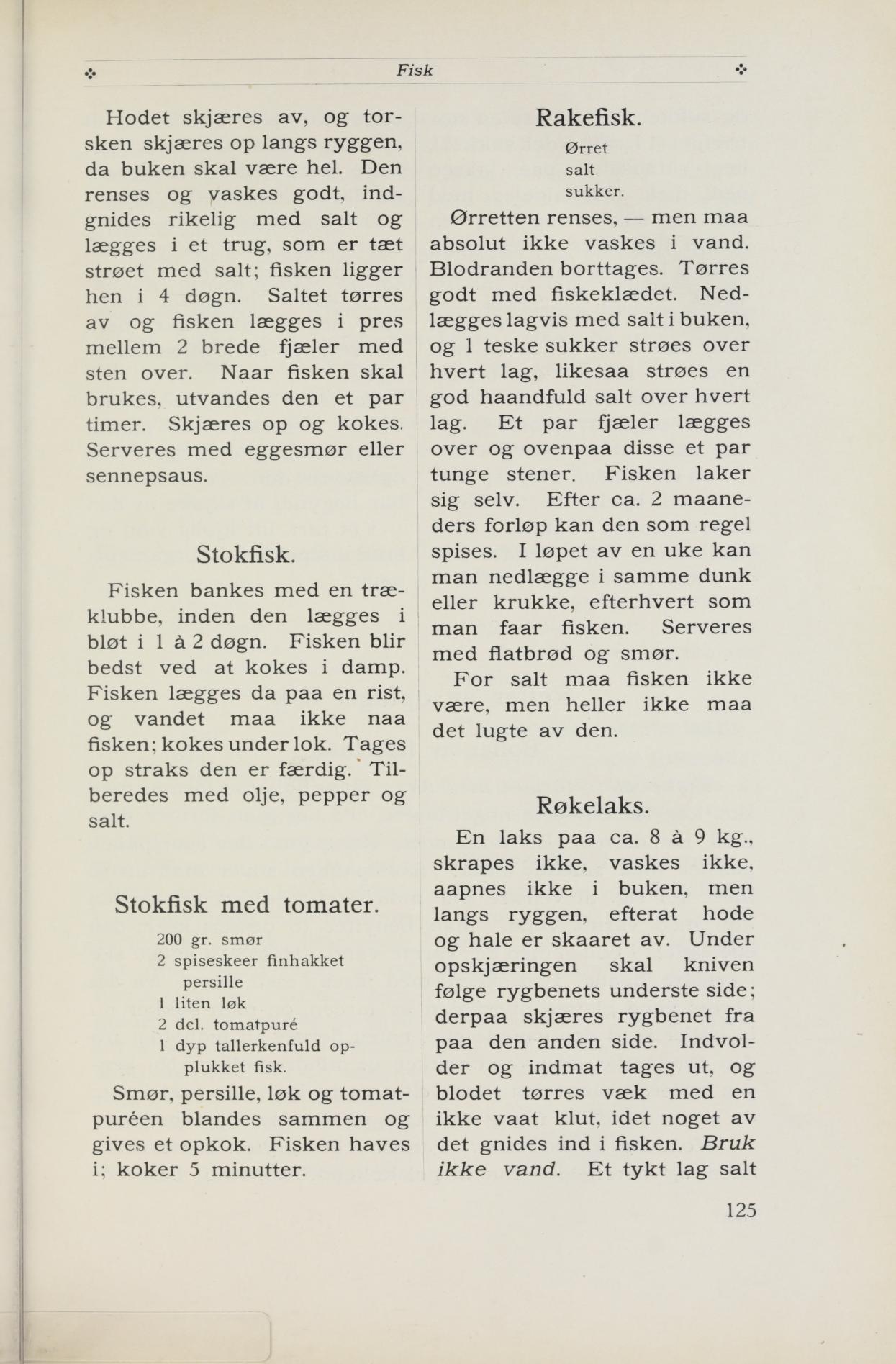
Source: Henriette Schønberg Erken, Stor kokebok, 1914-utg. s. 125 (falt i det fri)

Be the first to rate

About the dish

Rakefisk of trout is one of the oldest Norwegian preservation methods, especially associated with the inland districts. Erken gives a simple country recipe: the fish must never come into contact with water, and it makes its own brine under pressure.

How to make it

  1. 1

    Clean the fish

    Clean the trout, but absolutely do not rinse it in water. Remove the blood line along the backbone.

  2. 2

    Dry

    Dry the fish well with a clean cloth.

  3. 3

    Pack down

    Layer the fish in a keg or crock with salt in the belly. Sprinkle 1 teaspoon of sugar and a good handful of salt over each layer.

  4. 4

    Apply pressure

    Place a couple of boards over the fish and a couple of heavy stones on top. The fish makes its own brine.

  5. 5

    Curing

    Let the fish stand to cure; after about 2 months it is usually ready to eat. Over the course of a week you can pack down more fish in the same keg as you catch it.

  6. 6

    Serve

    Serve the rakefisk with flatbread and butter.

Changes from the original

The quantities are estimated for about 5 kg of trout, since the original gives no measurements. The "fish cloth" has been modernized to a clean kitchen towel. The method has been divided into steps.

Time machine – what changed?

Pick two editions and see what Henriette Schønberg Erken added, removed or changed between them.

1914 (proofread, p. 125) → Modernised~73% of the text changedremovedadded
Ørret 5 kg ørret (renset, ikke vasket). 500 g salt sukker. Ørretten renses, — (en god håndfull per lag). 5 teskjeer sukker (1 teskje per lag). Rens ørreten, men maa absolut skyll den absolutt ikke vaskes i vand. Blodranden borttages. Tørres vann. Fjern blodranden langs ryggen.. Tørk fisken godt av med fiskeklædet. Nedlægges et rent klede.. Legg fisken lagvis i en dunk eller krukke med salt i buken, og buken. Strø 1 teske teskje sukker strøes over hvert lag, likesaa strøes og en god haandfuld håndfull salt over hvert lag. Et lag.. Legg et par fjæler lægges fjøler over fisken og ovenpaa disse et par tunge stener. steiner oppå. Fisken laker sig selv. Efter lager sin egen lake.. La fisken stå til modning; etter ca. 2 maaneders forløp kan måneder er den som regel spises. spiseklar. I løpet av en uke kan man nedlægge legge ned mer fisk i samme dunk eller krukke, efterhvert etter hvert som man faar fisken. Serveres får den.. Server rakefisken med flatbrød og smør.

Note on Modernised

Mengdene er anslått for ca. 5 kg ørret, siden originalen ikke oppgir mål. «Fiskeklædet» er modernisert til rent kjøkkenhåndkle. Fremgangsmåten er delt i trinn.

Community interpretations

Be the first to share your own version.

See interpretations →

Frequently asked questions

Why should the trout not be washed in water?
Water disrupts the fermentation and can give a poor result. The fish is cleaned, the blood line removed, and it is dried well with the fish cloth instead of being washed.
How long must the rakefisk stand before it can be eaten?
According to the recipe it is usually ready to eat after about 2 months. The fish makes its own brine under pressure from boards and a couple of heavy stones.
How much salt and sugar are used?
Salt is placed in the belly of each fish, and for each layer 1 teaspoon of sugar and a good handful of salt are sprinkled over.
Can I pack down fish several times in the same container?
Yes, over the course of a week you can pack down fish in the same keg or crock as you catch it. Serve with flatbread and butter.

Related recipes

More dishes in the same category from the archive

Read also

Kommentarer

Ingen kommentarer ennå. Bli den første til å dele!