Original 1914 recipe
Verbatim from the first edition of the Big Cookbook.
Rakefisk (traditional Norwegian fermented trout) made from cleaned, unwashed fish layered with salt and sugar under pressure in a keg, producing its own brine and curing for about 2 months. Served with flatbread and butter.
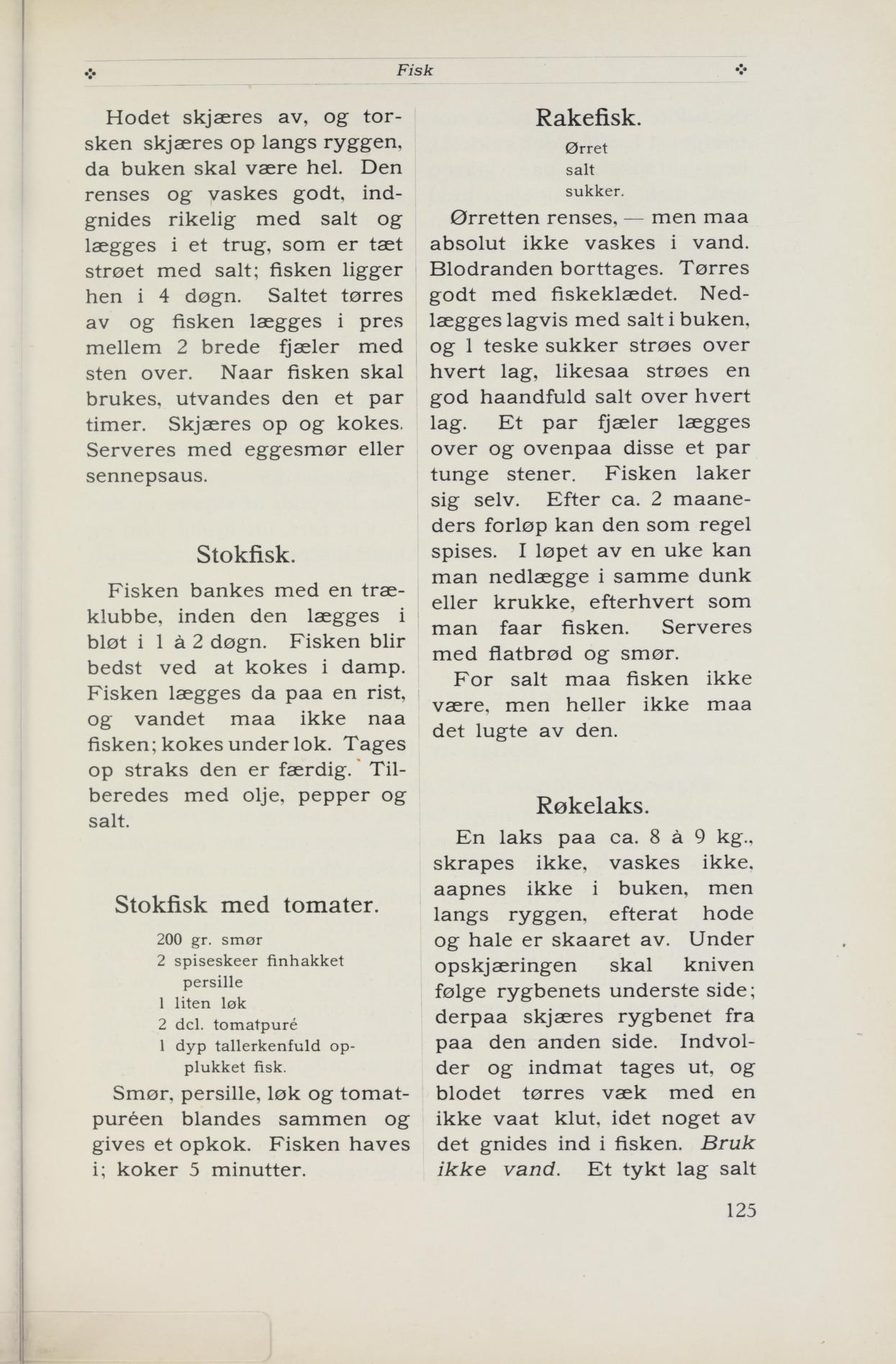
Source: Henriette Schønberg Erken, Stor kokebok, 1914-utg. s. 125 (falt i det fri)
Rakefisk of trout is one of the oldest Norwegian preservation methods, especially associated with the inland districts. Erken gives a simple country recipe: the fish must never come into contact with water, and it makes its own brine under pressure.
Clean the fish
Clean the trout, but absolutely do not rinse it in water. Remove the blood line along the backbone.
Dry
Dry the fish well with a clean cloth.
Pack down
Layer the fish in a keg or crock with salt in the belly. Sprinkle 1 teaspoon of sugar and a good handful of salt over each layer.
Apply pressure
Place a couple of boards over the fish and a couple of heavy stones on top. The fish makes its own brine.
Curing
Let the fish stand to cure; after about 2 months it is usually ready to eat. Over the course of a week you can pack down more fish in the same keg as you catch it.
Serve
Serve the rakefisk with flatbread and butter.
The quantities are estimated for about 5 kg of trout, since the original gives no measurements. The "fish cloth" has been modernized to a clean kitchen towel. The method has been divided into steps.
Original 1914 recipe
Verbatim from the first edition of the Big Cookbook.

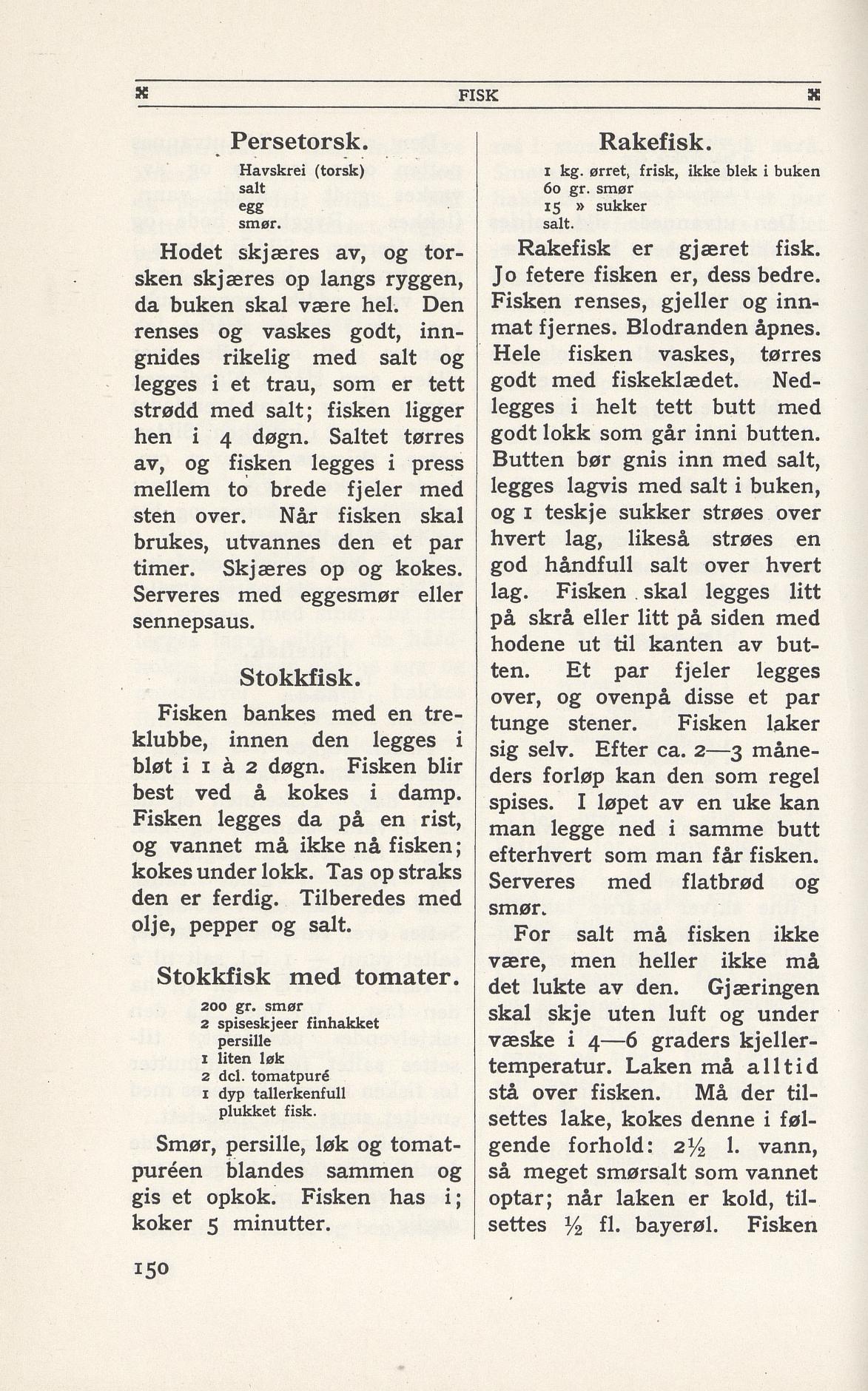
Revised 1949 recipe
From the revised edition of the Big Cookbook.

Be the first to share your own version.
More dishes in the same category from the archive
Ingen kommentarer ennå. Bli den første til å dele!