Skip to content

Potato Ring (Potato Border)

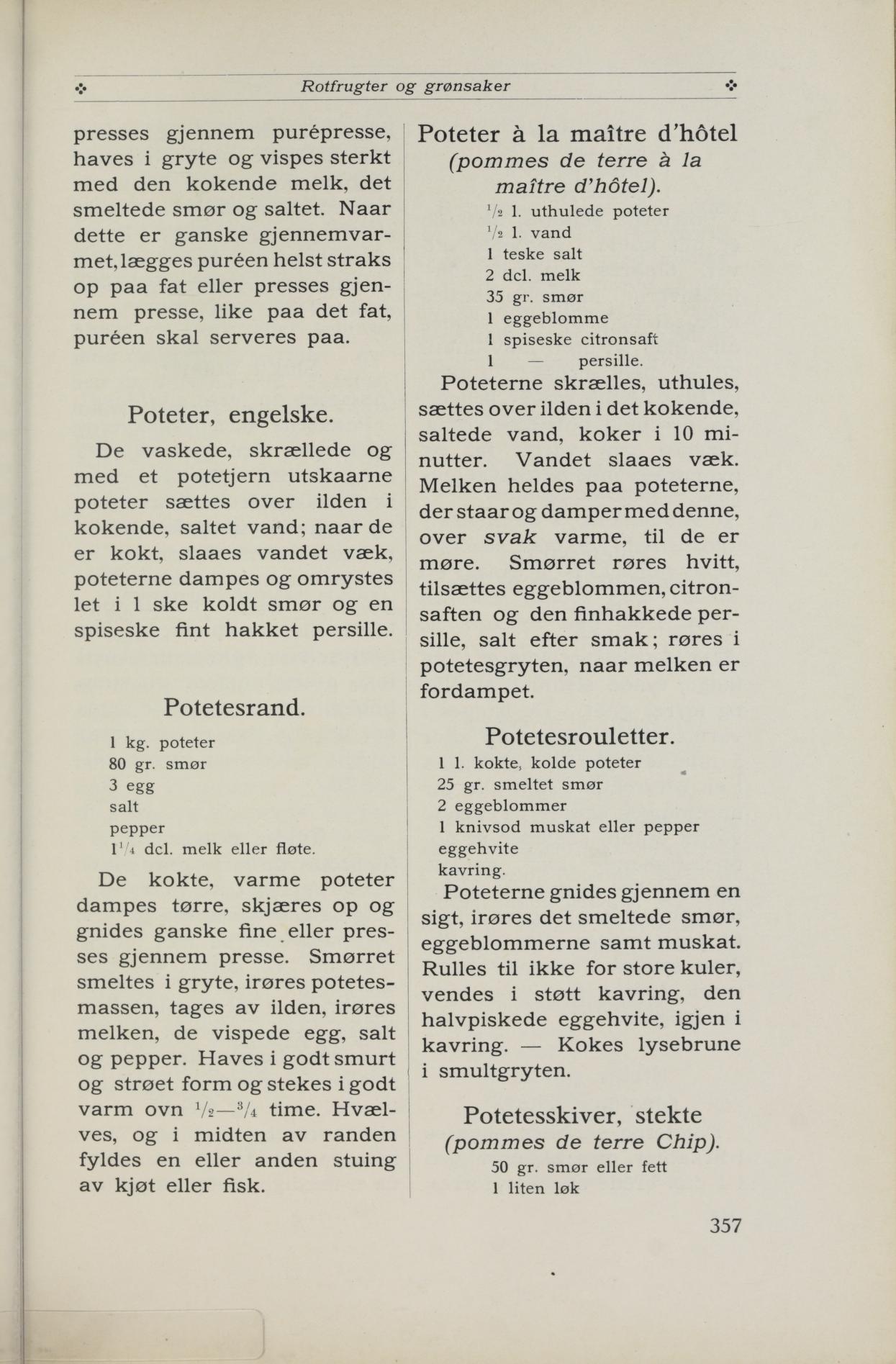
Potato border from Erken 1914: mashed potato of 1 kg potatoes with 80 g butter, 3 eggs, and 1¼ dl milk, baked in a buttered ring mold at about 200 °C for 30–45 min, turned out, and filled with a meat or fish ragout.

Source: Henriette Schønberg Erken, Stor kokebok, 1914-utg. s. 357 (falt i det fri)

Be the first to rate

About the dish

Ring molds were very popular in Norwegian bourgeois cookery around 1900. The potato border was baked in a ring mold, turned out onto a platter, and filled with a ragout of meat or fish — an efficient way to stretch a small amount of meat into a whole meal.

How to make it

  1. 1

    Mash the potatoes

    Steam the freshly boiled, warm potatoes dry, cut them up, and mash them completely fine or press them through a potato ricer.

  2. 2

    Combine the mixture

    Melt the butter in a pot and stir in the potato mass. Take the pot off the heat and stir in the milk, the beaten eggs, salt, and pepper.

  3. 3

    Fill the mold

    Put the mixture into a well-buttered ring mold coated with rusk crumbs.

  4. 4

    Bake

    Bake in a good hot oven (about 200 °C (390 °F)) for 30–45 minutes.

  5. 5

    Serve

    Turn the border out onto a platter and fill the center with a ragout of meat or fish.

Changes from the original

Measurements converted to modern units (1¼ deciliter milk). Oven temperature is given (200 °C (390 °F)) for the original's "good hot oven." The language of the steps has been modernized.

In stores now

Clean, minimally processed groceries matched to the ingredients — approximate prices.

Product data and prices via Kassalapp. Prices are updated daily and may vary.

Time machine – what changed?

Pick two editions and see what Henriette Schønberg Erken added, removed or changed between them.

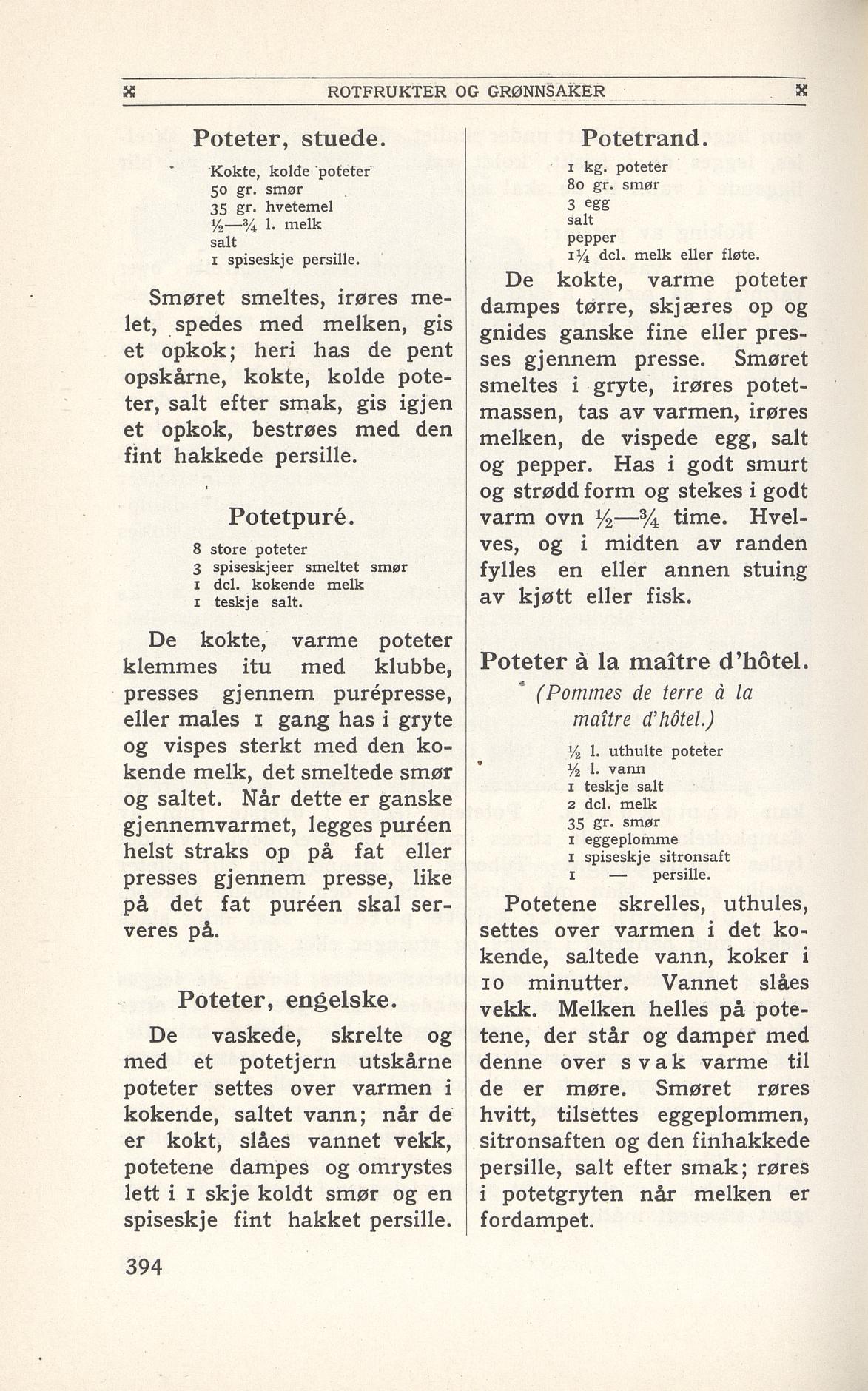
1949 (proofread, p. 394) → Modernised~76% of the text changedremovedadded
½ kg. 1 kg poteter (kokte og varme). 80 gr. smør g smør. 3 stk egg (vispet). 1 ts salt (etter smak). 0,25 ts pepper 1½ del. (etter smak). 1,25 dl melk eller fløte. De kokte, 1 ss smør (til forming). 2 ss kavring (støtt, til å strø formen). Damp de nykokte, varme poteter dampes potetene tørre, skjæres op skjær dem opp og gnides ganske gni dem helt fine eller presses gjennem presse. Smøret smeltes press dem gjennom potetpresse.. Smelt smøret i gryte, irøres potetmassen, tas en gryte og rør inn potetmassen. Ta gryten av varmen, irøres varmen og rør inn melken, de vispede egg, eggene, salt og pepper. Has pepper.. Ha massen i en godt smurt og med kavring strødd form og stekes ringform.. Stek i godt varm ovn ½—¾ time. Hvelves, og (ca. 200 °C) i 30–45 minutter.. Hvelv ranten på et fat og fyll midten av randen fylles med en eller annen stuing av kjøtt eller fisk.

Note on Modernised

Mål er omregnet til moderne enheter (1¼ desiliter melk). Ovnstemperatur er angitt (200 °C), som originalens «godt varm ovn». Språket i trinnene er modernisert.

Community interpretations

Be the first to share your own version.

See interpretations →

Frequently asked questions

How long should the potato ring bake?
In a good hot oven for half to three-quarters of an hour, in a well-buttered and coated mold.
What do you fill the ring with?
After the ring is turned out, the center is filled with a ragout of meat or fish.
How are the potatoes handled?
Boiled, warm potatoes are steamed dry, cut up, and mashed completely fine or pressed through a ricer. They are then stirred into melted butter, and the pot is taken off the heat before milk/cream, beaten eggs, salt, and pepper are stirred in.
Where does the recipe come from?
From Henriette Schønberg Erken's "Stor kokebok" (1914), page 357. It is intended for 6 servings with 1 kg potatoes, 80 g butter, 3 eggs, and 1 1/4 dl milk or cream.

Related recipes

More dishes in the same category from the archive

Read also

Kommentarer

Ingen kommentarer ennå. Bli den første til å dele!