Skip to content

Cheese Straws II

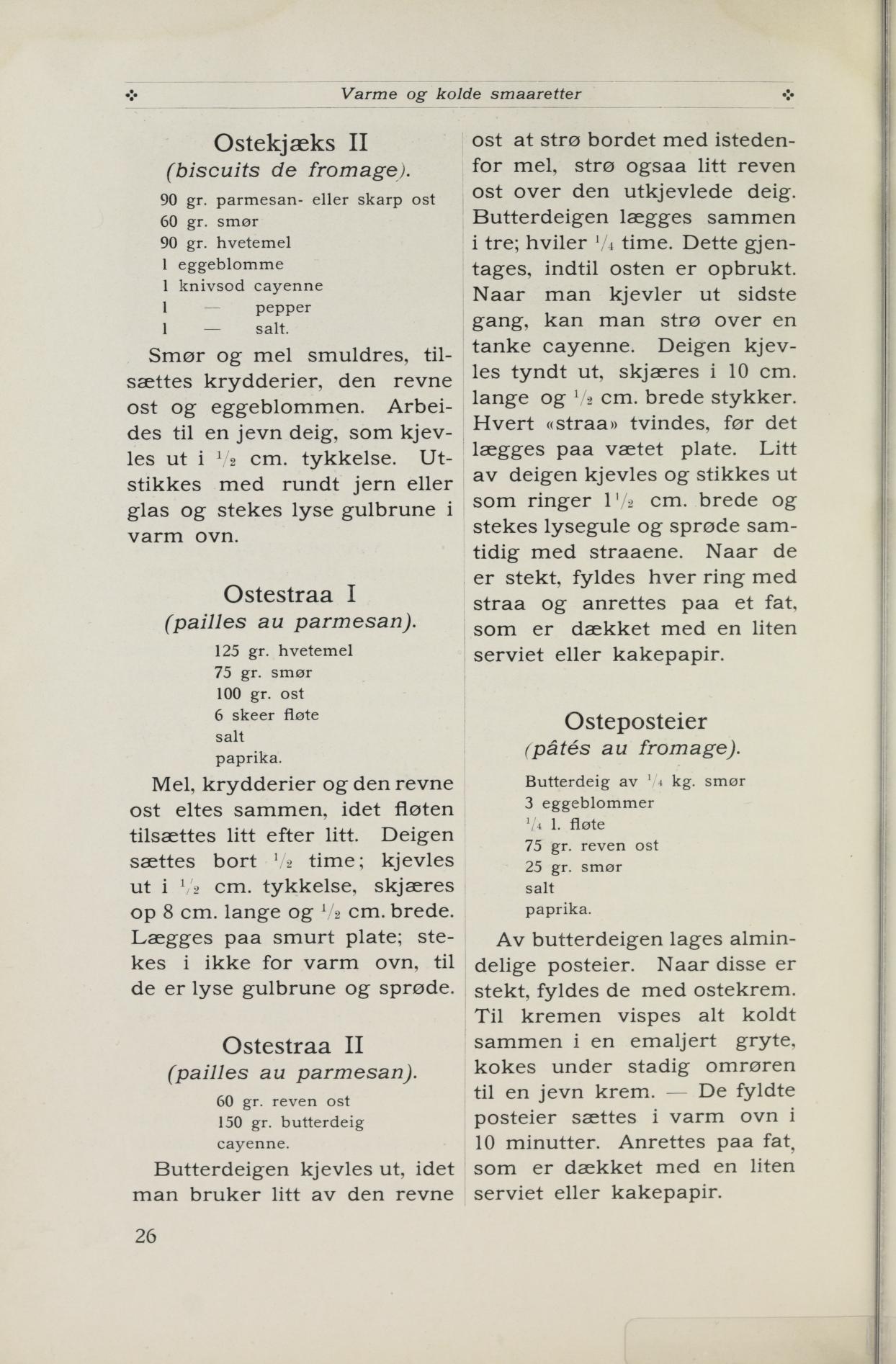
Cheese straws II (Erken 1914): 150 g puff pastry is rolled and folded repeatedly with 60 g grated cheese and cayenne, cut into twisted straws, and baked crisp along with cut-out rings that the straws are served in.

Source: Henriette Schønberg Erken, Stor kokebok, 1914-utg. s. 26 (falt i det fri)

Be the first to rate

About the dish

The finer variant of cheese straws, made from puff pastry folded with grated cheese. The straws are set in small rings of the same dough—a typically elegant presentation in Erken's party kitchen.

How to make it

  1. 1

    Roll with cheese

    Roll out the puff pastry on a surface sprinkled with a little of the grated cheese instead of flour, and sprinkle a little cheese over the dough as well.

  2. 2

    Fold and rest

    Fold the dough in thirds and let it rest for a quarter of an hour. Repeat the rolling, cheese-sprinkling, folding, and resting until all the cheese is used up.

  3. 3

    Final rolling

    At the last rolling you can sprinkle a touch of cayenne pepper over. Roll the dough out thin.

  4. 4

    Cut and twist

    Cut the dough into strips 10 cm long and ½ cm wide. Twist each straw before laying it on a water-rinsed sheet.

  5. 5

    Rings

    Roll out a little of the dough and cut out rings ½ cm wide. Bake the rings together with the straws until everything is pale golden and crisp, about 200 °C (390 °F) for 8–10 minutes.

  6. 6

    Arrangement

    Fill each ring with cheese straws and arrange on a platter covered with a small napkin or paper doily.

Changes from the original

The puff pastry is given as ready-made pastry. Baking temperature and time are estimated; measurements and amounts are kept.

In stores now

Clean, minimally processed groceries matched to the ingredients — approximate prices.

Product data and prices via Kassalapp. Prices are updated daily and may vary.

Tidsmaskin – hva endret seg?

Velg to utgaver og se hva Henriette Schønberg Erken la til, fjernet eller endret mellom dem.

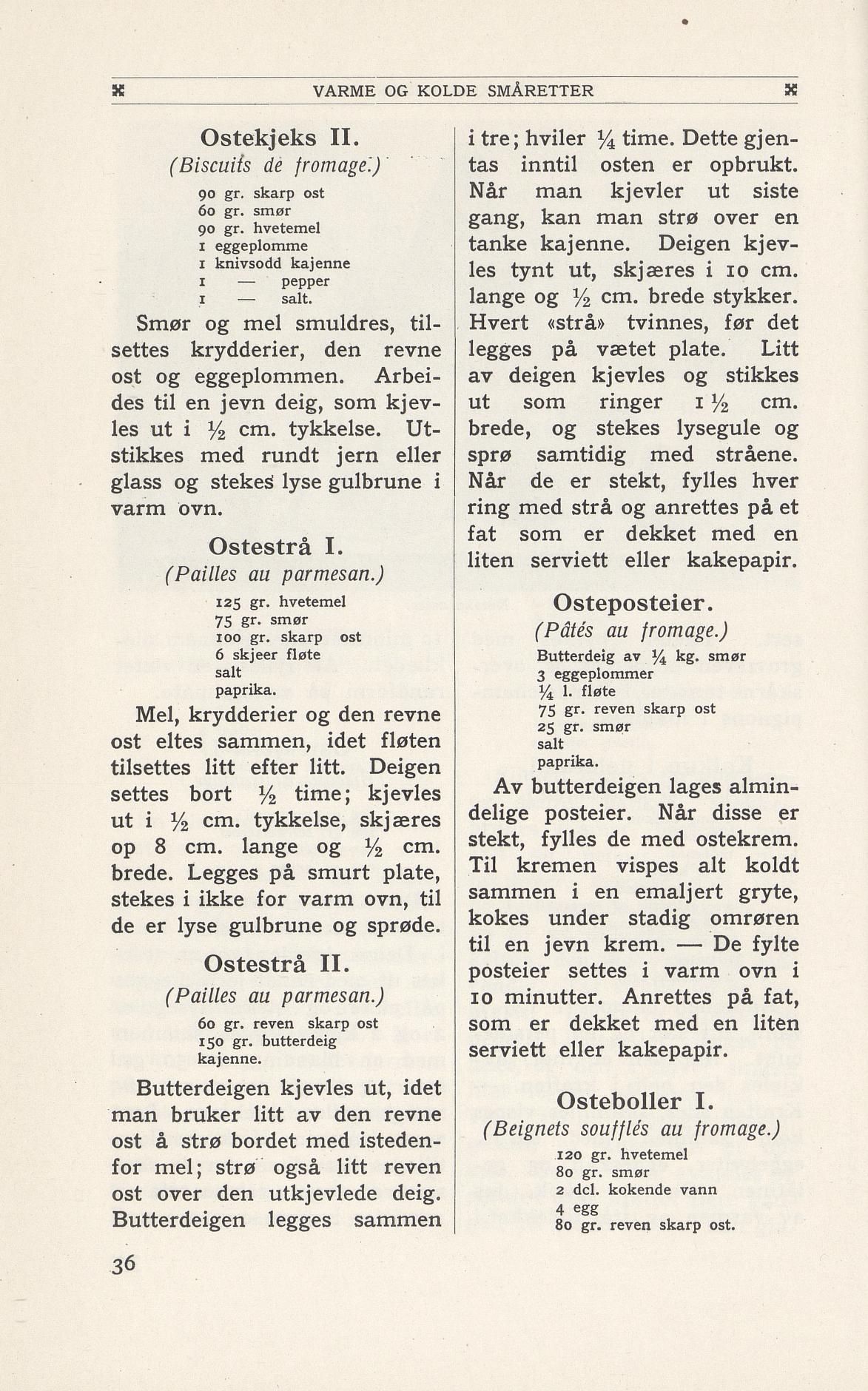
1914 (korrekturlest, s. 26)1949 (korrekturlest, s. 36)~38% av teksten endretfjernetlagt til
(pailles (Pailles au parmesan). parmesan.) 60 gr. reven skarp ost 150 gr. butterdeig cayenne. kajenne. Butterdeigen kjevles ut, idet man bruker litt av den revne ost at å strø bordet med istedenfor mel, isteden for mel; strø ogsaa også litt reven ost over den utkjevlede deig. Butterdeigen lægges legges sammen i tre; hviler ¼ ¾ time. Dette gjentages, indtil gjentas inntil osten er opbrukt. Naar Når man kjevler ut sidste siste gang, kan man strø over en tanke cayenne. kajenne. Deigen kjevles tyndt tynt ut, skjæres i 10 cm. lange og ½ cm. brede stykker. Hvert «straa» tvindes, «strå» tvinnes, før det lægges paa legges på vætet plate. Litt av deigen kjevles og stikkes ut som ringer ½ cm. brede brede, og stekes lysegule og sprøde sprø samtidig med straaene. Naar stråene. Når de er stekt, fyldes fylles hver ring med straa strå og anrettes paa et fat, fat som er dækket dekket med en liten serviet serviett eller kakepapir.

Community interpretations

Be the first to share your own version.

See interpretations

Frequently asked questions

Why use grated cheese instead of flour when rolling out the dough?
The cheese should be worked into the puff pastry layer by layer. By sprinkling the surface with grated cheese instead of flour, the dough gets cheese flavor all the way through, and you avoid adding extra flour. The dough is folded in thirds, rests ¼ hour, and the process is repeated until all 60 g of cheese are used up.
How big should the cheese straws be?
The dough is rolled out thin at the end and cut into strips 10 cm long and ½ cm wide. Each straw is twisted before being laid on a moistened baking sheet.
What are the rings used for?
A little of the dough is rolled and cut out as rings, ½ cm wide, which are baked pale yellow and crisp at the same time as the straws. After baking, each ring is filled with straws, and they are arranged together on a platter.
Where does the recipe come from?
It is from Henriette Schønberg Erken's "Stor kokebok" (1914), page 26, in the chapter on warm and cold small dishes—cheese dishes. The French name is "pailles au parmesan." Cayenne is sprinkled over at the last rolling for a little sharpness.

Related recipes

More dishes in the same category from the archive

Read also

Kommentarer

Ingen kommentarer ennå. Bli den første til å dele!