Skip to content

Beef Tenderloin à la duchesse

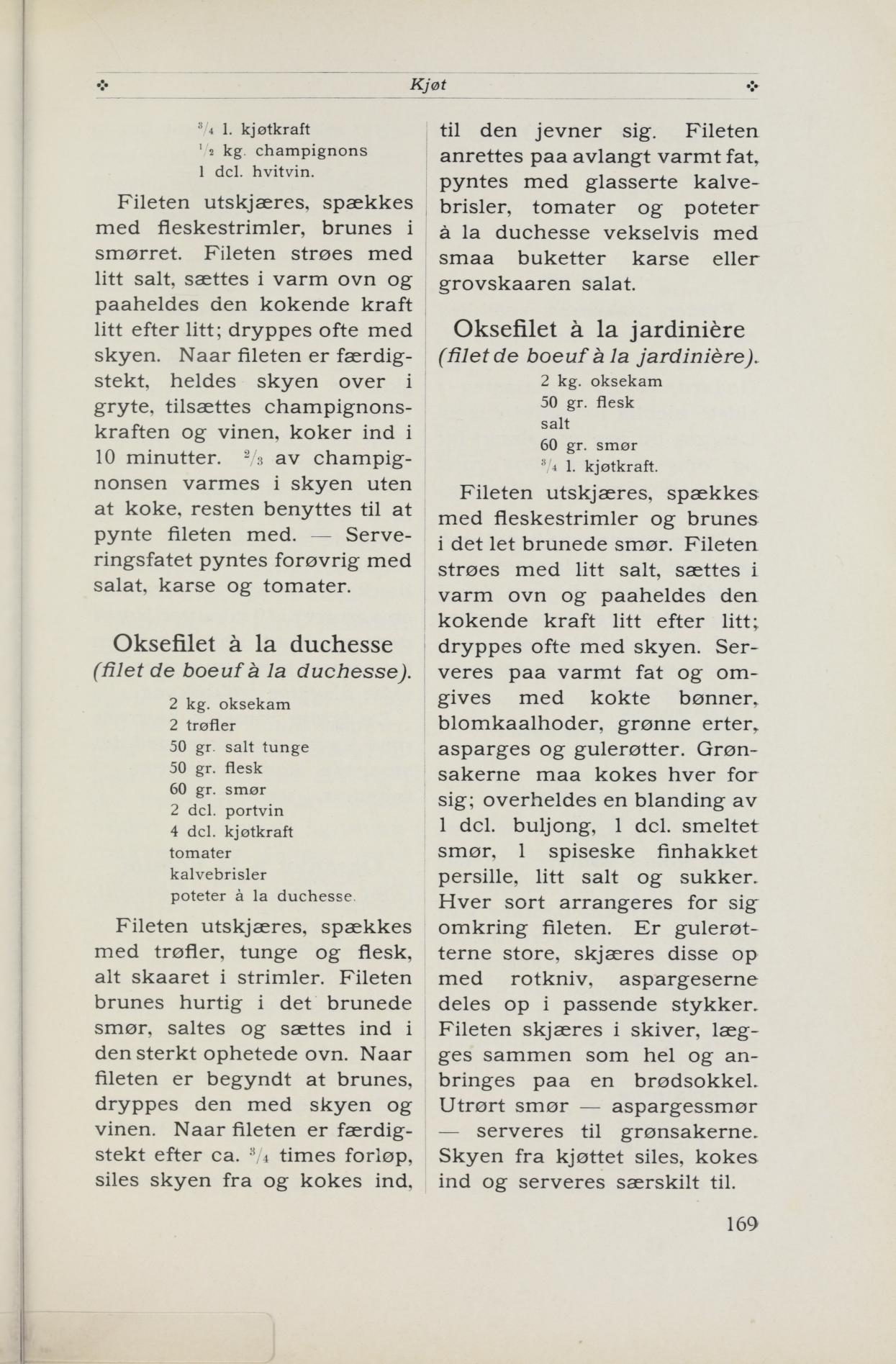
Erken's beef tenderloin à la duchesse: 2 kg beef loin larded with strips of truffle, salted tongue and pork fat, browned in butter and roasted in a hot oven about 45 min while basting with meat stock and port. The drippings are strained and reduced. Served garnished with glazed sweetbreads, tomatoes, duchess potatoes and cress.

Source: Henriette Schønberg Erken, Stor kokebok, 1914-utg. s. 169 (falt i det fri)

Be the first to rate

About the dish

One in a series of French-inspired beef tenderloin dishes in Erken's meat chapter, where the same basic technique – larding, browning, and roasting with constant basting – is varied with different garnishes and wine additions. "À la duchesse" refers to the duchess potatoes used as garnish.

How to make it

  1. 1

    Lard the tenderloin

    Cut out the tenderloin and clean it. Cut truffles, salted tongue, and pork fat into thin strips and lard the tenderloin with them.

  2. 2

    Brown the meat

    Brown the butter in a pan and quickly brown the tenderloin on all sides. Sprinkle over a little salt.

  3. 3

    Roast in the oven

    Place the tenderloin in a strongly preheated oven (about 225 °C (435 °F)). Once it begins to take color, baste it often with drippings, boiling meat stock, and port. Roast about 45 minutes.

  4. 4

    Reduce the drippings

    Remove the tenderloin, strain the drippings, and reduce them until they thicken on their own.

  5. 5

    Plating

    Place the tenderloin on an oblong, warm platter. Garnish with glazed sweetbreads, tomatoes, and duchess potatoes, alternating with small bouquets of cress or coarsely cut lettuce. Serve the sauce alongside.

Changes from the original

Deciliters and grams are kept in modern notation (del. → dl). "Beef loin" is specified as beef tenderloin/fillet from the loin, "pork fat" as fresh pork belly for larding, and "salt tongue" as salted ox tongue. Quantities for tomatoes, sweetbreads, and potatoes are estimated because the original does not give them. Roasting time and oven temperature are given in modern values.

In stores now

Clean, minimally processed groceries matched to the ingredients — approximate prices.

Product data and prices via Kassalapp. Prices are updated daily and may vary.

Tidsmaskin – hva endret seg?

Velg to utgaver og se hva Henriette Schønberg Erken la til, fjernet eller endret mellom dem.

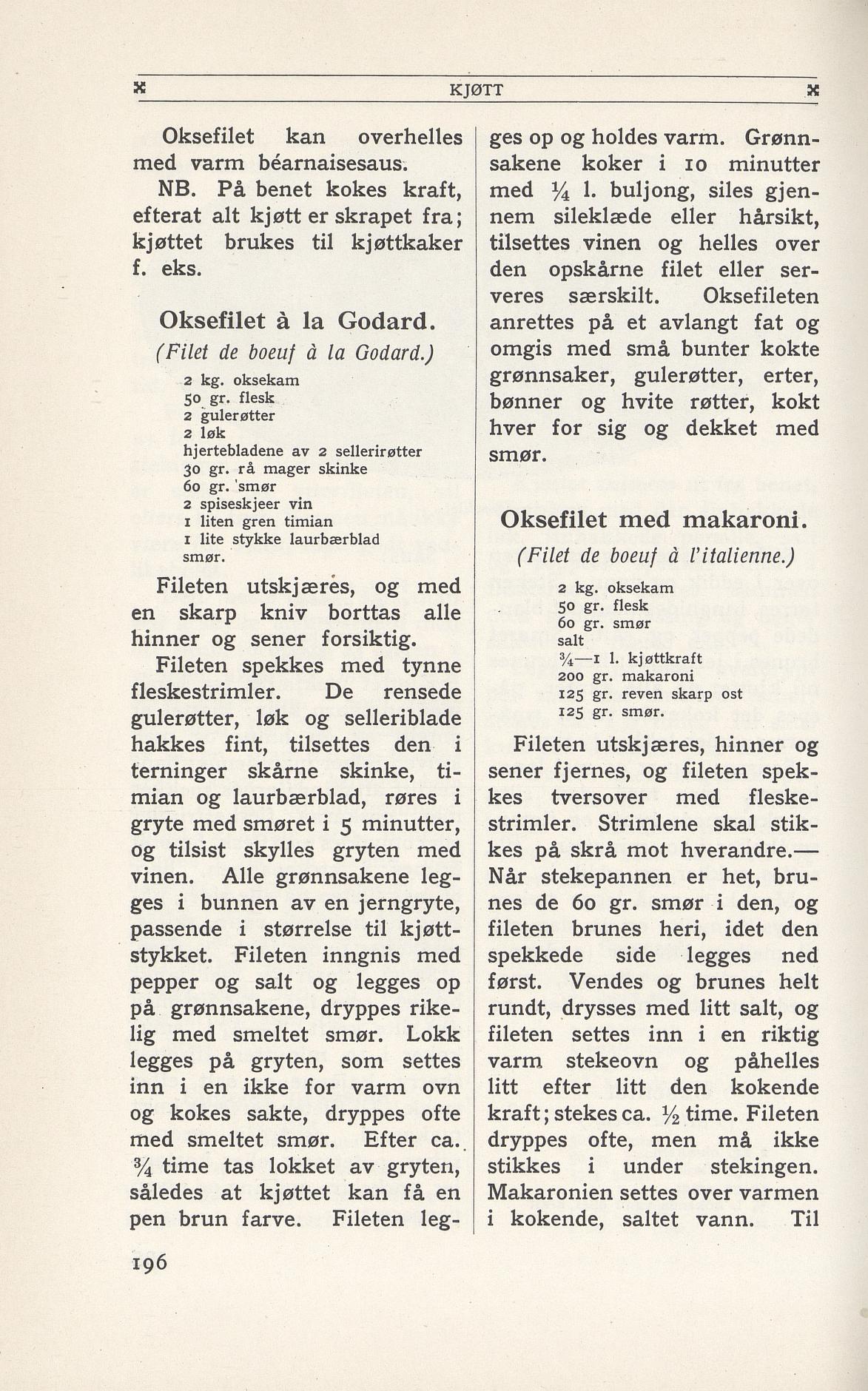
1914 (korrekturlest, s. 169)1949 (korrekturlest, s. 196)~27% av teksten endretfjernetlagt til
2 kg. oksekam 2 trøfler 50 gr. salt tunge 50 gr. flesk 60 gr. smør 2 del. portvin 4 del. kjøtkraft dl. kjøttkraft tomater kalvebrisler poteter à la duchesse Fileten utskjæres, spækkes spekkes med trøfler, tunge og flesk, alt skaaret skåret i strimler. Fileten brunes hurtig i det brunede smør, saltes og sættes ind settes inn i den sterkt ophetede ovn. Naar Når fileten er begyndt at begynt å brunes, dryppes den med skyen og vinen. Naar Når fileten er færdig ferdig stekt efter ca. ¾ times forløp, siles skyen fra og kokes ind, inn, til den jevner sig. Fileten anrettes paa avlangt varmt fat, pyntes med glasserte glaserte kalvebrisler, hvis det kan skaffes, tomater og poteter à la duchesse vekselvis med smaa små buketter karse eller grovskaaren grovskåren salat.

Community interpretations

Be the first to share your own version.

See interpretations

Frequently asked questions

How long should the tenderloin roast?
After being browned quickly in butter in the pan, it is placed in a strongly heated oven and roasted about ¾ hour (45 minutes). Total time with preparation is around 110 minutes.
What is the tenderloin larded with?
With strips of truffle (2 pcs), salted tongue (50 g), and pork fat (50 g) – all cut into strips and inserted into the meat before roasting.
How is the sauce made?
During roasting the tenderloin is basted with drippings and port (2 dl wine, 4 dl meat stock). When the meat is done, the drippings are strained off and reduced until they thicken on their own.
What is it served with?
The tenderloin is placed on an oblong warm platter and garnished alternately with glazed sweetbreads, tomatoes, and potatoes à la duchesse, plus small bouquets of cress or coarsely cut lettuce. The recipe is from Henriette Schønberg Erken's Stor kokebok (1914), p. 169, and serves 8.

Related recipes

More dishes in the same category from the archive

Read also

Kommentarer

Ingen kommentarer ennå. Bli den første til å dele!