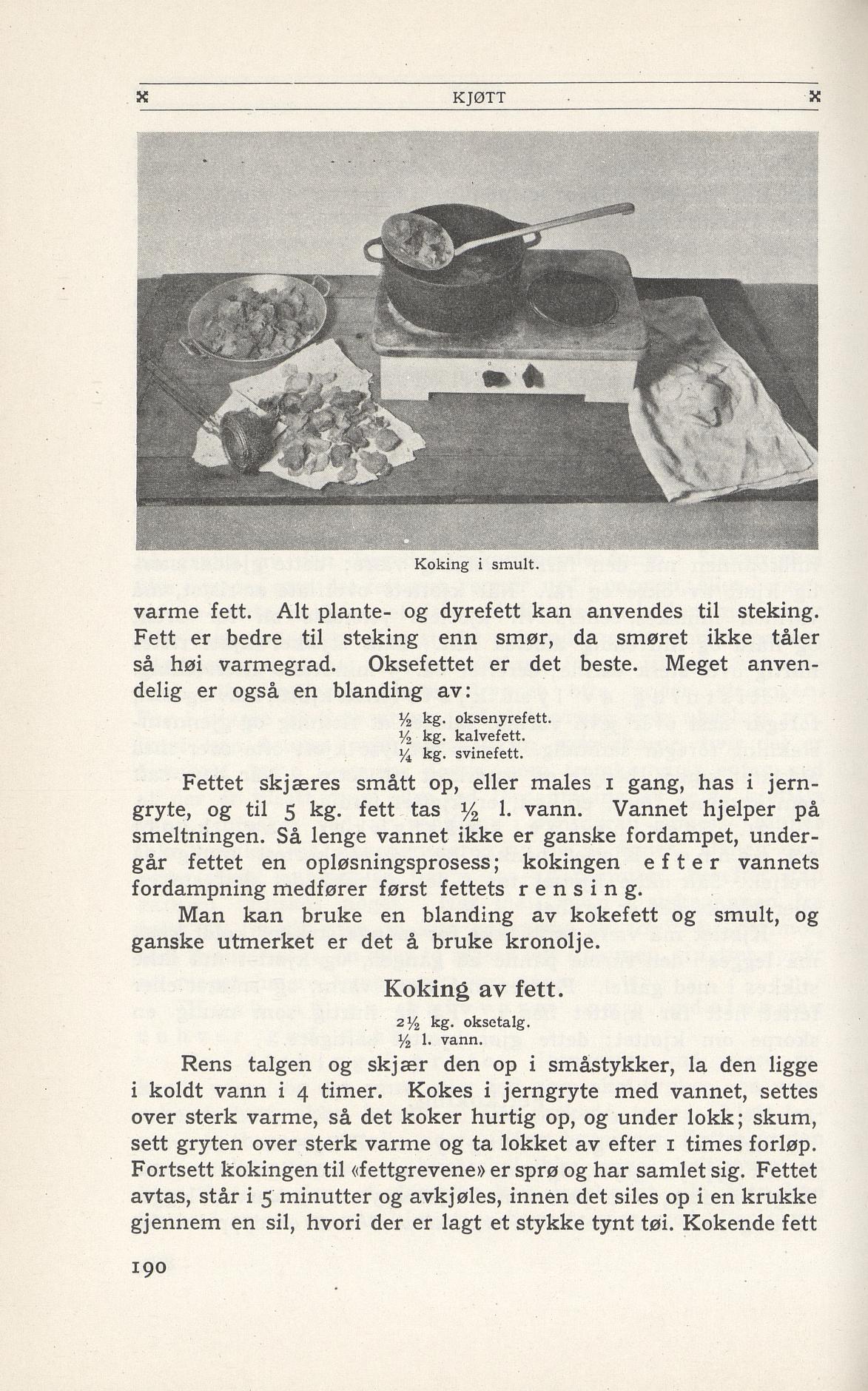
Original 1914 recipe
Verbatim from the first edition of the Big Cookbook.
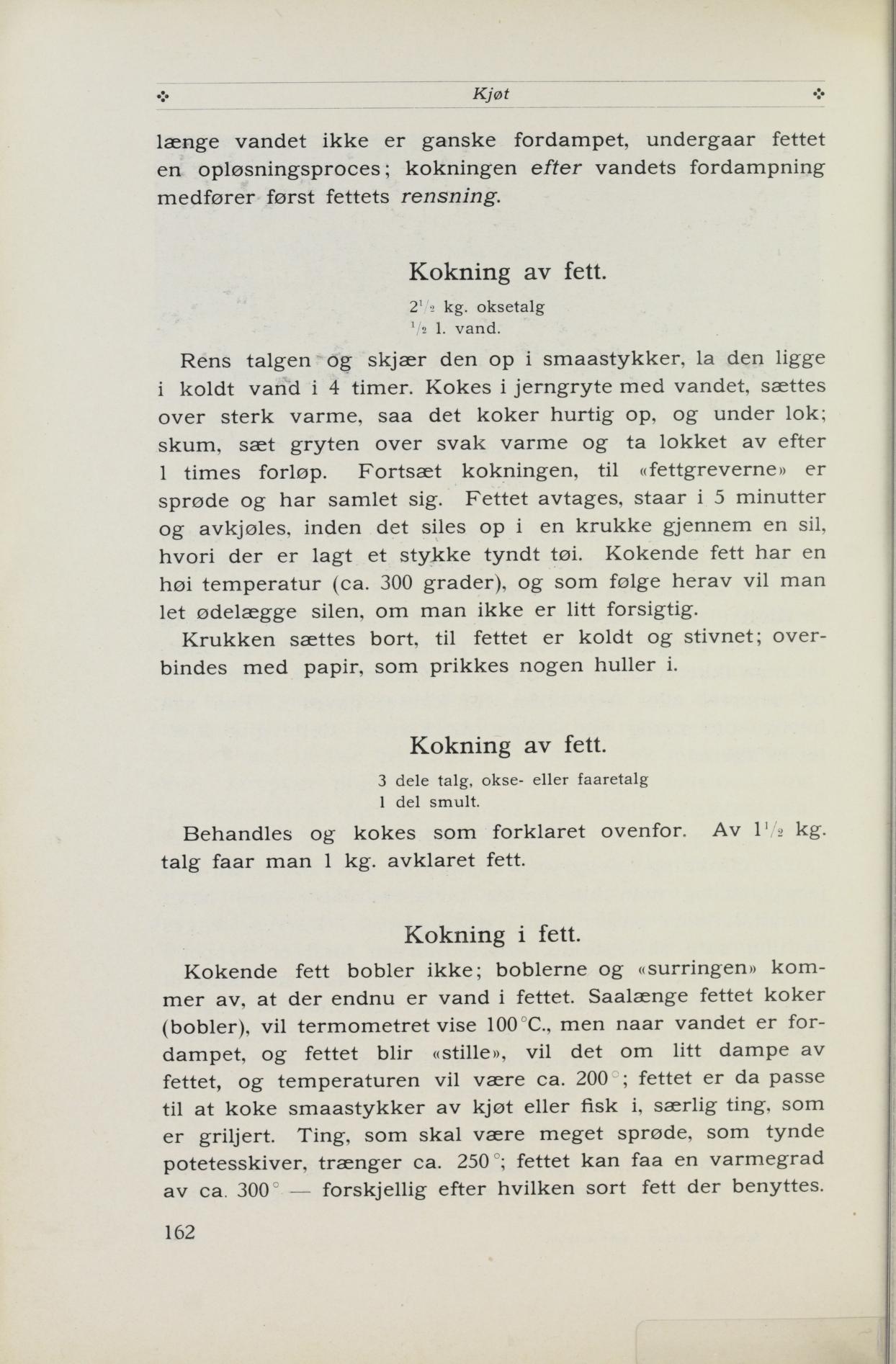
ProofreadPage 162
Kokende fett bobler ikke; boblerne og «surringen» kommer av, at der endnu er vand i fettet. Saalænge fettet koker (bobler), vil termometret vise 100° C, men naar vandet er fordampet, og fettet blir «stille», vil det om litt dampe av fettet, og temperaturen vil være ca. 200°; fettet er da passe til at koke smaastykker av kjøt eller fisk i, særlig ting, som er griljert. Ting, som skal være meget sprøde, som tynde potetesskiver, trænger ca. 250°; fettet kan faa en varmegrad av ca. 300° — forskjellig efter hvilken sort fett der benyttes.
Som regel er det smaa stykker fisk, kjøt eller oplagede ting av samme, som rouletter og kroquetter, som kokes. Det særegne er, at det som kokes, blir paavirket ens helt omkring av en meget høi varmegrad, saaledes at skorpen dannes særlig hurtig og sterkt tættende. Fettet maa fuldstændig dække det, som skal kokes. Kroquetter eller andet, som skal griljeres, maa være helt dækket av kavring; findes der bare flekker, vil de let revne her. Straks det stekte tages op av gryten, lægges det paa papir eller flatbrød eller paa et varmt klæde, som lægges paa en omvendt haarsigt, saaledes at dampen slipper ut, og anrettes helst snarest mulig. Skal det ligge en tid, maa det være i varm ovn; damp taaler det paa ingen maate, det blir bløtt.
Efterat fettgryten er passe varm til at kokes i, maa den ikke staa ledig; læg ialfald en brødskive eller potetskive i, fettet brændes da ikke saa let.
Læg ikke for mange stykker fisk eller kjøt ad gangen i gryten; herved blir fettet saa avkjølet, at det trækkes ind i den ting, som skal stekes, før der kan bli tale om nogen bruning.
Intet maa lægges i fettgryten, før fettet er hett; utaalmodighet og ukyndighet straffer sig ganske ordentlig. — Hvad der stekes i halvt varmt smult eller fett, blir motbydelig baade av smak og utseende, griljeringen vil kun indsuge fettet.