Skip to content

Cherry Wine

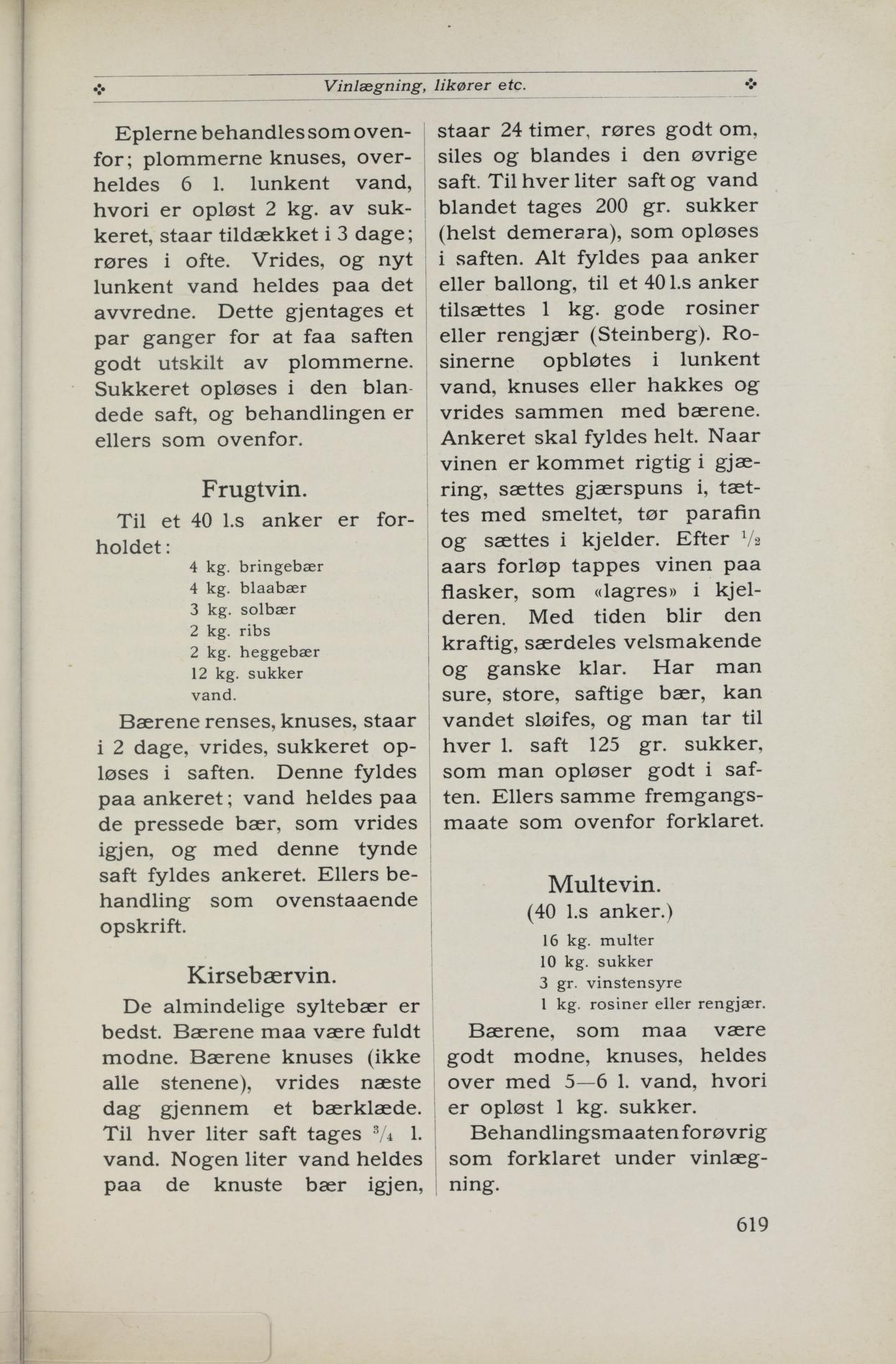
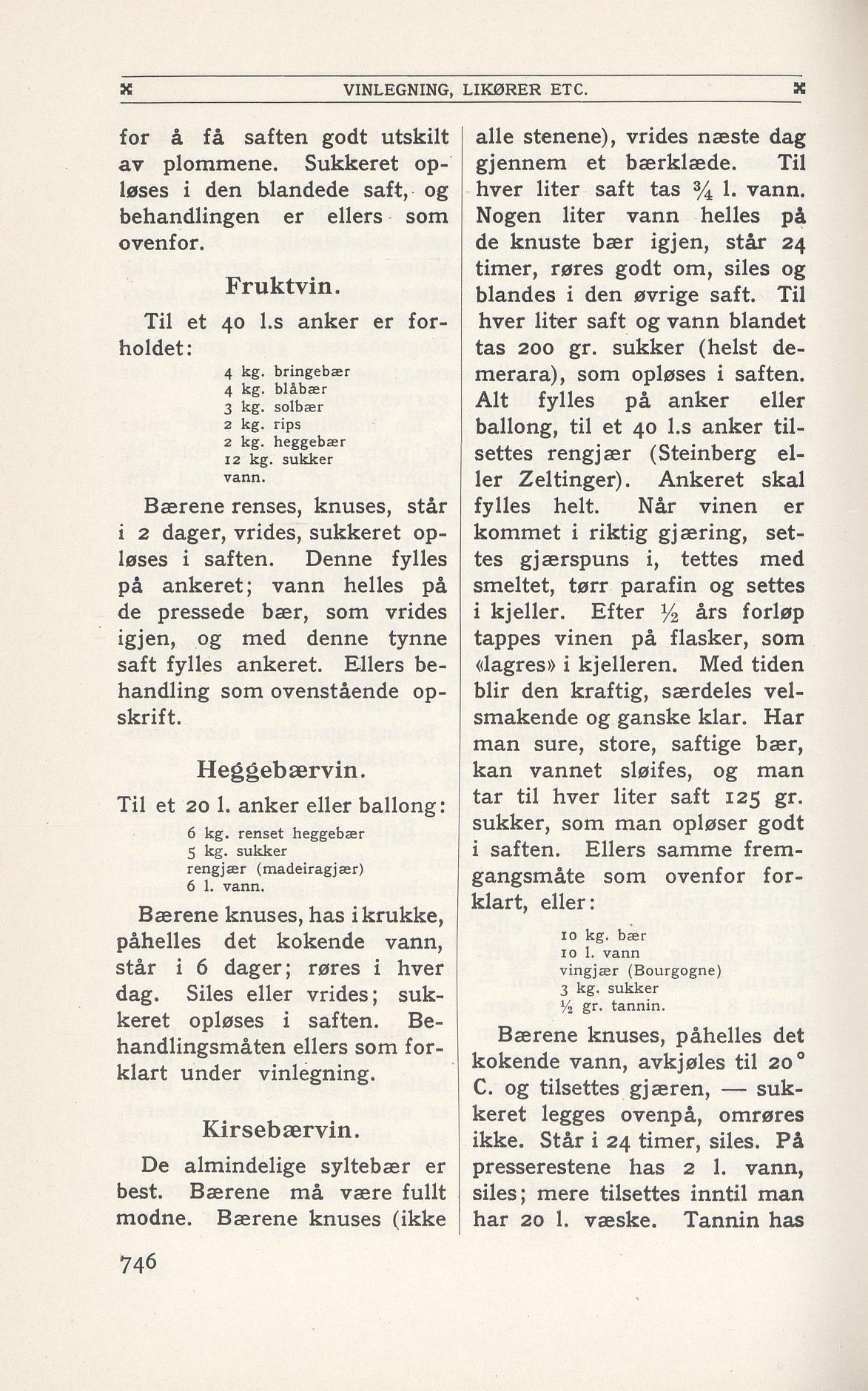
Cherry wine from fully ripe cooking cherries: the berries are crushed (not all the pits), pressed, steeped again with water, 3/4 l water per liter of juice and 200 g demerara sugar per liter of mixture (or 125 g per liter of pure juice without water), plus 3 g tartaric acid and 1 kg raisins/wine yeast per 40 l cask; ferments with a fermentation bung and matures for half a year before bottling.

Source: Henriette Schønberg Erken, Stor kokebok, 1914-utg. s. 619 (falt i det fri)

Be the first to rate

About the dish

From "Winemaking, liqueurs, etc." in Erken's "Stor kokebok" (1914). The recipe is written as a ratio recipe where sugar and water are reckoned per liter of juice, and therefore suits both a demijohn and a 40-liter cask. Erken recommends "the ordinary preserving cherries," that is, common morellos/cooking cherries.

How to make it

  1. 1

    Crush the berries

    Use fully ripe cooking cherries. Crush the berries, but not all the pits.

  2. 2

    Press the juice

    Wring the berries through a berry cloth the next day.

  3. 3

    Steep again

    Pour a few liters of water over the crushed berries again, let it stand for 24 hours, stir well, strain, and mix with the rest of the juice. Allow 3/4 liter of water for each liter of juice.

  4. 4

    Sugar and acid

    Dissolve 200 g sugar (preferably demerara) in each liter of mixed juice and water, and add the tartaric acid.

  5. 5

    Raisins or yeast

    Soak the raisins in lukewarm water, crush or chop them, and wring them out together with the berries. For a 40-liter cask, use 1 kg raisins or wine yeast.

  6. 6

    Fill and ferment

    Fill the cask or demijohn completely. When the wine has come properly into fermentation, insert the fermentation bung, seal it with melted, dry paraffin, and place the vessel in the cellar.

  7. 7

    Maturing

    After half a year, bottle the wine and store it in the cellar. In time it becomes strong, very flavorful, and perfectly clear.

  8. 8

    Variant

    If you have sour, large, juicy berries, the water can be left out; use 125 g sugar per liter of juice in that case, otherwise the same method.

Changes from the original

The quantities are converted to ratios per liter of juice in modern units; "wine yeast (Steinberg)" is kept as an alternative to raisins (modern wine yeast can be used). The method is divided into numbered steps, and demerara sugar is specified as raw sugar.

Tidsmaskin – hva endret seg?

Velg to utgaver og se hva Henriette Schønberg Erken la til, fjernet eller endret mellom dem.

1914 (korrekturlest, s. 619)1949 (korrekturlest, s. 746)~56% av teksten endretfjernetlagt til
3 gr. vinstensyre 1 kg. rosiner eller rengjær (Steinberg) kirsebær (syltebær) sukker, helst demerara vand. De almindelige syltebær er bedst. best. Bærene maa være fuldt fullt modne. Bærene knuses (ikke alle stenene), vrides næste dag gjennem et bærklæde. Til hver liter saft tages ¾ tas 3/4 l. vand. vann. Nogen liter vand heldes paa vann helles på de knuste bær igjen, staar står 24 timer, røres godt om, siles og blandes i den øvrige saft. Til hver liter saft og vand vann blandet tages tas 200 gr. sukker (helst demerara), som opløses i saften. Alt fyldes paa fylles på anker eller ballong, til et 40 l.s anker tilsættes 1 kg. gode rosiner eller tilsettes rengjær (Steinberg). Rosinerne opbløtes i lunkent vand, knuses (Steinberg eller hakkes og vrides sammen med bærene. Zeltinger). Ankeret skal fyldes fylles helt. Naar Når vinen er kommet rigtig i riktig gjæring, sættes settes gjærspuns i, tættes tettes med smeltet, tør tørr parafin og sættes settes i kjelder. kjeller. Efter ½ aars 1 1/2 års forløp tappes vinen paa flasker, som «lagres» i kjelderen. kjelleren. Med tiden blir den kraftig, særdeles velsmakende og ganske klar. Har man sure, store, saftige bær, kan vandet vannet sløifes, og man tar til hver l. liter saft 125 gr. sukker, som man opløser godt i saften. Ellers samme fremgangsmaate fremgangsmåte som ovenfor forklaret. forklart, eller: 10 kg. bær 10 l. vann vingjær (Bourgogne) 3 kg. sukker 1/2 gr. tannin. Bærene knuses, påhelles det kokende vann, avkjøles til 20° C. og tilsettes gjæren, — sukkeret legges ovenpå, omrøres ikke. Står i 24 timer, siles. På presserestene has 2 l. vann, siles; mere tilsettes inntil man har 20 l. væske. Tannin has i når gjæringen er over. Tappes efter 8 måned.

Community interpretations

Be the first to share your own version.

See interpretations

Frequently asked questions

Which cherries are best suited?
Ordinary preserving cherries are best, and they must be fully ripe. The berries are crushed (not all the pits) and wrung through a berry cloth the next day.
How much water and sugar should I allow?
For each liter of juice, take 3/4 liter of water. For each liter of mixed juice and water, use 200 g sugar, preferably demerara, dissolved in the juice.
What are the raisins used for?
For a 40-liter cask, add 1 kg of good raisins (or wine yeast, Steinberg). The raisins are soaked in lukewarm water, crushed or chopped, and wrung out together with the berries.
Can I make better use of the berry mass?
Yes, pour a few liters of water over the crushed berries again, let stand for 24 hours, stir well, strain off, and mix with the rest of the juice.

Related recipes

More dishes in the same category from the archive

Read also

Kommentarer

Ingen kommentarer ennå. Bli den første til å dele!