Skip to content

Chicken Cutlets

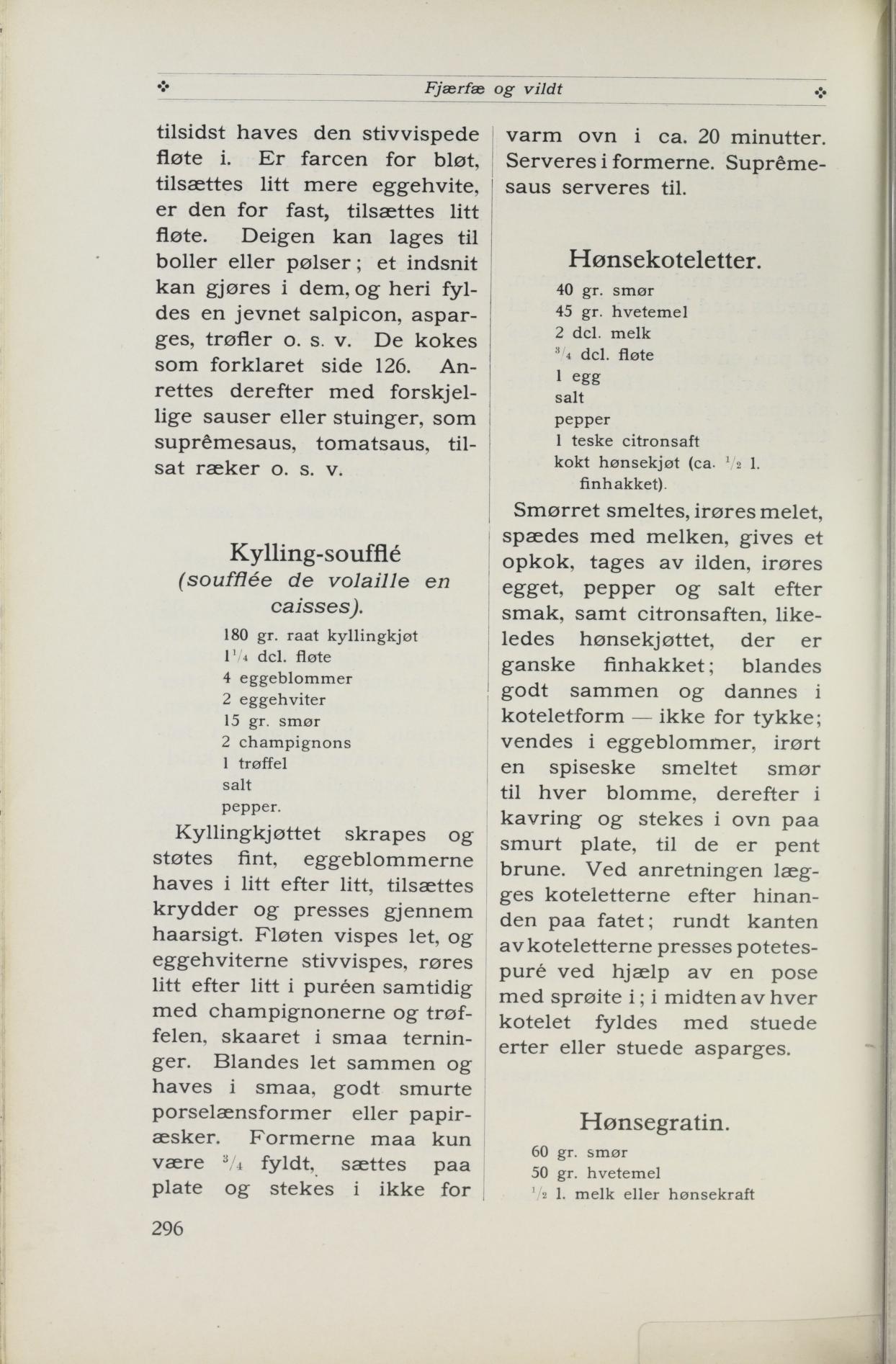
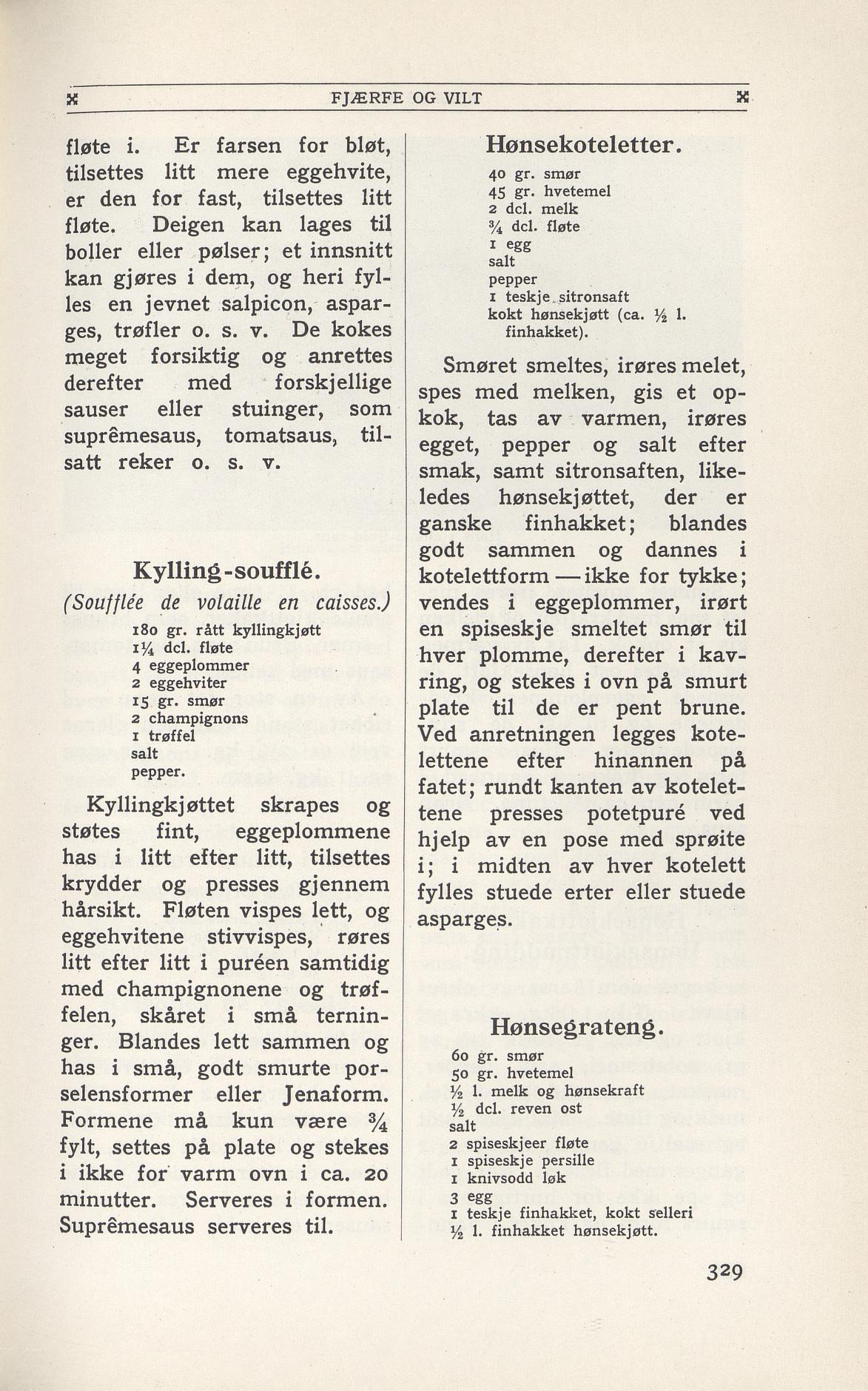
Erken's chicken cutlets from 1914: a thick panada of 40 g butter, 45 g flour, 2 dl milk and a little cream is stirred with egg, seasonings, lemon juice and about 300 g finely chopped cooked chicken, shaped into cutlets, breaded in egg yolk with melted butter and rusk crumbs, baked until browned and served with mashed potatoes and creamed peas or asparagus.

Source: Henriette Schønberg Erken, Stor kokebok, 1914-utg. s. 296 (falt i det fri)

Be the first to rate

About the dish

The recipe belongs to Erken's section on poultry and game, where cooked chicken from making soup was reused in finer dishes. The cutlets are shaped like small chops from a thick white sauce (panada) mixed with chopped chicken — a classic case of "leftovers in party dress." The amount of cream in the printed ingredient list is somewhat uncertain in the OCR; here it is interpreted as ¼ deciliter.

How to make it

  1. 1

    Make the panada

    Melt the butter, stir in the flour and thin with the milk and cream. Bring to a boil, stirring, until you have a thick, smooth mixture.

  2. 2

    Season

    Take the pan off the heat and stir in the egg, salt, pepper and lemon juice.

  3. 3

    Fold in the meat

    Stir in the fairly finely chopped cooked chicken and mix everything well. Let the mixture become cold and firm.

  4. 4

    Shape the cutlets

    Shape the mixture into small cutlets — not too thick.

  5. 5

    Bread

    Stir 1 tbsp melted butter into each egg yolk. Turn the cutlets first in the egg yolks, then in the rusk crumbs.

  6. 6

    Bake

    Place the cutlets on a greased baking sheet and bake them in the oven (about 200 °C (390 °F)) until nicely browned, about 15–20 minutes.

  7. 7

    Plating

    Arrange the cutlets in a row on the platter. Pipe mashed potatoes around the edge of the cutlets with a piping bag, and fill the center of each cutlet with creamed peas or creamed asparagus.

Changes from the original

Deciliters and grams are kept in modern form, "kavring" is given as dry breadcrumbs/rusk, and the amount of chicken is converted from ½ liter finely chopped to about 300 g. An oven temperature (200 °C (390 °F)) has been added, since the original gives no degrees.

In stores now

Clean, minimally processed groceries matched to the ingredients — approximate prices.

Product data and prices via Kassalapp. Prices are updated daily and may vary.

Time machine – what changed?

Pick two editions and see what Henriette Schønberg Erken added, removed or changed between them.

Modernised → 1914 (proofread, p. 296)~84% of the text changedremovedadded
40 g gr. smør (til panaden). 45 g hvetemel. gr. hvetemel 2 dl melk. 0,25 dl del. melk 1/4 del. fløte (mengden usikker i originalen). 1 stk egg. egg salt pepper 1 ts sitronsaft. 300 g teske citronsaft kokt hønsekjøtt hønsekjøt (ca. ½ liter 1/2 l. finhakket). salt (etter smak). pepper (etter smak). 2 stk eggeplommer (til panering). 2 ss smeltet smør (1 ss til hver eggeplomme). 2 dl kavring eller tørt brødrasp (til panering). potetpuré (til pynt rundt kotelettene). stuede erter eller stuede asparges (til fyll i midten). Smelt smøret, rør inn melet og spe Smørret smeltes, irøres melet, spædes med melken og fløten. Kok opp under omrøring til en tykk, glatt masse.. Ta kjelen melken, gives et opkok, tages av varmen og rør inn ilden, irøres egget, salt, pepper og sitronsaft.. Rør inn det salt efter smak, samt citronsaften, likeledes hønsekjøttet, der er ganske finhakkede, kokte hønsekjøttet og bland alt finhakket; blandes godt sammen. La massen bli kald sammen og fast.. Form massen til små koteletter dannes i koteletform — ikke for tykke.. Rør 1 ss tykke; vendes i eggeblommer, irørt en spiseske smeltet smør inn i til hver eggeplomme. Vend kotelettene først i eggeplommene, deretter blomme, derefter i kavring.. Legg kotelettene på smurt stekeplate kavring og stek dem stekes i ovnen (ca. 200 °C) ovn paa smurt plate, til de er pent brune, ca. 15–20 minutter.. Legg kotelettene etter hverandre på fatet. Sprøyt potetpuré brune. Ved anretningen lægges koteletterne efter hinanden paa fatet; rundt kanten av kotelettene koteletterne presses potetespuré ved hjælp av en pose med sprøytepose, og fyll sprøite i; i midten av hver kotelett kotelet fyldes med stuede erter eller stuede asparges.
Note on Modernised

Desiliter og gram er beholdt i moderne form, «kavring» er angitt som tørt brødrasp/kavring, og mengden hønsekjøtt er omregnet fra ½ liter finhakket til ca. 300 g. Stekeovnstemperatur (200 °C) er lagt til, siden originalen ikke oppgir grader.

Community interpretations

Be the first to share your own version.

See interpretations →

Frequently asked questions

What do I use as the chicken in the cutlets?
Ready-cooked chicken, about 1/2 liter finely chopped. So it's a good way to use up leftovers from a boiled hen.
How do I bread and cook them?
Shaped into cutlets – not too thick – turned in egg yolk with a tablespoon of melted butter added per yolk, then in rusk crumbs. Baked in the oven on a greased sheet until nicely browned.
How are they plated according to the original recipe?
The cutlets are laid in a row on the platter, and mashed potatoes are piped with a bag and tip around the edge of each cutlet. The recipe is from Henriette Schønberg Erken's "Stor kokebok" (1914), p. 296.
What do the cream, lemon juice and egg do in the mixture?
The egg binds the mixture, cream and milk give a supple white-sauce base of butter and wheat flour, and 1 teaspoon of lemon juice brightens the flavor together with salt and pepper.

Related recipes

More dishes in the same category from the archive

Read also

Kommentarer

Ingen kommentarer ennå. Bli den første til å dele!