Skip to content

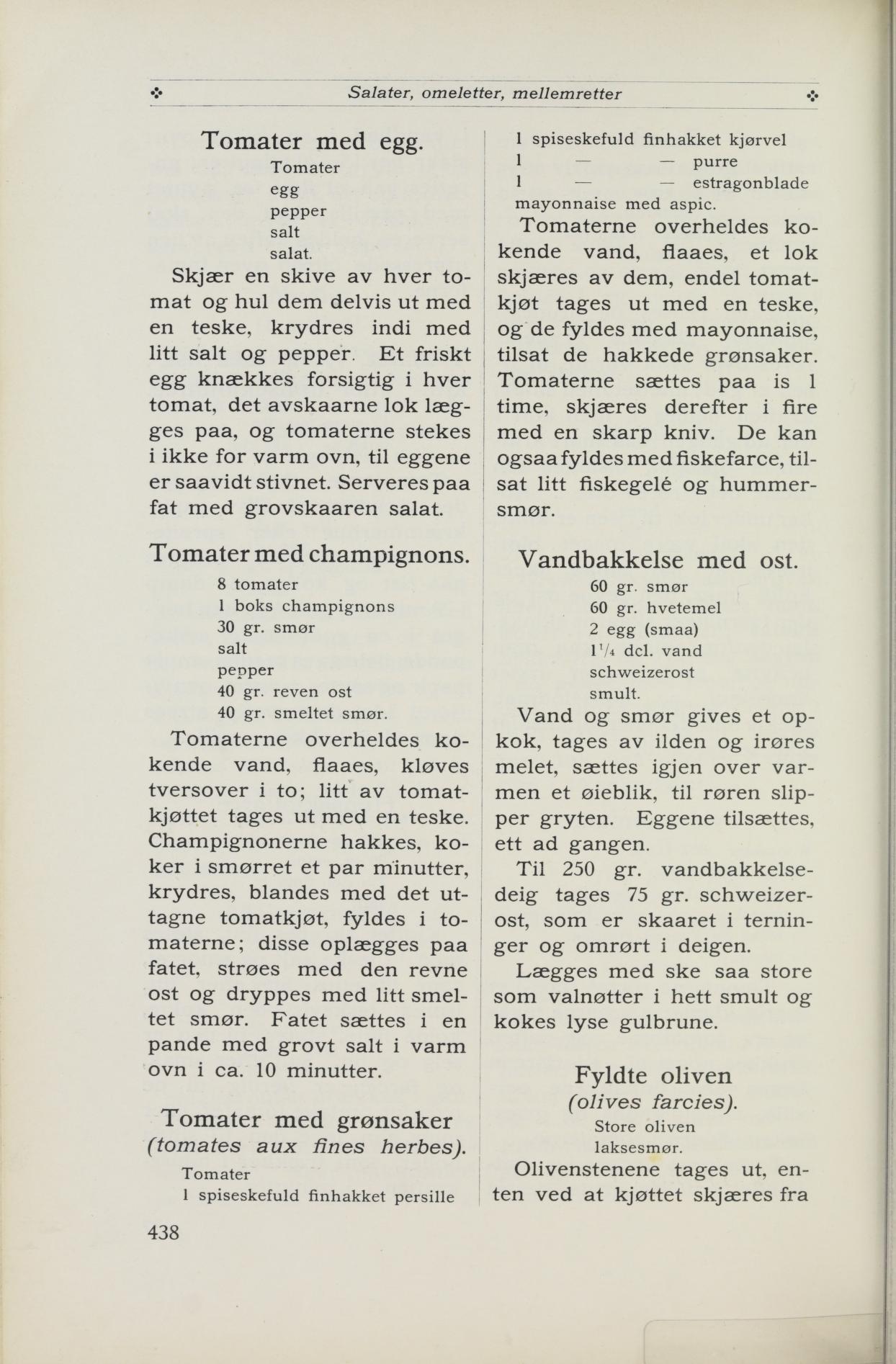
Stuffed Olives (olives farcies)

Large olives are pitted and filled with a piping bag: salmon butter (60 g butter + 60 g strained smoked salmon), alternatively paprika butter (butter, paprika, wine/stock) or caviar butter (caviar, cream, butter), or chicken/game purée. Chilled and served at room temperature. Erken 1914.

Source: Henriette Schønberg Erken, Stor kokebok, 1914-utg. s. 438 (falt i det fri)

Be the first to rate

About the dish

Stuffed olives were among the small, elaborate "arrangements" that decorated cold buffets and intermediate courses in bourgeois kitchens. Erken gives several variants of butter filling: salmon butter, paprika butter and caviar butter, as well as purées.

How to make it

  1. 1

    Remove the pits

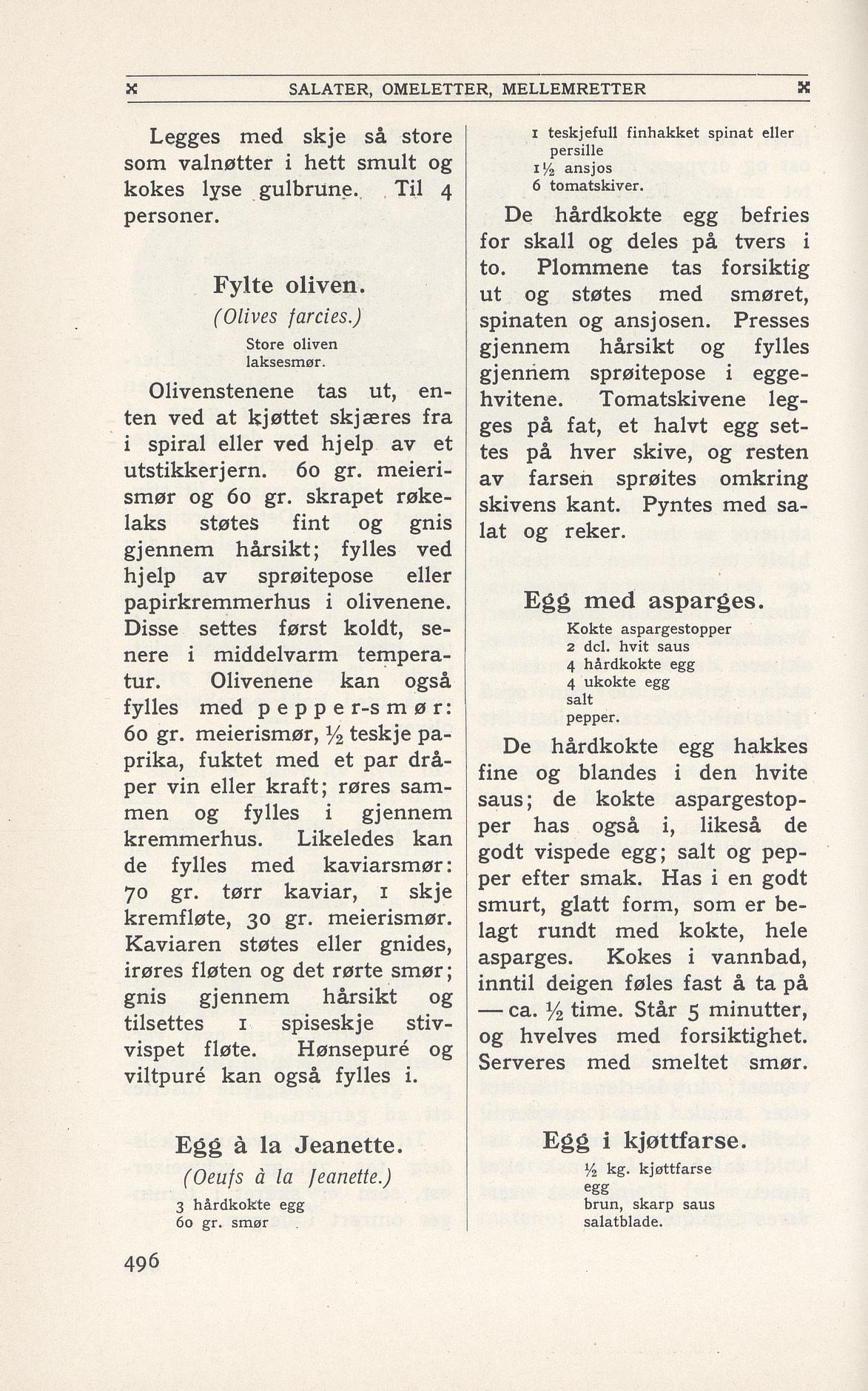
    Remove the pits from the olives, either by cutting the flesh away in a spiral or with the help of a corer.

  2. 2

    Make the salmon butter

    Mash 60 g of dairy butter and 60 g of scraped smoked salmon finely together and rub the mixture through a fine-mesh sieve.

  3. 3

    Fill the olives

    Fill the salmon butter into the olives with a piping bag or a paper cone.

  4. 4

    Chill and serve

    First set the olives in the cold so the filling sets, then let them stand at a medium-warm temperature (room temperature) before serving.

  5. 5

    Variants

    Paprika butter: 60 g dairy butter is stirred with 1/2 tsp paprika, moistened with a couple of drops of wine or stock. Caviar butter: 60 g dried caviar is mashed or rubbed, stirred with 1 tbsp heavy cream and 30 g stirred butter, rubbed through a sieve and finished with 1 tbsp stiffly whipped cream. The olives can also be filled with chicken purée or game purée.

Changes from the original

The amount of olives is estimated, "hair sieve" has become a fine-mesh sieve, and the fillings are described in modern words. "Medium-warm temperature" is interpreted as room temperature at serving.

In stores now

Clean, minimally processed groceries matched to the ingredients — approximate prices.

Product data and prices via Kassalapp. Prices are updated daily and may vary.

Tidsmaskin – hva endret seg?

Velg to utgaver og se hva Henriette Schønberg Erken la til, fjernet eller endret mellom dem.

1914 (korrekturlest, s. 438)1949 (korrekturlest, s. 496)~45% av teksten endretfjernetlagt til
Store oliven laksesmør. Olivenstenene tages Olivenestenen tas ut, enten ved at kjøttet skjæres fra i spiral eller ved hjælp hjelp av et utstikkerjern. utstikker jern. 60 gr. meierismør og 60 gr. skrapet røkelaks støtes fint og gnides gnis gjennem haarsigt; fyldes hårsikt; fylles ved hjælp hjelp av sprøitepose eller papirkræmmerhus papirkremmerhus i olivenerne. olivenene. Disse sættes settes først koldt, senere i middelvarm temperatur. Olivenerne Olivenene kan ogsaa fyldes også fylles med pepper-smør: pepperssmør: 60 gr. meierismør, 1/2 teske ½ teskje paprika, fugtet fuktet med et par draaper dråper vin eller kraft; røres sammen og fyldes fylles i gjennem kræmmerhus. kremmerhus. Likeledes kan de fyldes fylles med kaviarsmør: 60 70 gr. tørret tørr kaviar, 1 ske skje kremfløte, 30 gr. meierismør. Kaviaren støtes eller gnides, irøres fløten og det rørte smør; gnides gnis gjennem haarsigt hårsikt og tilsættes tilsettes 1 spiseskefuld stivvispet spiseskje stiv vispet fløte. Hønsepuré og vildtpuré (se side 73) viltpuré kan ogsaa fyldes også fylles i.

Community interpretations

Be the first to share your own version.

See interpretations

Frequently asked questions

How do I get the pit out of the olives?
Either cut the flesh away from the pit in a spiral, or use a corer (olive corer).
Which fillings does the recipe suggest?
Three variants: salmon butter (60 g dairy butter + 60 g scraped smoked salmon), pepper butter (60 g butter + 1/2 tsp paprika moistened with a few drops of wine or stock) and caviar butter (60 g dried caviar, 1 tbsp heavy cream, 30 g butter).
How do I fill and serve them?
The filling is mashed finely and rubbed through a fine sieve to become completely smooth, and piped in with a piping bag or paper cone. The olives are first set in the cold, and later placed at a medium-warm temperature before serving.
Where does the recipe come from?
From Henriette Schønberg Erken's "Stor kokebok" from 1914, page 438, as an intermediate course.

Related recipes

More dishes in the same category from the archive

Read also

Kommentarer

Ingen kommentarer ennå. Bli den første til å dele!