Skip to content

Fruit Wine

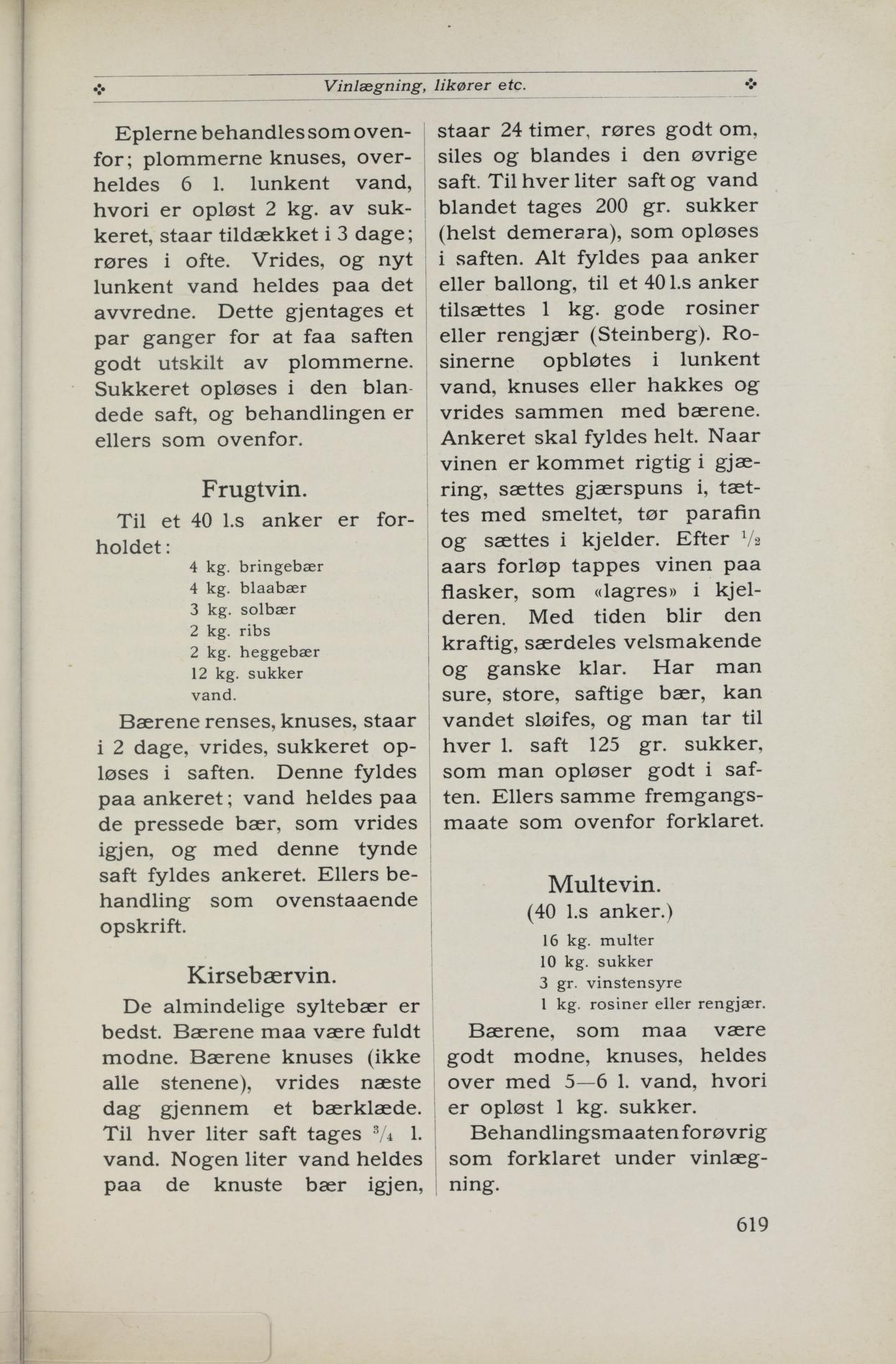
Erken's fruit wine for a 40-liter cask of raspberries, blueberries, black currants, red currants and bird cherries with 12 kg sugar: the berries are crushed, left 2 days, pressed, the sugar dissolved in the juice, the cask topped up with a second pressing of the pomace, and the wine ferments with a fermentation bung before bottling.

Source: Henriette Schønberg Erken, Stor kokebok, 1914-utg. s. 619 (falt i det fri)

Be the first to rate

About the dish

From the chapter "Winemaking, liqueurs etc." in Henriette Schønberg Erken's "Stor kokebok" (1914). The recipe is calculated for a 40-liter cask, that is, home winemaking of berry wine on a large scale as was common on the farms.

How to make it

  1. 1

    Clean and crush the berries

    Clean the berries of leaves and stalks and crush them well.

  2. 2

    Let the berries stand

    Let the crushed berries stand covered for 2 days.

  3. 3

    Press the juice

    Wring the berries through a berry cloth so the juice is separated out.

  4. 4

    Dissolve the sugar

    Dissolve the sugar completely in the juice and fill it into the cask (40 liters).

  5. 5

    Second extraction of the pomace

    Pour water over the pressed berries, wring them once more, and fill the cask completely with this thin juice.

  6. 6

    Fermentation and storage

    Set the cask in a warm place to ferment. Lay clean cotton over the bung hole the first few days and stir the wine once daily; then insert the fermentation bung and stir no more. Seal with melted, dry paraffin and set the cask in the cellar. After about half a year, the wine is bottled and the bottles stored in the cellar.

Changes from the original

The ingredient quantities are set out in modern units (kg/g/liters), and the method is divided into numbered steps. The reference to "the above recipe" is filled in with the general winemaking method Erken describes in the chapter (filling the cask, fermentation bung, bottling).

Tidsmaskin – hva endret seg?

Velg to utgaver og se hva Henriette Schønberg Erken la til, fjernet eller endret mellom dem.

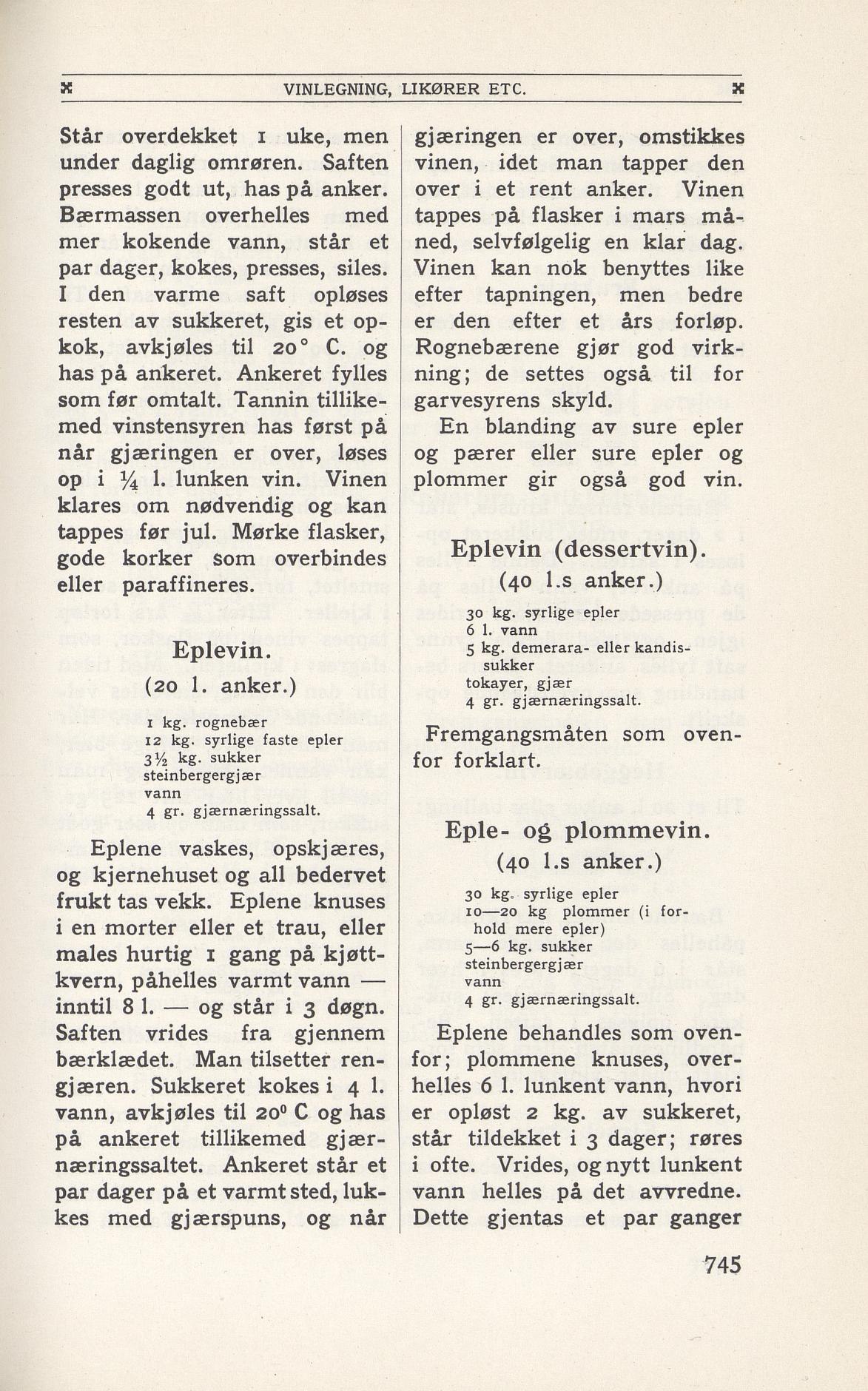
1914 (korrekturlest, s. 619)1949 (korrekturlest, s. 745)~36% av teksten endretfjernetlagt til
Til et 40 l.s anker er forholdet: 4 kg. bringebær 4 kg. blaabær blåbær 3 kg. solbær 2 kg. ribs rips 2 kg. heggebær 12 kg. sukker vand. vann. Bærene renses, knuses, staar står i 2 dage, dager, vrides, sukkeret opløses i saften. Denne fyldes paa fylles på ankeret; vand heldes paa vann helles på de pressede bær, som vrides igjen, og med denne tynde tynne saft fyldes fylles ankeret. Ellers behandling som ovenstaaende opskrift. ovenstående oppskrift.
Community interpretations

Be the first to share your own version.

See interpretations

Frequently asked questions

Which berries go into this fruit wine?
For a 40-liter cask: 4 kg raspberries, 4 kg blueberries, 3 kg black currants, 2 kg red currants and 2 kg bird cherries, plus 12 kg sugar and water.
How do I make the juice?
The berries are cleaned and crushed, stand for 2 days, and are wrung out. The sugar is dissolved in the juice, which is filled into the cask. Then water is poured over the pressed berries, which are wrung again – this thin juice fills up the cask.
How long does it take before the wine is ready?
Count on a long maturing time – the recipe indicates about half a year (roughly 180 days) from start to finished wine, including the 2 days the berries stand before pressing.
Where does the recipe come from?
From Henriette Schønberg Erken's "Stor kokebok" (1914), page 619, in the chapter on winemaking and liqueurs.

Related recipes

More dishes in the same category from the archive

Read also

Kommentarer

Ingen kommentarer ennå. Bli den første til å dele!