Skip to content

Breakfast Rusks

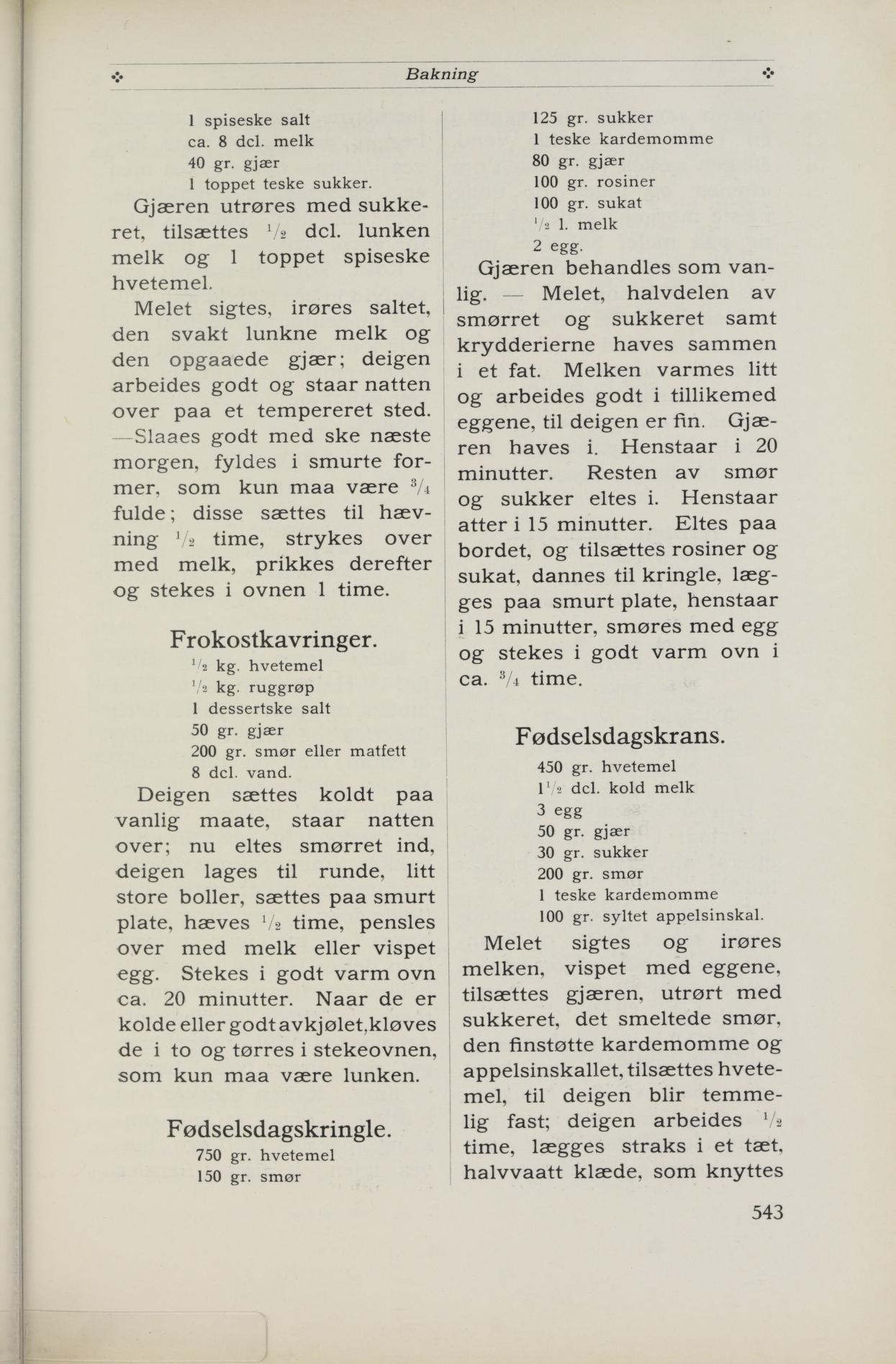
Erken's breakfast rusks (kavringer) from 1914: a cold yeast dough of wheat flour and cracked rye is set the night before, butter is kneaded in in the morning, the dough is shaped into buns, baked about 20 min, then split and dried in a lukewarm oven.

Source: Henriette Schønberg Erken, Stor kokebok, 1914-utg. s. 543 (falt i det fri)

Be the first to rate

About the dish

Rusks were a regular breakfast food in Norwegian homes, and Erken has several variants in "Stor kokebok." This one uses cracked rye (coarsely milled/crushed rye) alongside the wheat flour and is set as a cold dough the evening before. The ingredient list stood in a narrow column beside the method, and the OCR has made the amounts for flour and cracked rye uncertain; here they are interpreted from the liquid amount (8 dl of water).

How to make it

  1. 1

    Set the cold dough the night before

    Dissolve the yeast in the cold water. Mix in the wheat flour, cracked rye and salt to a cohesive dough, and let it stand cool overnight.

  2. 2

    Knead in the butter

    Knead the butter thoroughly into the cold dough the next morning, until the dough is smooth.

  3. 3

    Shape the buns

    Shape the dough into round, fairly large buns and place them on a greased baking sheet.

  4. 4

    Proof and brush

    Let the buns rise 30 minutes. Brush with milk or beaten egg.

  5. 5

    Bake

    Bake in a good hot oven, about 200 °C (390 °F), for around 20 minutes.

  6. 6

    Split and dry

    When the buns are cold or well cooled, split them in two and dry them in a lukewarm oven, about 100–120 °C (250 °F), until they are dry and crisp.

Changes from the original

Measures have been converted to grams/deciliters and a graded baking temperature has been added (the original says "good hot oven" and "lukewarm" oven). "Shortening" is rendered as margarine. Unclear flour amounts in the OCR have been interpreted from the liquid amount.

In stores now

Clean, minimally processed groceries matched to the ingredients — approximate prices.

Product data and prices via Kassalapp. Prices are updated daily and may vary.

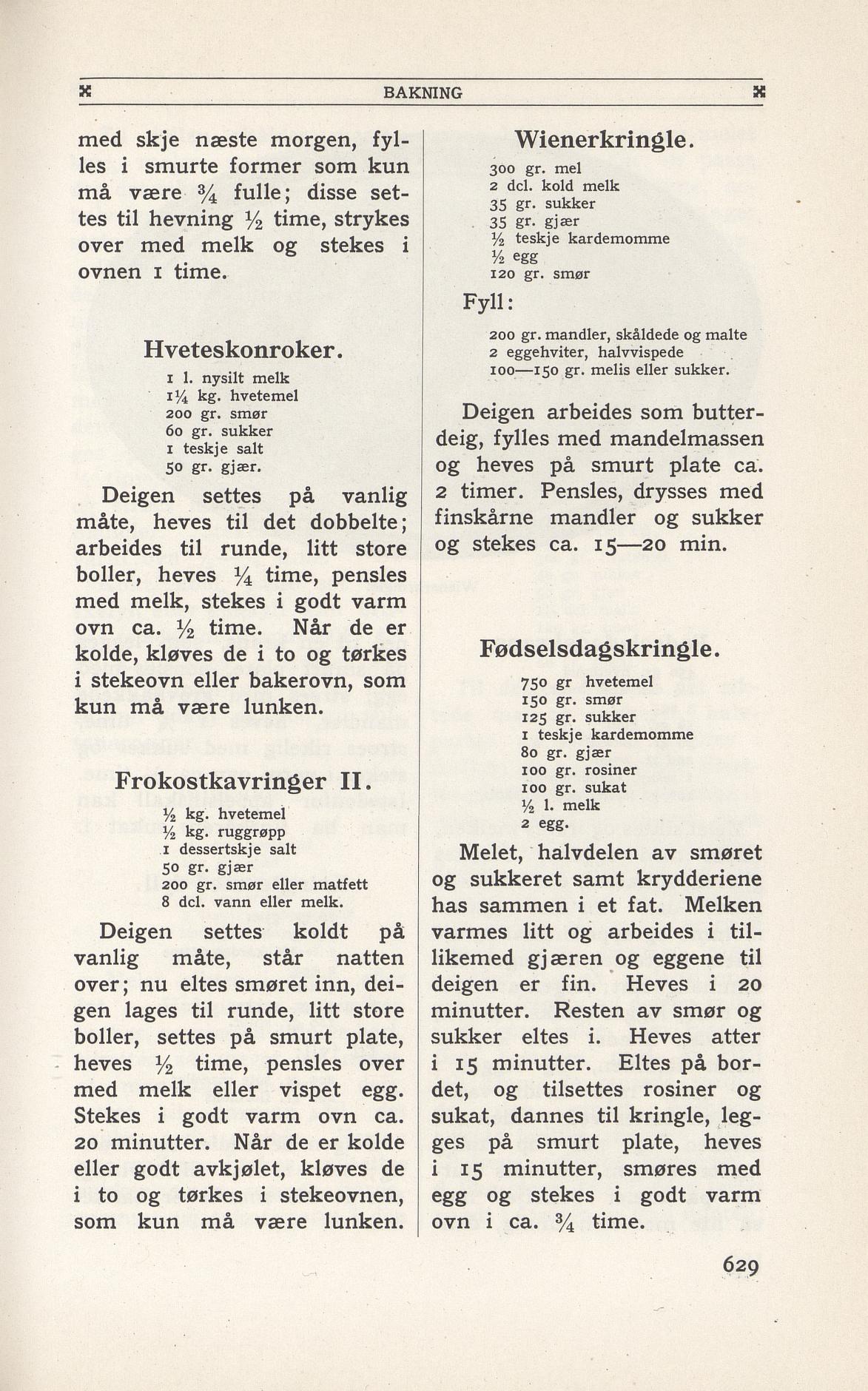
Tidsmaskin – hva endret seg?

Velg to utgaver og se hva Henriette Schønberg Erken la til, fjernet eller endret mellom dem.

1914 (korrekturlest, s. 543)1949 (korrekturlest, s. 629)~37% av teksten endretfjernetlagt til
1 ½ kg. hvetemel 1/2 ½ kg. ruggrøp ruggrøpp 1 dessertske dessertskje salt 50 gr. gjær 200 gr. smør eller matfett 8 del. vand. vann eller melk. Deigen sættes settes koldt paa vanlig maate, staar måte, står natten over; nu eltes smørret ind, smøret inn, deigen lages til runde, litt store boller, sættes paa settes på smurt plate, hæves 1/2 heves ½ time, pensles over med melk eller vispet egg. Stekes i godt varm ovn ca. 20 minutter. Naar Når de er kolde eller godt avkjølet, kløves de i to og tørres tørkes i stekeovnen, som kun maa være lunken.
Community interpretations

Be the first to share your own version.

See interpretations

Frequently asked questions

Why does the recipe take so long?
The dough is set cold in the usual way and stands overnight. The actual work is short: after the butter is kneaded in, buns are shaped and left to rise 1/2 hour, baked about 20 minutes, and finally the split rusks are dried in a lukewarm oven.
What is the dough made of?
1 kg of wheat flour, 1/2 kg of rye grits (cracked rye), 1 dessert spoon of salt, 50 g of yeast, 200 g of butter or shortening and 8 dl of water. The butter is kneaded in the next day, once the dough has stood overnight.
How do the buns become rusks?
When the baked buns are cold or well cooled, they are split in two and dried in the oven. The oven must be only lukewarm, so the rusks dry out without browning.
Should they be brushed?
Yes, after rising on a greased sheet the buns are brushed with milk or beaten egg before being baked in a good hot oven for about 20 minutes.

Related recipes

More dishes in the same category from the archive

Read also

Kommentarer

Ingen kommentarer ennå. Bli den første til å dele!