Skip to content

Fish Timbales with Shrimp and Asparagus

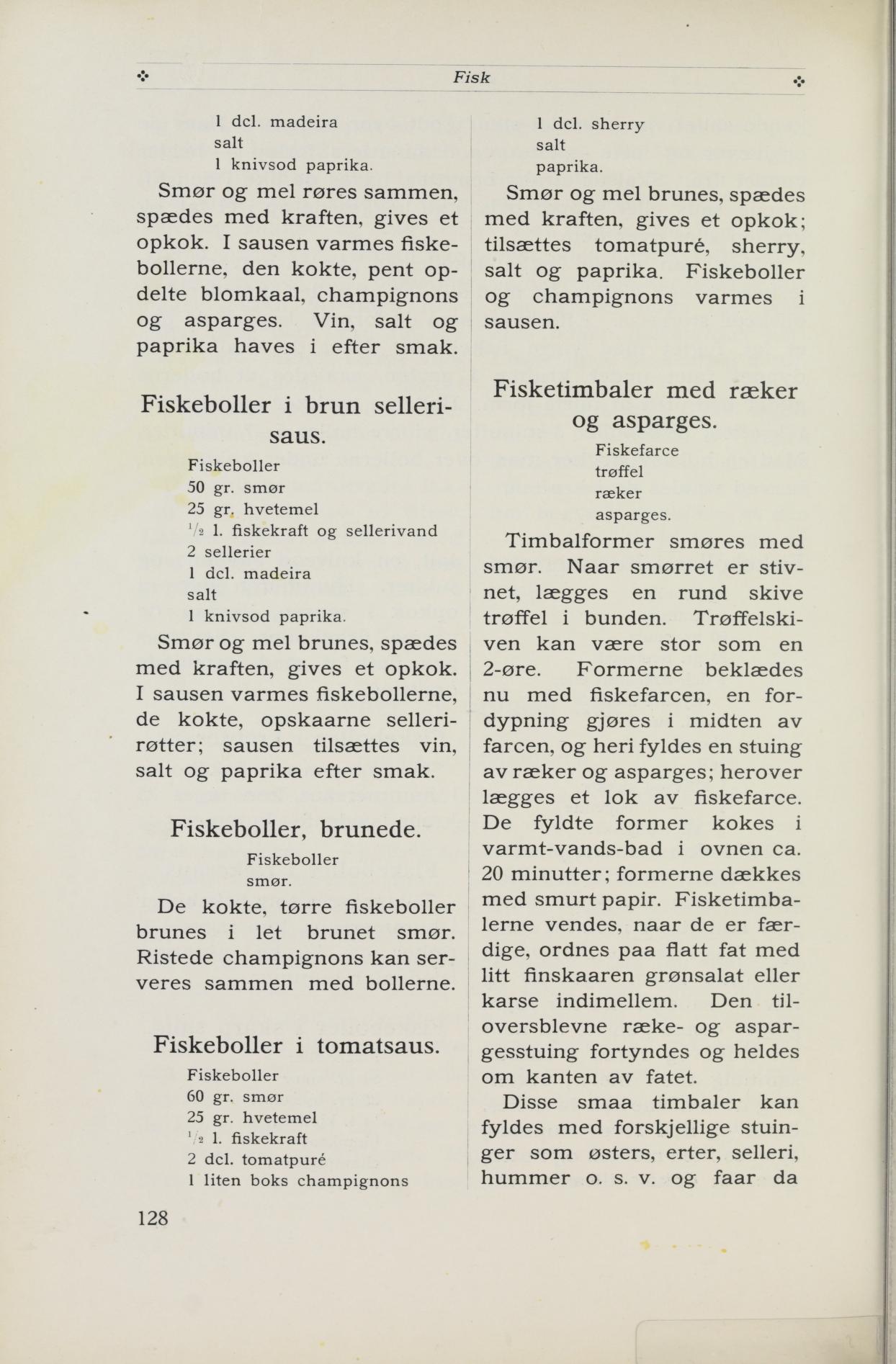
Erken 1914: small greased timbale molds with a slice of truffle in the bottom are lined with fish forcemeat, filled with shrimp-and-asparagus ragout, covered with forcemeat and cooked in a water bath in the oven for about 20 min. Turned out and served with thinned ragout around them. Can be varied with oysters, peas, celery or lobster.

Source: Henriette Schønberg Erken, Stor kokebok, 1914-utg. s. 128 (falt i det fri)

Be the first to rate

About the dish

A typical party dish from Erken's repertoire: small timbales of fish forcemeat with a luxury filling of shrimp, asparagus and truffle. The truffle slice "the size of a two-øre coin" shows the precise, home-economics-school-style guidance of the era.

How to make it

  1. 1

    Prepare the molds

    Grease small timbale molds well with butter and set them in a cold place until the butter sets. Place a round slice of truffle in the bottom of each mold.

  2. 2

    Line the molds

    Line the insides of the molds with an even layer of fish forcemeat and make a hollow in the middle.

  3. 3

    Make the ragout

    Mix the shrimp and cut, boiled asparagus with a little thick white sauce into a ragout. Fill the hollow in the molds.

  4. 4

    Close the timbales

    Place a lid of fish forcemeat over the filling and smooth the surface. Cover the molds with greased paper.

  5. 5

    Cook in a water bath

    Set the molds in a roasting pan with hot water and cook them in the oven at about 175 °C (345 °F) for about 20 minutes, until the forcemeat is firm.

  6. 6

    Serve

    Turn the timbales out onto a flat platter and garnish between them with finely cut green salad or cress. Thin the rest of the shrimp-and-asparagus ragout and pour it around the edge of the platter.

  7. 7

    Variations

    The timbales can be filled with other ragouts, for example oysters, peas, celery or lobster, and are named after the filling.

Changes from the original

Amounts have been estimated and given in modern units, since the original only lists the ingredients. The water bath in the oven is described with a modern temperature. Parchment paper can be used instead of greased paper.

In stores now

Clean, minimally processed groceries matched to the ingredients — approximate prices.

Product data and prices via Kassalapp. Prices are updated daily and may vary.

Tidsmaskin – hva endret seg?

Velg to utgaver og se hva Henriette Schønberg Erken la til, fjernet eller endret mellom dem.

1914 (korrekturlest, s. 128)1949 (korrekturlest, s. 156)~55% av teksten endretfjernetlagt til
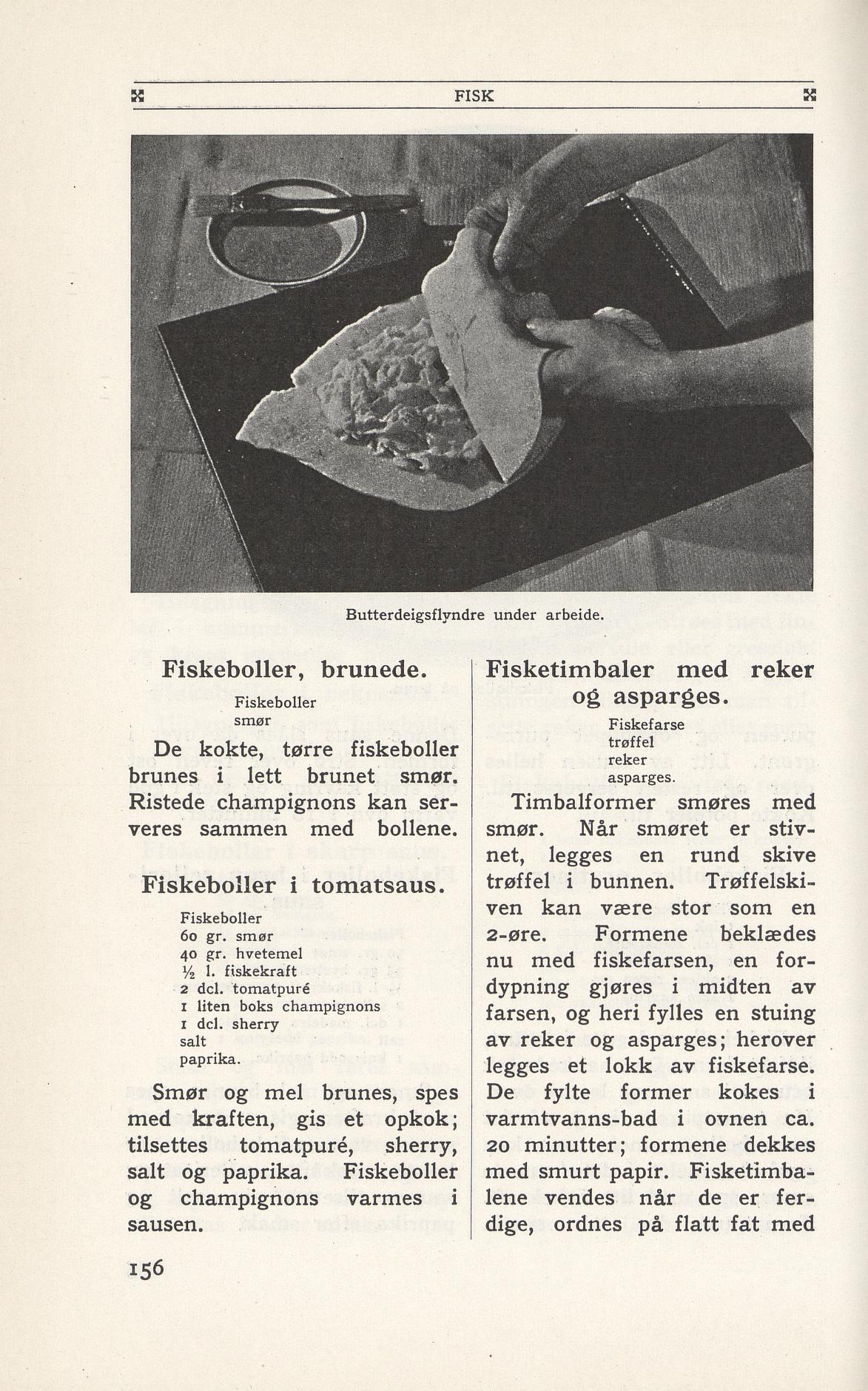
Fiskefarce Fiskefarse trøffel ræker reker asparges. Timbalformer smøres med smør. Naar smørret Når smøret er stivnet, lægges legges en rund skive trøffel i bunden. bunnen. Trøffelskiven kan være stor som en 2-øre. Formerne Formene beklædes nu med fiskefarcen, fiskefarsen, en fordypning gjøres i midten av farcen, farsen, og heri fyldes fylles en stuing av ræker reker og asparges; herover lægges legges et lok lokk av fiskefarce. fiskefarse. De fyldte fylte former kokes i varmt-vands-bad varmtvannsbad i ovnen ca. 20 minutter; formerne dækkes formene dekkes med smurt papir. Fisketimbalerne vendes, naar Fisketimbalesne vendes når de er færdige, ferdige, ordnes paa flatt fat med litt finskaaren grønsalat finkåren grønnsalat eller karse indimellem. innimellem. Den tiloversblevne ræke- reke- og aspargesstuing fortyndes fortynnes og heldes helles om kanten av fatet. Disse smaa timbaler kan fyldes med forskjellige stuinger som østers, erter, selleri, hummer o. s. v. og faar da navn efter hvad de er fyldt med.

Community interpretations

Be the first to share your own version.

See interpretations

Frequently asked questions

How long should the timbales stay in the oven?
About 20 minutes in a water bath (hot-water bath) in the oven. Cover the molds with greased paper while they cook. Count on around 75 minutes in total with preparation.
How are the molds prepared?
The timbale molds are greased well with butter. When the butter has set, a round slice of truffle – about the size of a small coin – is placed in the bottom. Then the molds are lined with fish forcemeat, a hollow is made in the middle for the filling, and finally a lid of forcemeat is placed over.
How are they served, and can the filling be varied?
The timbales are turned out of the molds and set on a flat platter with a little finely cut green salad or cress between them. The remaining shrimp-and-asparagus ragout is thinned and poured around the edge of the platter. According to the recipe, the timbales can be filled with various other ragouts.
Where does the recipe come from?
From Henriette Schønberg Erken's "Stor kokebok" (1914), page 128, in the chapter on fish forcemeat and fish cakes.

Related recipes

More dishes in the same category from the archive

Read also

Kommentarer

Ingen kommentarer ennå. Bli den første til å dele!