Skip to content

Pheasant Ragout (salmis de faisan)

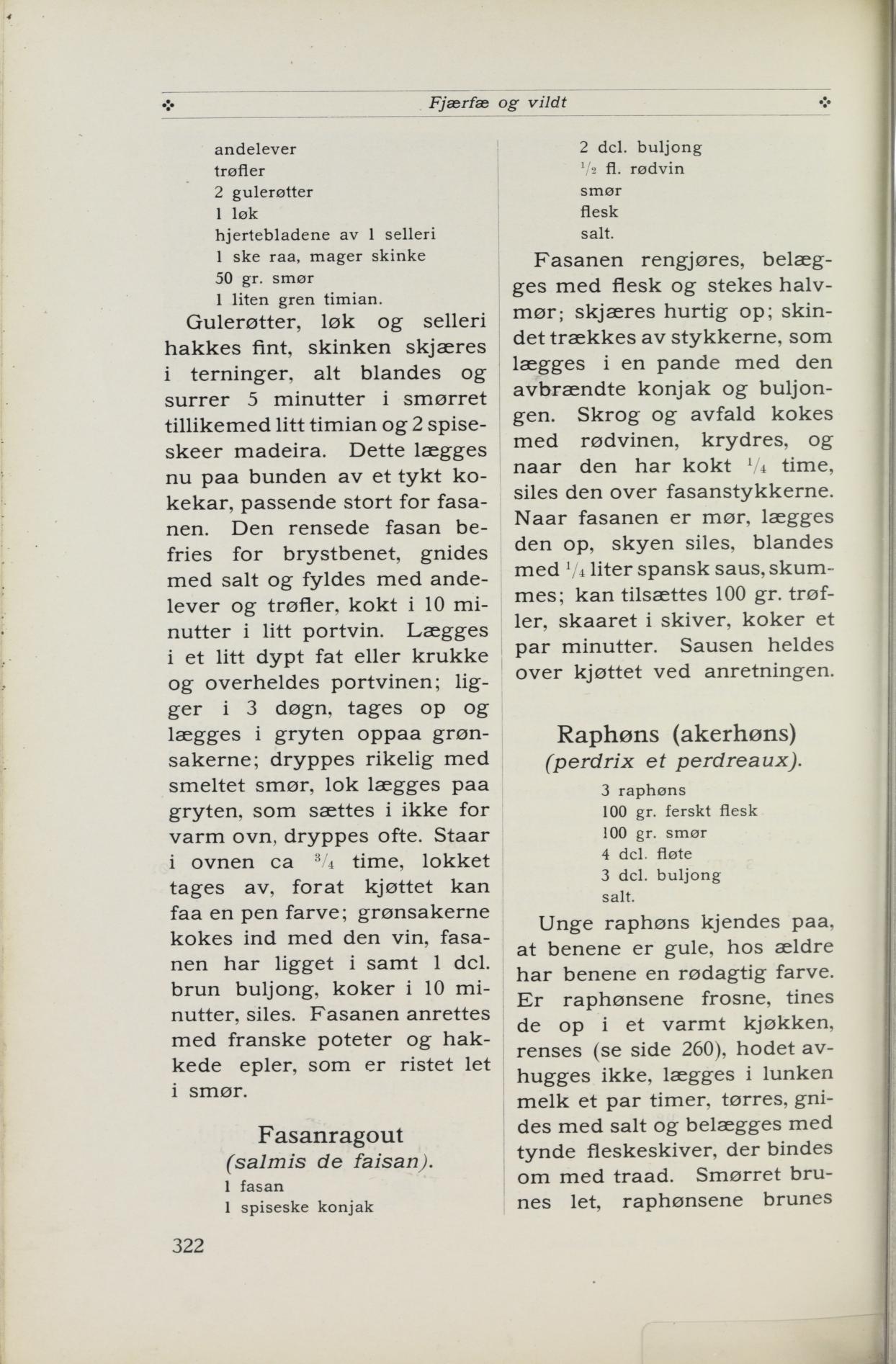
Pheasant ragout (salmis de faisan) from Erken's Stor kokebok 1914: pheasant is part-roasted half-tender with pork, cut up, flambéed with cognac, and finished tender in strained stock made from the carcass and red wine; the sauce is finished with a brown base sauce and optional truffle slices.

Source: Henriette Schønberg Erken, Stor kokebok, 1914-utg. s. 322 (falt i det fri)

Be the first to rate

About the dish

From the chapter "Poultry and Game" in Henriette Schønberg Erken's "Stor kokebok" (1914). Salmis is a classic French way of preparing fowl: the bird is roasted half-tender, cut up, and finished in a rich wine sauce made from the carcass and trimmings. "Spanish sauce" is the era's name for a brown base sauce (demi-glace).

How to make it

  1. 1

    Part-roasting

    Clean the pheasant, lay thin pork slices over the breast, and roast the bird until half-tender.

  2. 2

    Cut up

    Cut the bird up quickly while it is hot, and pull the skin off the pieces.

  3. 3

    Flambé

    Place the meat pieces in a pan, pour the cognac over them, and light it. Add the bouillon.

  4. 4

    Cook stock from the carcass

    Cook the carcass and trimmings with the red wine, season with salt and pepper, and let it boil for half an hour. Strain the stock over the pheasant pieces.

  5. 5

    Finishing tender

    Let the pheasant steep in the stock until tender. Take the meat up and keep it warm.

  6. 6

    Sauce

    Strain the jus, blend it with the brown base sauce, and skim. Add the truffle slices if desired and let the sauce boil a couple of minutes.

  7. 7

    Plating

    Pour the sauce over the meat at plating and serve at once.

Changes from the original

Amounts are converted to modern measures (del. = deciliter, "½ bottle red wine" ≈ 3 dl). "Spanish sauce" is given as brown base sauce/demi-glace, and "flesk" as fresh, fatty pork belly in thin slices. Truffles are kept as an optional accompaniment.

Tidsmaskin – hva endret seg?

Velg to utgaver og se hva Henriette Schønberg Erken la til, fjernet eller endret mellom dem.

1914 (korrekturlest, s. 322)1949 (korrekturlest, s. 356)~50% av teksten endretfjernetlagt til
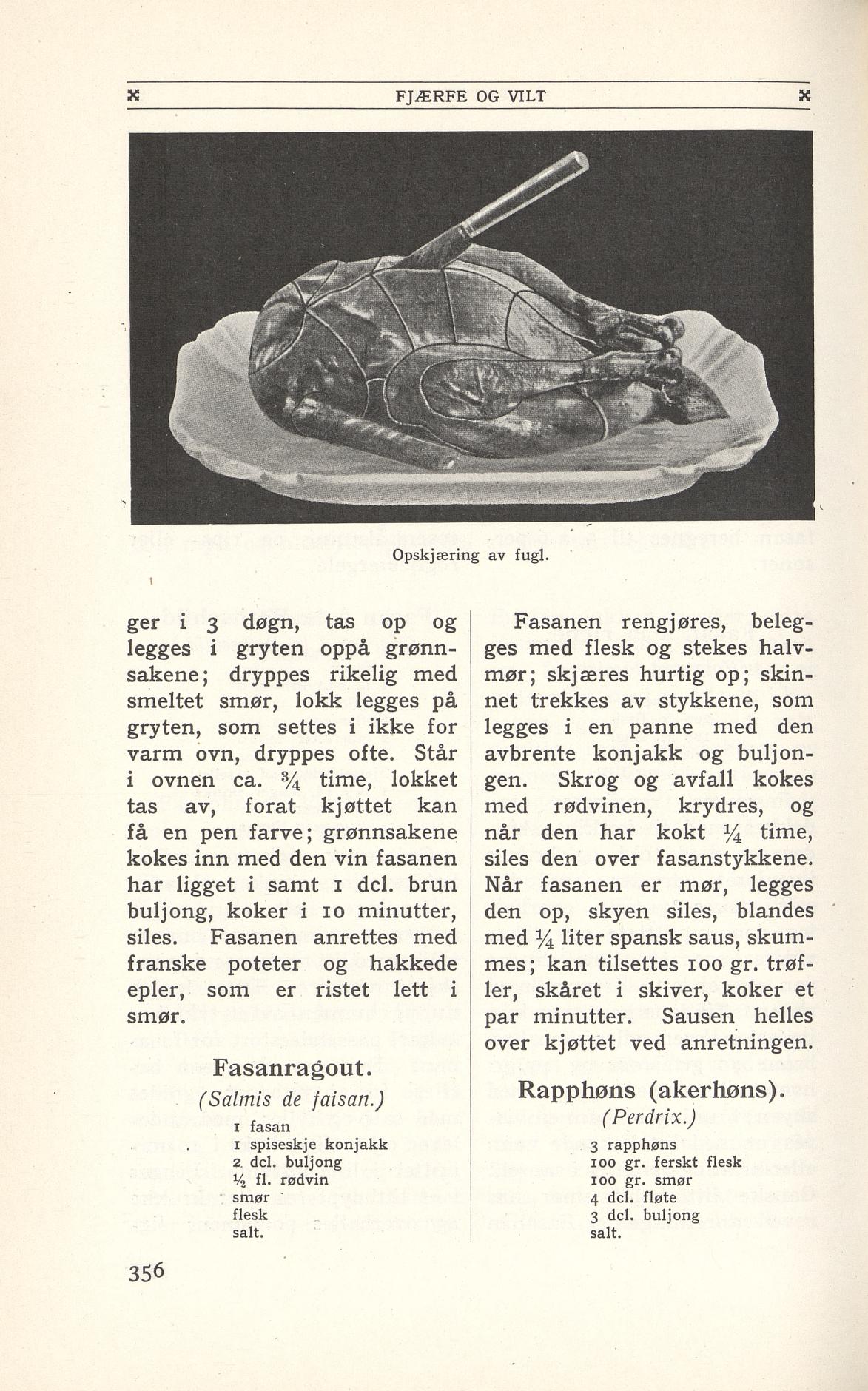
1 (Salmis de faisan.) X fasan 1 spiseske konjak i spiseskje konjakk 2 del. buljong ca. ½ V 2 fl. rødvin smør flesk salt ¼ liter spansk saus 100 gr. trøfler. salt. Fasanen rengjøres, belægges belegges med flesk og stekes halvmør; halv mør; skjæres hurtig op; skindet trækkes skinnet trekkes av stykkerne, stykkene, som lægges legges i en pande panne med den avbrændte konjak avbrente konjakk og buljongen. Skrog og avfald avfall kokes med rødvinen, krydres, og naar når den har kokt ½ % time, siles den over fasanstykkerne. Naar fasanstykkene. Når fasanen er mør, lægges legges den op, skyen siles, blandes med ¼ y 4 liter spansk saus, skummes; kan tilsættes tilsettes 100 gr. trøfler, skaaret skåret i skiver, koker et par minutter. Sausen heldes helles over kjøttet ved anretningen.

Community interpretations

Be the first to share your own version.

See interpretations

Frequently asked questions

What does it mean that the pheasant is roasted "half-tender"?
The pheasant is covered with pork and roasted only until half cooked through. It is then cut up, the skin pulled off, and the pieces finished tender in the pan with cognac, bouillon, and the strained red-wine stock.
What is the carcass used for?
The carcass and scraps are cooked together with the red wine (about ½ bottle) and seasoned. After ½ hour of cooking, the stock is strained over the pheasant pieces, so all the flavor is used.
How is the sauce made?
When the meat is tender, it is set out, the jus is strained and blended with ¼ liter of Spanish sauce, and skimmed. Optionally 100 g of sliced truffles are added and boiled a couple of minutes. The sauce is poured over the meat at plating.
Where does the recipe come from?
From Henriette Schønberg Erken's "Stor kokebok" (1914), page 322. The dish is also called salmis de faisan and figured for 4 servings, with about 100 minutes total time.

Related recipes

More dishes in the same category from the archive

Read also

Kommentarer

Ingen kommentarer ennå. Bli den første til å dele!