Skip to content

Apple Wine

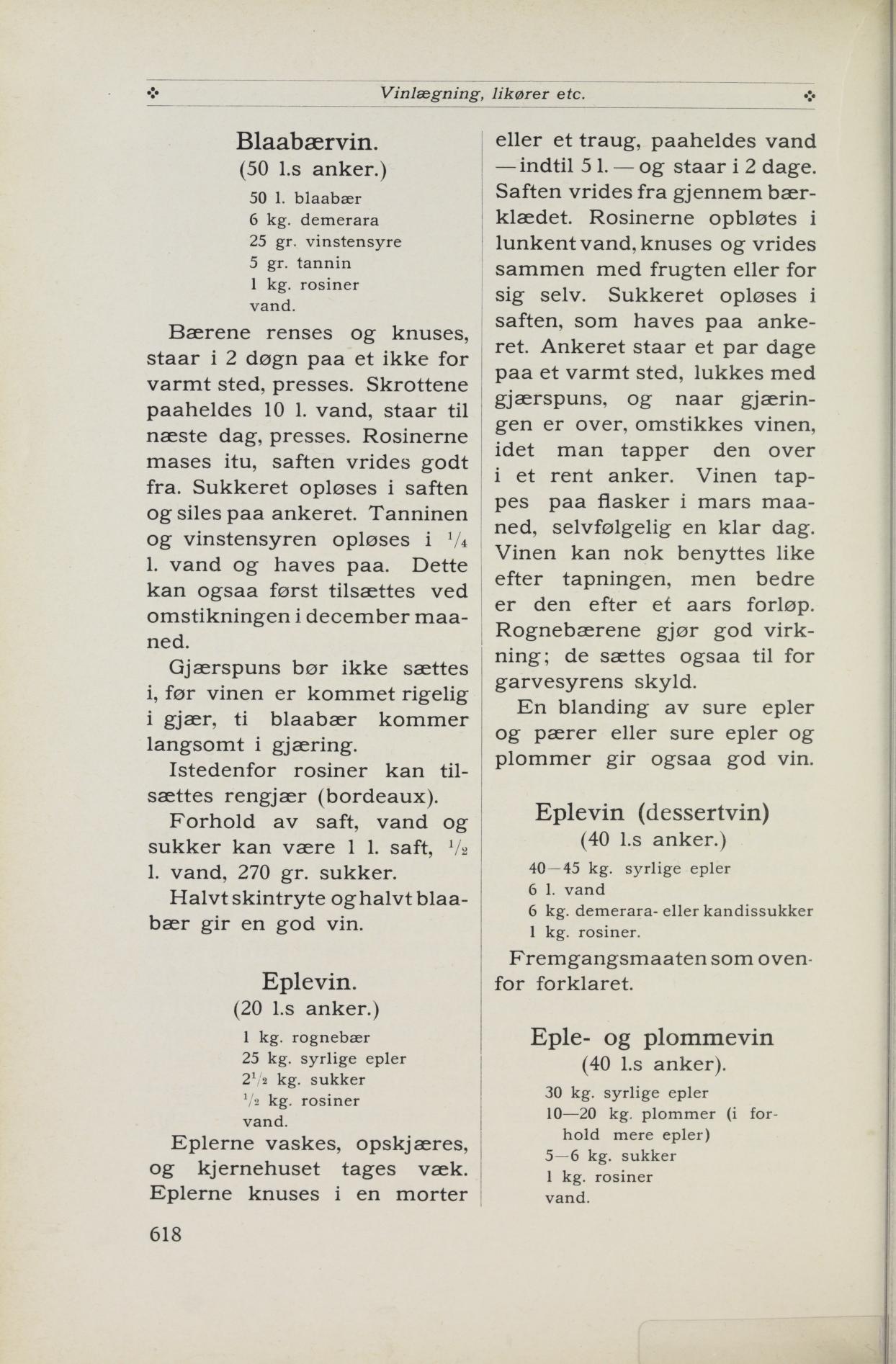
Erken's apple wine (1914) for a 20-liter cask (anker): 25 kg tart apples, 1 kg rowanberries (for tannin), 2½ kg sugar, raisins, and up to 5 l water. Apples are crushed and steeped 2 days, the juice pressed, sugar dissolved in, fermented in the cask, and bottled in March.

Source: Henriette Schønberg Erken, Stor kokebok, 1914-utg. s. 618 (falt i det fri)

Be the first to rate

About the dish

Apple wine was one of the most common homemade wines in Norwegian homes in the early 1900s, made from tart garden apples. Erken recommends rowanberries as a natural source of tannin.

How to make it

  1. 1

    Prepare the apples

    Wash the apples, cut them up, and remove the core.

  2. 2

    Crush and steep

    Crush the apples in a mortar or trough, pour on water – up to 5 liters – and let stand for 2 days.

  3. 3

    Press the juice

    Wring the juice out through a cloth (straining cloth).

  4. 4

    Raisins

    Soak the raisins in lukewarm water, crush them, and wring them out together with the fruit, or on their own.

  5. 5

    Fill the cask

    Dissolve the sugar in the juice and pour it all into the cask. Let the cask stand a couple of days in a warm place, then close it with a fermentation bung.

  6. 6

    Racking and bottling

    When fermentation is over, rack the wine over into a clean cask. Bottle in March, preferably on a clear day. The wine can be used right away, but improves after a year of storage.

Changes from the original

Units have been modernized. The quantity of raisins is not fully legible in the OCR text and has been set to ½ kg. "Berry cloth" is described as a cloth/straining cloth, and the method has been divided into steps.

Tidsmaskin – hva endret seg?

Velg to utgaver og se hva Henriette Schønberg Erken la til, fjernet eller endret mellom dem.

1914 (korrekturlest, s. 618)1949 (korrekturlest, s. 811)~98% av teksten endretfjernetlagt til
(20 l.s anker.) 25 kg. syrlige epler 1 kg. rognebær 2 1/2 kg. sukker 1/2 kg. rosiner vand. Eplerne vaskes, opskjæres, og kjernehuset tages væk. Eplerne knuses i en morter eller et traug, paaheldes vand — indtil 5 l. — og staar i 2 dage. Saften vrides fra gjennem bærklædet. Rosinerne opbløtes i lunkent vand, knuses og vrides sammen Løskokt ris blandes med frugten eller for sig selv. Sukkeret opløses i saften, som haves paa ankeret. Ankeret staar et par dage paa et varmt sted, lukkes eplemos, søtes med gjærspuns, og naar gjæringen er over, omstikkes vinen, idet man tapper den over i et rent anker. Vinen tappes paa flasker i mars maaned, selvfølgelig en klar dag. Vinen kan nok benyttes like efter tapningen, men bedre er den efter et aars forløp. Rognebærene gjør god virkning; de sættes ogsaa til for garvesyrens skyld. En blanding av sure epler og pærer honning eller sure epler og plommer gir ogsaa god vin. litt brunet sukker. Fløte eller vaniljesaus til.
Community interpretations

Be the first to share your own version.

See interpretations

Frequently asked questions

How long does it take to make apple wine?
Figure on around half a year (about 180 days). The apple mass stands 2 days with water, the juice ferments in the cask, and the wine is bottled in March. It can be used right after bottling, but improves with longer storage.
What apples and quantities do I need?
The recipe is meant for a 20-liter cask: 25 kg tart apples, 1 kg rowanberries, 2½ kg sugar, ½ kg raisins, and water (up to 5 liters).
How are the raisins handled?
The raisins are soaked in lukewarm water, crushed, and wrung out together with the fruit – or on their own – so that their juice goes into the wine.
What do you do after fermentation?
The cask stands a couple of days in the warmth and is closed with a fermentation bung. When fermentation is over, the wine is racked by pouring it over into a clean cask, and then bottled in March on a clear day.

Related recipes

More dishes in the same category from the archive

Read also

Kommentarer

Ingen kommentarer ennå. Bli den første til å dele!