Skip to content

Egg Custard for Soups I

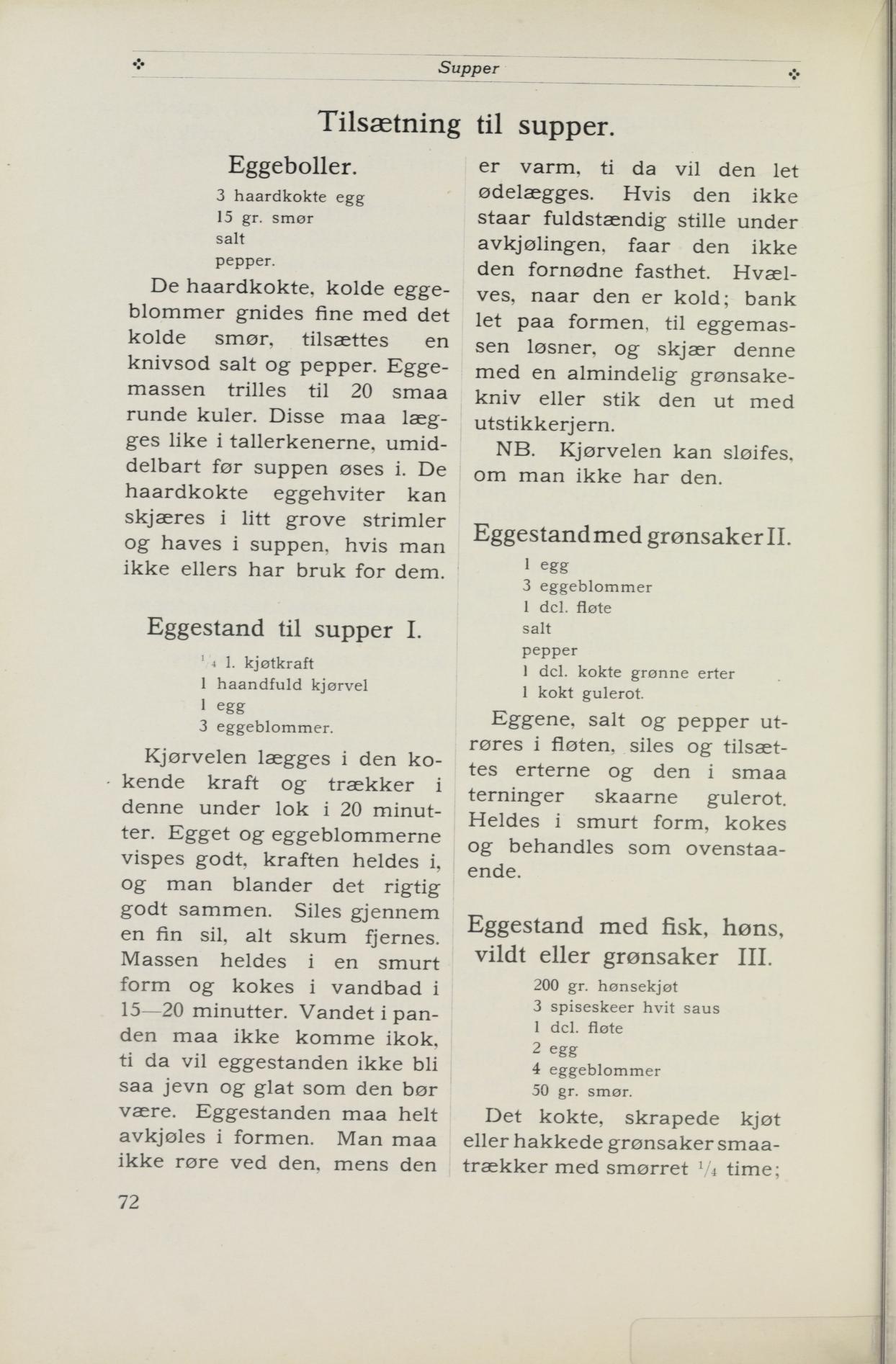
Egg custard for soups I (1914): chervil steeps 20 min in ¼ l of boiling meat stock; the stock is mixed with 1 egg and 3 egg yolks, strained, poured into a buttered mold, and cooked in a water bath (without boiling) 15–20 min. Cooled completely undisturbed, turned out, and cut into cubes as a garnish in clear soup. The chervil may be omitted.

Source: Henriette Schønberg Erken, Stor kokebok, 1914-utg. s. 72 (falt i det fri)

Be the first to rate

About the dish

Egg custard (royal egg custard, "royale") was the classic garnish in clear soups. Erken gives three variants; this is the base recipe with chervil.

How to make it

  1. 1

    Steep the stock

    Put the chervil into the boiling meat stock and let it steep, covered, for 20 minutes.

  2. 2

    Mix with egg

    Whisk the egg and egg yolks well. Pour in the stock and mix everything thoroughly. Season with salt and pepper.

  3. 3

    Strain

    Strain the mixture through a fine sieve and remove all the foam.

  4. 4

    Cook in a water bath

    Pour the mixture into a buttered mold and cook it in a water bath for 15–20 minutes. The water must not boil (hold it at about 80–90 °C (195 °F)), otherwise the custard will not be even and smooth.

  5. 5

    Cool

    Let the custard go completely cold in the mold. Do not touch it while it is warm, and let it stand entirely undisturbed as it cools, otherwise it will not become firm enough.

  6. 6

    Cut up

    Turn the cold custard out; tap the mold lightly until the mixture releases. Cut it into cubes with a vegetable knife, or stamp out shapes with a cutter.

Changes from the original

Measures are converted to modern units (dl), and the method is divided into numbered steps in modern Norwegian. The water bath is specified as about 80–90 °C (195 °F) (the original's "must not come to a boil").

In stores now

Clean, minimally processed groceries matched to the ingredients — approximate prices.

Product data and prices via Kassalapp. Prices are updated daily and may vary.

Tidsmaskin – hva endret seg?

Velg to utgaver og se hva Henriette Schønberg Erken la til, fjernet eller endret mellom dem.

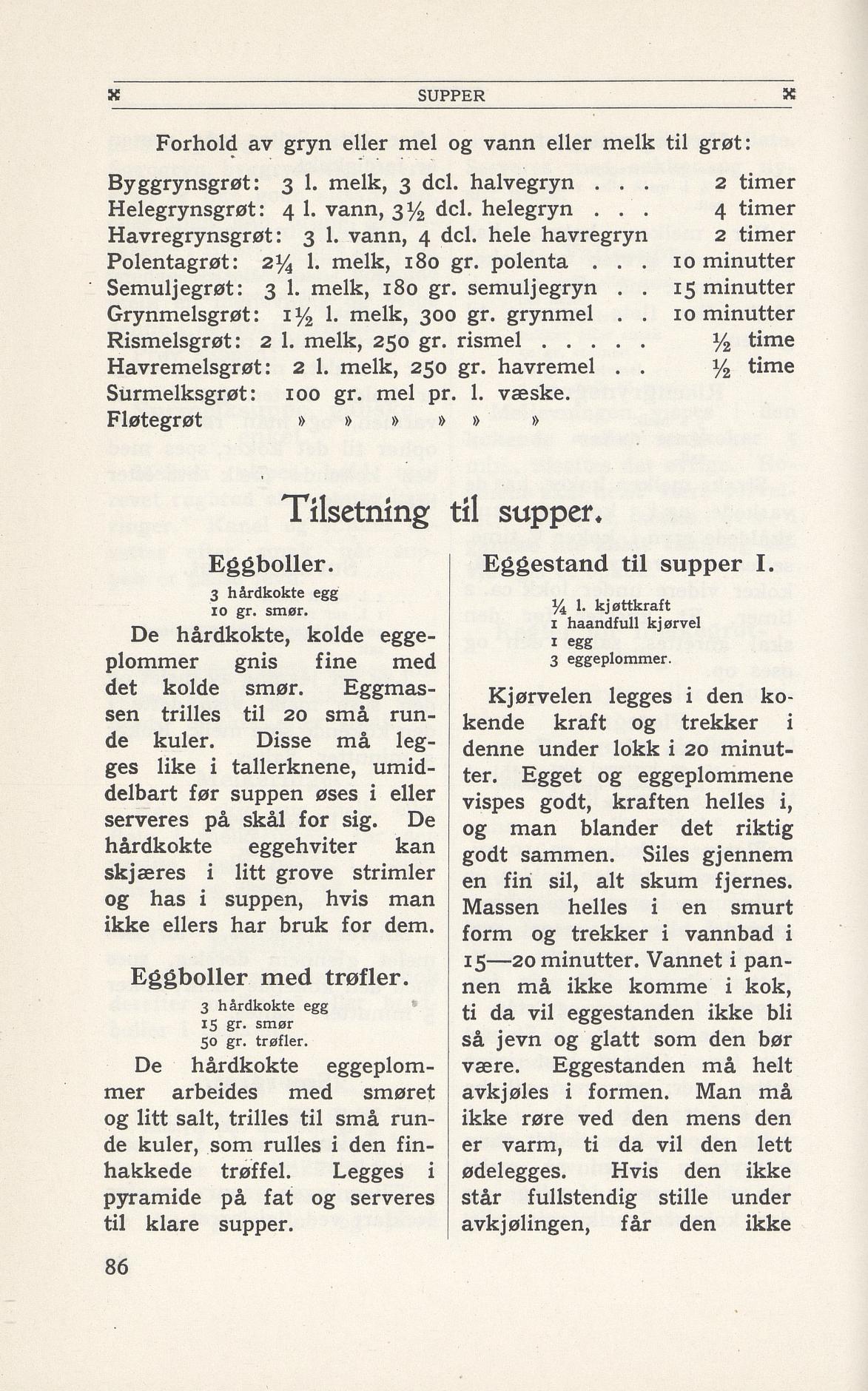
1914 (korrekturlest, s. 72)1949 (korrekturlest, s. 86)~40% av teksten endretfjernetlagt til
¾ l. kjøttkraft 1 haandfuld haandfull kjørvel 1 egg 3 eggeblommer ¼ l. kjøtkraft salt pepper. eggeplommer. Kjørvelen lægges legges i den kokende kraft og trækker trekker i denne under lok lokk i 20 minutter. Egget og eggeblommerne eggeplommene vispes godt, kraften heldes helles i, og man blander det rigtig riktig godt sammen. Siles gjennem en fin sil, alt skum fjernes. Massen heldes helles i en smurt form og kokes trekker i vandbad vannbad i 15—20 minutter. Vandet Vannet i panden maa pannen må ikke komme ikok, i kok, ti da vil eggestanden ikke bli saa jevn og glat glatt som den bør være. Eggestanden maa helt avkjøles i formen. Man maa ikke røre ved den, den mens den er varm, ti da vil den let ødelægges. lett ødelegges. Hvis den ikke staar fuldstændig står fullstendig stille under avkjølingen, faar får den ikke den fornødne fasthet. Hvælves, naar Hvelves når den er kold; bank let paa formen, lett på formen til eggemassen eggmassen løsner, og skjær denne med en almindelig grønsakekniv grønnsakskniv eller stik stikk den ut med utstikkerjern. utstikker jern. NB. Kjørvelen kan sløifes, om man ikke har den.
Community interpretations

Be the first to share your own version.

See interpretations

Frequently asked questions

What is egg custard, and what is it used for?
It is a firm set egg mixture cooked in a water bath, which is cut into cubes or shapes and used as a garnish in clear soups. The recipe is from Henriette Schønberg Erken's "Stor kokebok" (1914), p. 72.
Which ingredients are needed?
1 handful of chervil, 1 egg, 3 egg yolks, ¼ liter of meat stock, salt and pepper. The chervil steeps for 20 minutes in the boiling stock, covered.
Why must the water in the water bath not boil?
Then the custard will not be even and smooth. It is cooked 15–20 minutes in a water bath at a temperature below the boiling point.
How do I get the custard firm and whole?
Let it cool completely in the mold and stand entirely undisturbed – if you touch it while it is warm, it is easily ruined, and disturbance during cooling gives poor firmness. Turn it out only once it is cold.

Related recipes

More dishes in the same category from the archive

Read also

Kommentarer

Ingen kommentarer ennå. Bli den første til å dele!