Skip to content

Soft Soap

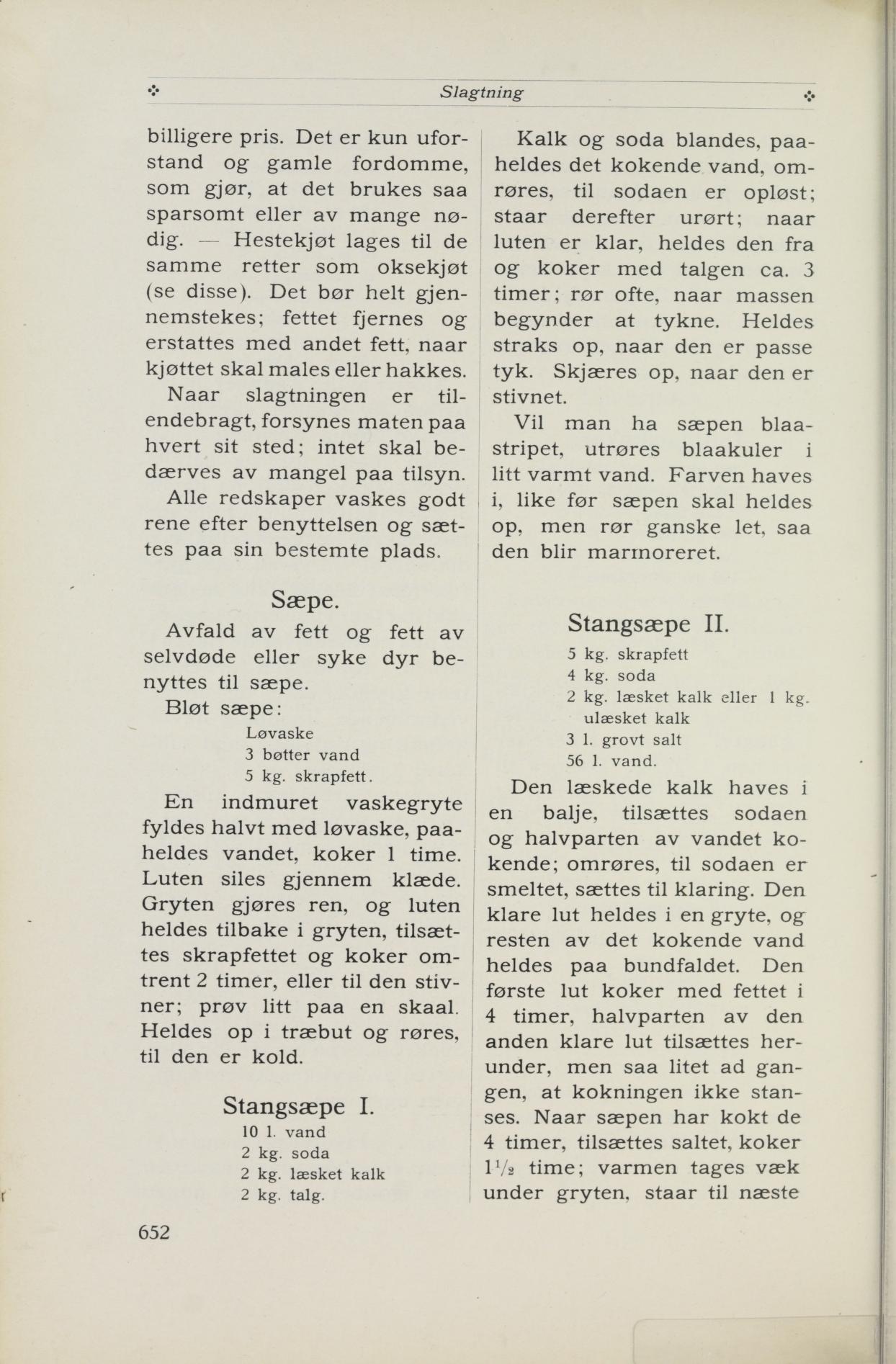
Erken's recipe for soft soap boiled from lye of hardwood ash and 5 kg scrap fat from the slaughtering; the lye is boiled 1 hour, strained, and boiled 2 hours with the fat before being stirred cold in a wooden tub.

Source: Henriette Schønberg Erken, Stor kokebok, 1914-utg. s. 652 (falt i det fri)

Be the first to rate

About the dish

The end of the slaughtering chapter in Stor kokebok is about using every scrap of waste from the slaughtering. Fat from scraping hides and offal, and fat from animals that had died or fallen ill, was boiled into soap with lye of hardwood ash (potassium carbonate) — an old farm tradition where nothing went to waste.

How to make it

  1. 1

    Boil lye from the ash

    Fill a large (built-in) wash cauldron halfway with hardwood ash. Pour in the water and let it boil for 1 hour. Wear goggles, gloves and ensure good ventilation — the lye is strongly caustic.

  2. 2

    Strain the lye

    Strain the lye through a cloth. Wash the cauldron thoroughly clean and pour the strained lye back into it.

  3. 3

    Boil with the fat

    Add the scrap fat and let it all boil for about 2 hours, or until the mass sets. Test a little on a plate to see if it is done.

  4. 4

    Stir cold

    Pour the soap into a wooden tub or another heat-resistant container and stir until it is completely cold.

Changes from the original

'3 buckets of water' has been estimated at about 30 liters (one bucket ≈ 10 liters). The amount of hardwood ash is given without measure in the original (a half-full wash cauldron) and stands as a free-standing ingredient. The method has been divided into numbered steps and modernized in language; a reminder about protective gear has been added, since lye is strongly caustic.

Time machine – what changed?

Pick two editions and see what Henriette Schønberg Erken added, removed or changed between them.

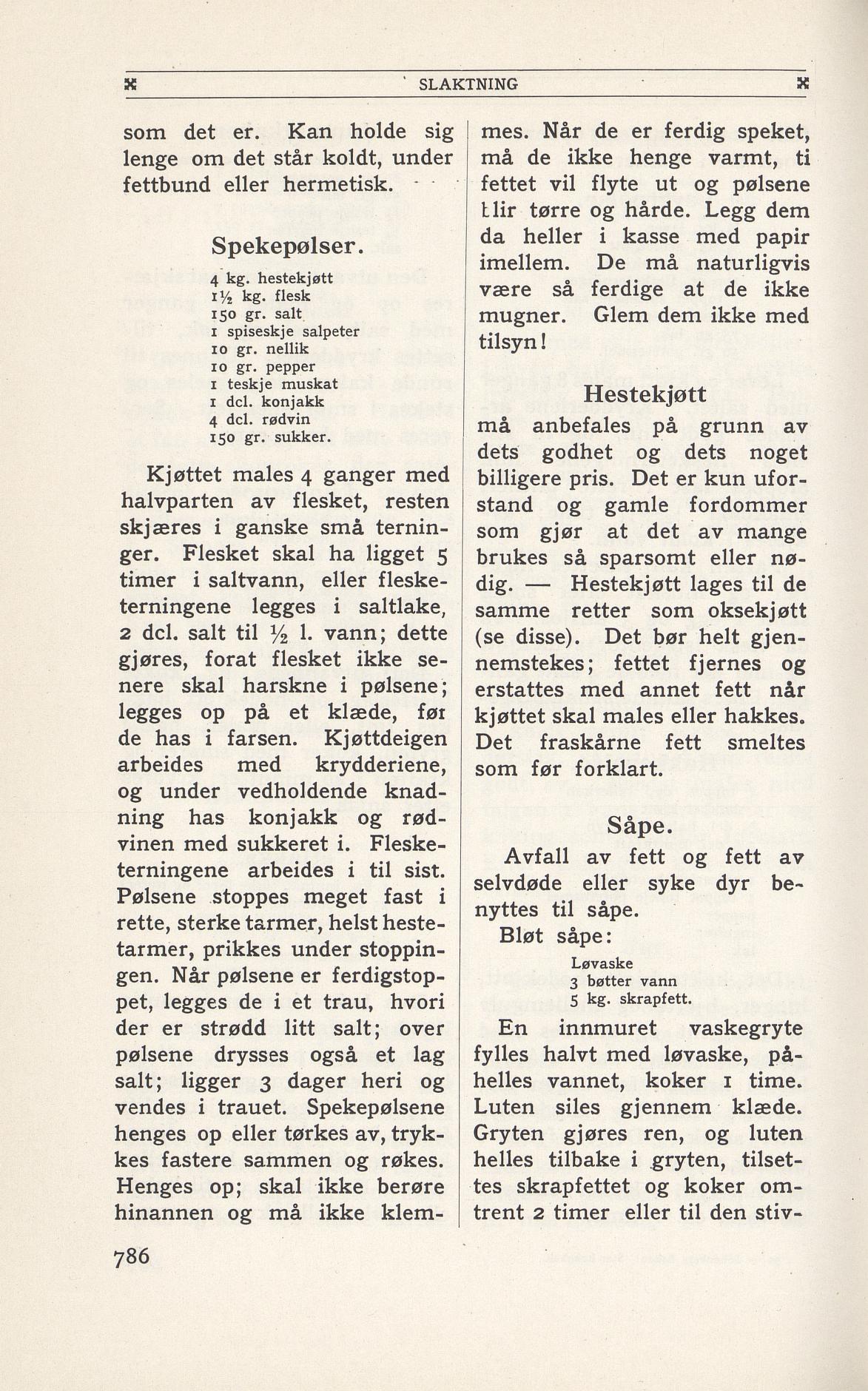
Modernised → 1949 (proofread, p. 786)~89% of the text changedremovedadded
løvaske (nok til å fylle vaskegryten halvfull). 30 l vann (ca. Løvaske 3 bøtter). bøtter vann 5 kg skrapfett (avfallsfett fra slaktingen). Fyll en stor (innmurt) kg. skrapfett. En innmuret vaskegryte fylles halvt opp med løvaske. Hell på vannet og la det koke i løvaske, på­helles vannet, koker 1 time. Bruk vernebriller, hansker og god ventilasjon – luten er sterkt etsende.. Sil luten gjennom et klede. Vask gryten godt ren Luten siles gjennem klæde. Gryten gjøres ren, og hell den silte luten helles tilbake i gryten.. Tilsett gryten, tilset­tes skrapfettet og la alt koke i omtrent koker om­trent 2 timer, timer eller til massen stivner. Prøv den stiv­ner; prøv litt på en tallerken for å se om skål. Helles op i trebutt og røres til den er ferdig.. Hell kold. så lite ad gangen, at kok­ningen ikke stanses. Når såpen opp har kokt de 4 timer, tilsettes saltet, koker 1½ time; varmen tas vekk under gryten, står til næste dag, såpen skjæres forsiktig fra, has tilbake i et trekar eller en annen varmefast beholder den rengjorte gryte og rør til tilsettes den siste halvpart av luten, koker 1 time. Helles i flate kar for å stivne, opskjæres i stykker og tørres. Skiller såpen sig efter annen gangs koking, tilsettes litt mere soda. Ingen lut må has i efterat saltet er helt kald. kommet i. Utmerket god såpe til rengjøring og til klæsvask.

Note on Modernised

«3 bøtter vand» er anslått til ca. 30 liter (en bøtte ≈ 10 liter). Mengden løvaske er oppgitt uten mål i originalen (halvfull vaskegryte) og står som frittstående ingrediens. Fremgangsmåten er delt i nummererte trinn og modernisert språklig; det er lagt til påminnelse om verneutstyr, da lut er sterkt etsende.

Community interpretations

Be the first to share your own version.

See interpretations →

Frequently asked questions

What is this soft soap made of?
Just three things: hardwood ash (ash of deciduous wood), 3 buckets of water and 5 kg scrap fat — that is, leftover fat from the slaughtering. The ash is boiled with the water into lye, and the lye is boiled further with the fat.
How long does the boiling take?
First the ash and water boil for 1 hour. Then the lye is strained and boiled with the scrap fat for about 2 hours, or until the mass sets.
How do I know the soap is done?
Take a little of the mass on a dish and test whether it sets. When it does, pour the soap into a wooden tub and stir until it is completely cold.
Why must the lye be strained and the cauldron washed?
The lye is strained through a cloth to remove the ash residue, and the cauldron is cleaned before the lye is poured back, so there will be no ash in the finished soap.

Equipment for this dish

Advertisement

We may earn a commission if you buy through these links. It does not affect the price.

Related recipes

More dishes in the same category from the archive

Read also

Kommentarer

Ingen kommentarer ennå. Bli den første til å dele!