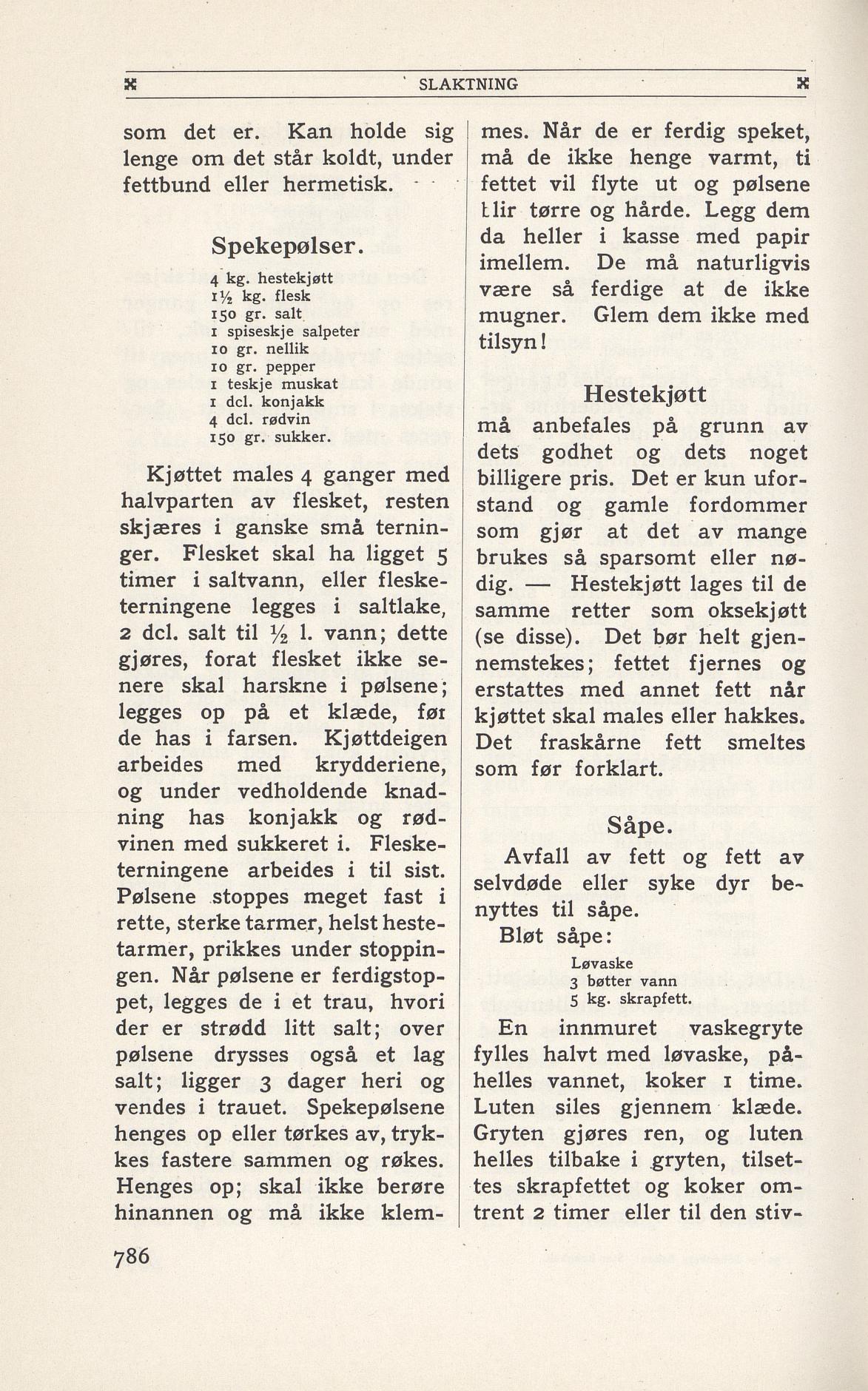
Original 1914 recipe
Verbatim from the first edition of the Big Cookbook.
Erken's recipe for soft soap boiled from lye of hardwood ash and 5 kg scrap fat from the slaughtering; the lye is boiled 1 hour, strained, and boiled 2 hours with the fat before being stirred cold in a wooden tub.
Source: Henriette Schønberg Erken, Stor kokebok, 1914-utg. s. 652 (falt i det fri)
The end of the slaughtering chapter in Stor kokebok is about using every scrap of waste from the slaughtering. Fat from scraping hides and offal, and fat from animals that had died or fallen ill, was boiled into soap with lye of hardwood ash (potassium carbonate) — an old farm tradition where nothing went to waste.
Boil lye from the ash
Fill a large (built-in) wash cauldron halfway with hardwood ash. Pour in the water and let it boil for 1 hour. Wear goggles, gloves and ensure good ventilation — the lye is strongly caustic.
Strain the lye
Strain the lye through a cloth. Wash the cauldron thoroughly clean and pour the strained lye back into it.
Boil with the fat
Add the scrap fat and let it all boil for about 2 hours, or until the mass sets. Test a little on a plate to see if it is done.
Stir cold
Pour the soap into a wooden tub or another heat-resistant container and stir until it is completely cold.
'3 buckets of water' has been estimated at about 30 liters (one bucket ≈ 10 liters). The amount of hardwood ash is given without measure in the original (a half-full wash cauldron) and stands as a free-standing ingredient. The method has been divided into numbered steps and modernized in language; a reminder about protective gear has been added, since lye is strongly caustic.
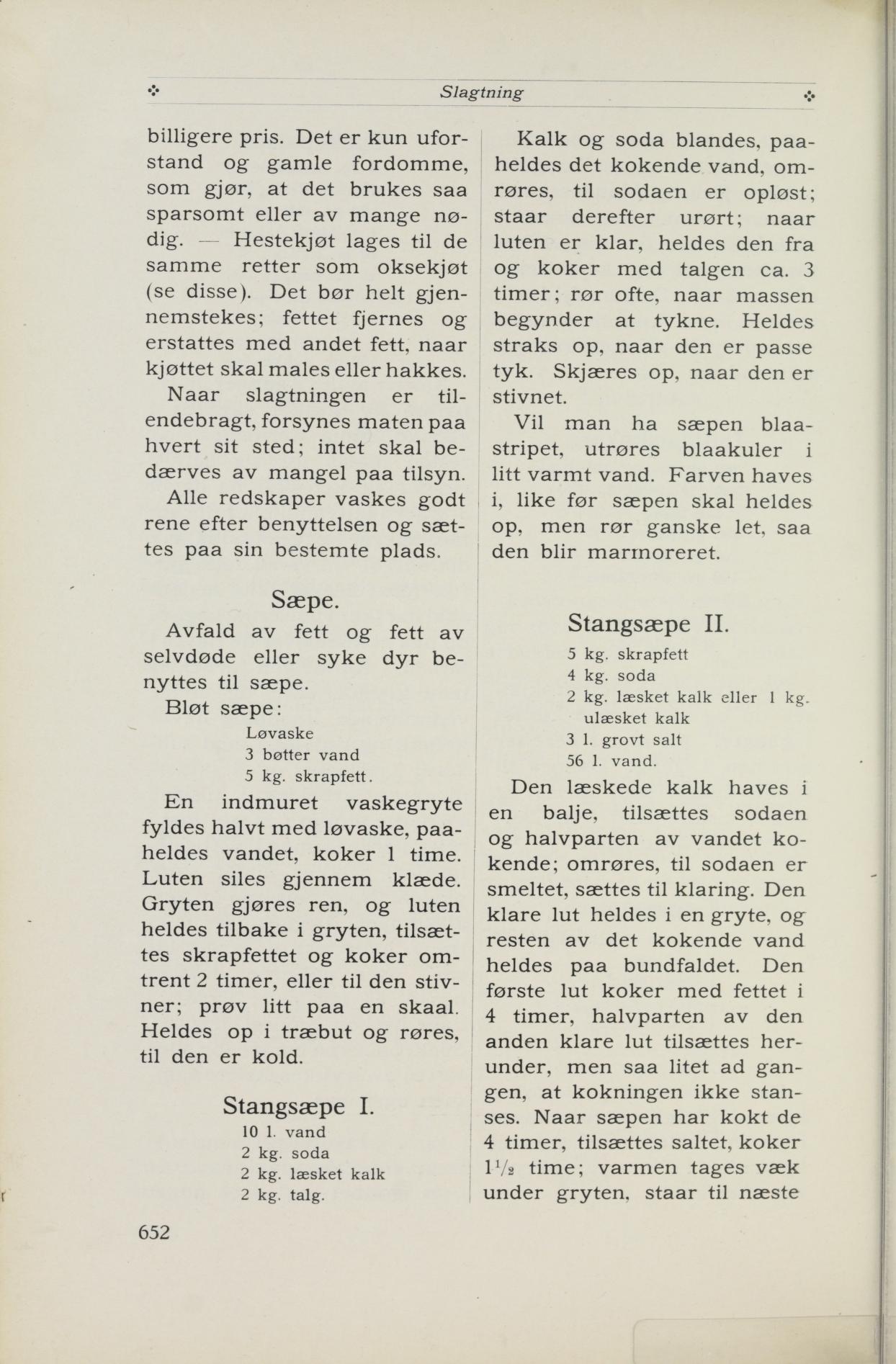
Original 1914 recipe
Verbatim from the first edition of the Big Cookbook.

Revised 1949 recipe
From the revised edition of the Big Cookbook.

Be the first to share your own version.
More dishes in the same category from the archive
Ingen kommentarer ennå. Bli den første til å dele!