Skip to content

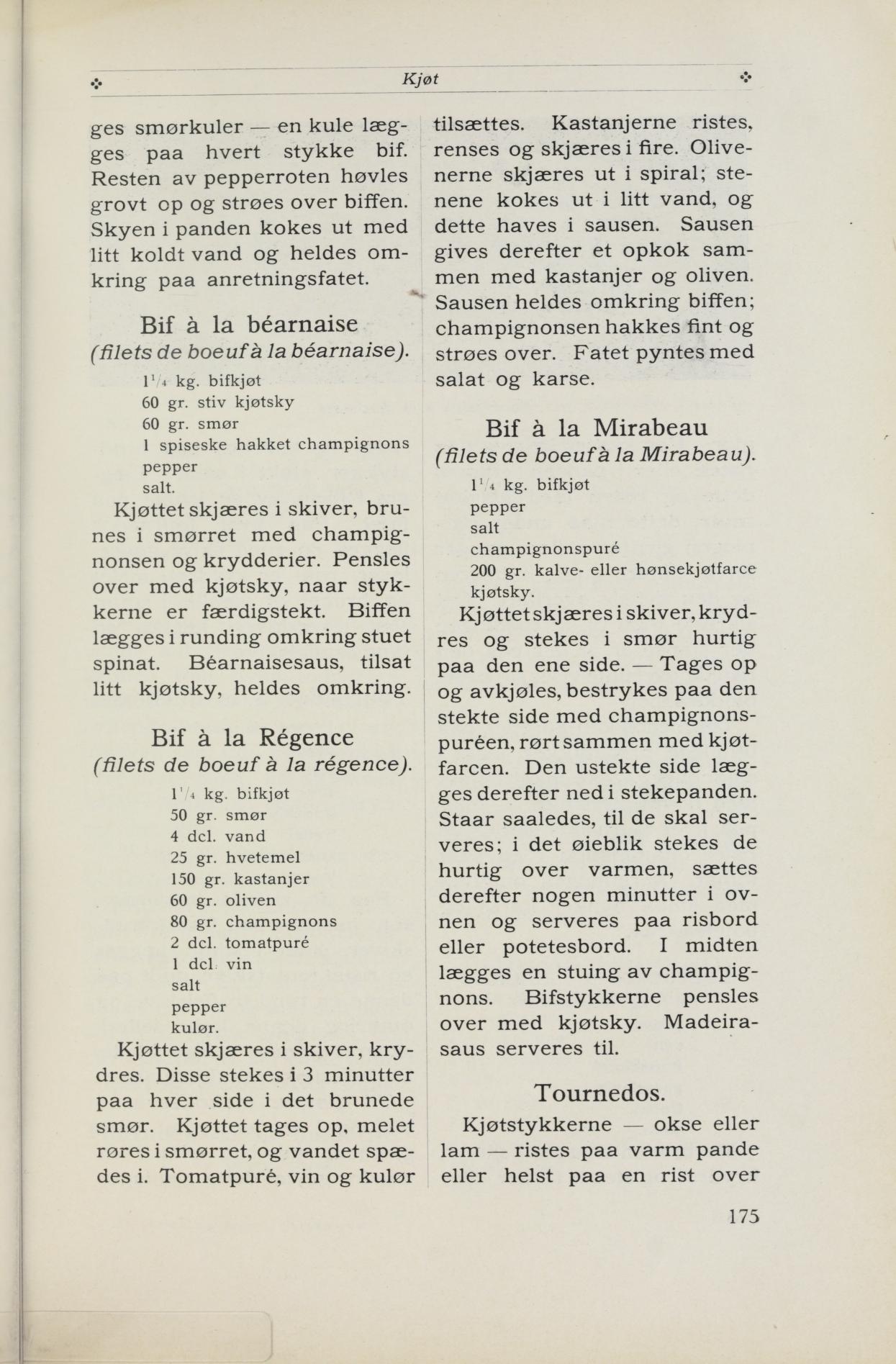
Tournedos

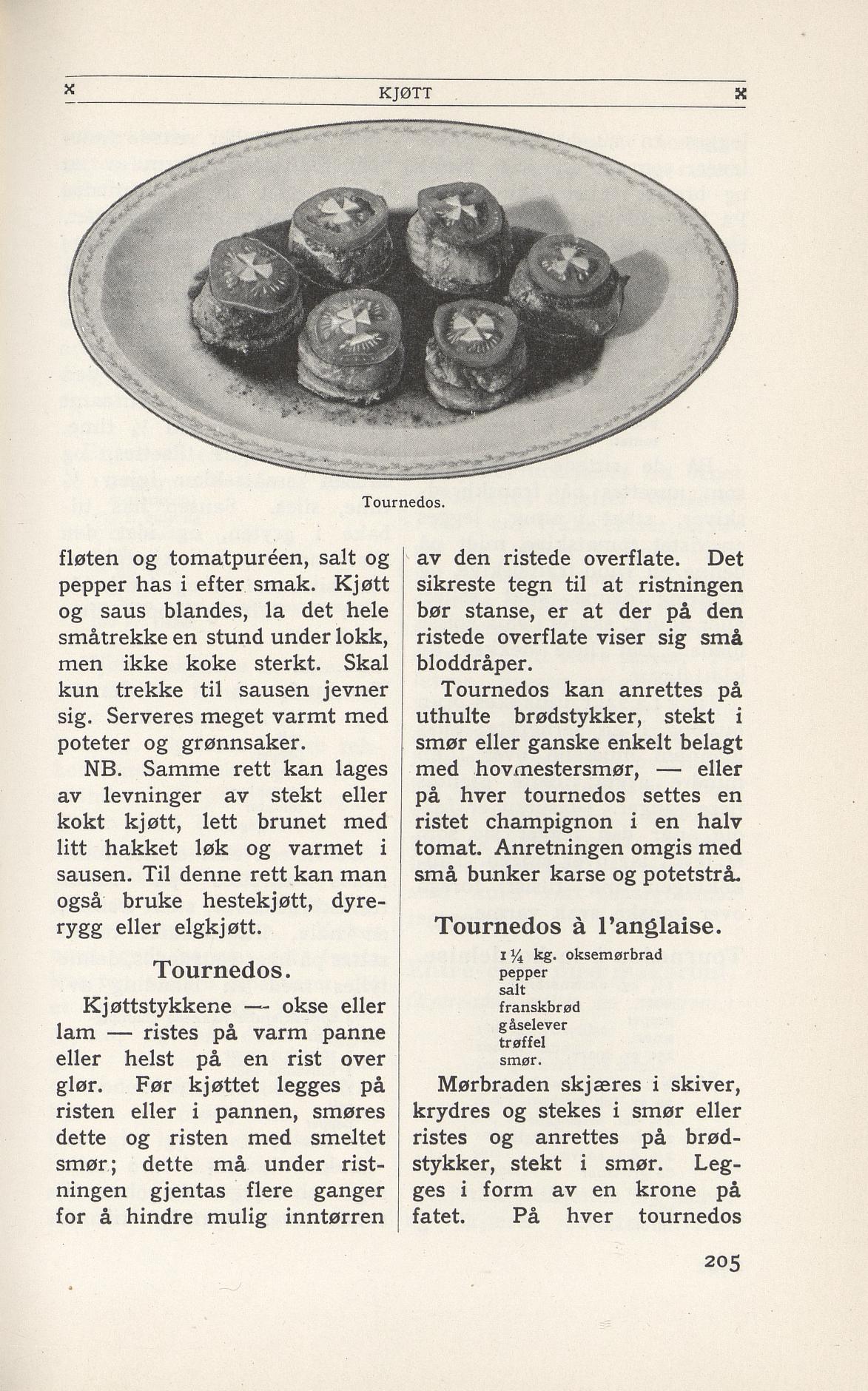
Erken 1914: basic recipe for tournedos of beef or lamb seared in a pan or on a rack over embers, brushed several times with melted butter; done when small drops of blood appear. Arranged on hollowed-out bread pieces fried in butter, with maître d'hôtel butter or a sautéed mushroom in half a tomato, garnished with cress and potato straws.

Source: Henriette Schønberg Erken, Stor kokebok, 1914-utg. s. 175 (falt i det fri)

Be the first to rate

About the dish

The basic recipe for tournedos in the meat chapter of "Stor kokebok" (1914), which introduces a series of variations. Erken stresses the old rule that small drops of blood on the surface show when the meat is done — the era's substitute for a meat thermometer.

How to make it

  1. 1

    Prepare the cooking surface

    Sear the pieces of meat in a hot pan, or preferably on a rack over embers. Brush both the meat and the rack with melted butter before placing the meat on.

  2. 2

    Brush along the way

    Repeat the brushing with melted butter several times during the searing, so that the seared surface does not dry out.

  3. 3

    Judge the cooking time

    The surest sign that the searing should stop is that small drops of blood appear on the seared surface.

  4. 4

    Plating

    Arrange the tournedos on hollowed-out bread pieces fried in butter, or simply place maître d'hôtel butter on each. Alternatively, set a sautéed mushroom in half a tomato on each tournedos.

  5. 5

    Garnish

    Surround the arrangement with small heaps of cress and potato straws.

Changes from the original

No ingredient list exists in the original; it has been set up from the text with guideline quantities. Cooking over embers is described with a grill pan or grill as a modern alternative, and the method is divided into numbered steps. "Potetesstraa" is modernized to potato straws (thin, deep-fried potato strips).

In stores now

Clean, minimally processed groceries matched to the ingredients — approximate prices.

Product data and prices via Kassalapp. Prices are updated daily and may vary.

Time machine – what changed?

Pick two editions and see what Henriette Schønberg Erken added, removed or changed between them.

1949 (proofread, p. 205) → 1914 (proofread, p. 175)~50% of the text changedremovedadded
Kjøttstykkene Kjøtstykkerne — okse eller lam — ristes på paa varm panne pande eller helst på paa en rist over glør. Før kjøttet legges på lægges paa risten eller i pannen, panden, smøres dette og risten med smeltet smør; dette må maa under ristningen gjentas gjentages flere ganger for å at hindre mulig inntørring indtørren av den ristede overflate. Det sikreste tegn til til, at ristningen bør stanse, er er, at der på paa den ristede overflate viser sig små bloddråper. smaa bloddraaper. Tournedos kan anrettes på uthulte paa uthulede brødstykker, stekt i smør eller ganske enkelt belagt med hovmestersmør, — eller på paa hver tournedos settes sættes en ristet champignon i en halv tomat. Anretningen omgis omgives med små smaa bunker karse og potetstrå. NB. Samme rett kan lages av levninger av stekt eller kokt kjøtt, lett brunet med litt hakket løk og varmet i sausen. Til denne rett kan man også bruke hestekjøtt, dyre rygg eller elgkjøtt. potetesstraa.

Community interpretations

Be the first to share your own version.

See interpretations →

Frequently asked questions

How do I know when the tournedos are done searing?
The surest sign is that small drops of blood appear on the seared surface. That is when the searing should stop.
What meat is used, and how is it cooked?
Pieces of beef or lamb. They are seared in a hot pan, but preferably on a rack over embers. Both the meat and the rack are brushed with melted butter before searing, and this is repeated several times along the way so the surface does not dry out.
How are tournedos plated according to the recipe?
On hollowed-out bread pieces fried in butter, or simply with maître d'hôtel butter on top. Alternatively, a sautéed mushroom is set in half a tomato on each tournedos. The arrangement is surrounded with small heaps of cress and potato straws.
Where does the recipe come from?
From Henriette Schønberg Erken's "Stor kokebok" (1914), page 175. Given for 4 servings with a total time of about 35 minutes.

Related recipes

More dishes in the same category from the archive

Read also

Kommentarer

Ingen kommentarer ennå. Bli den første til å dele!