Skip to content

Roast Fresh Beef Tongue

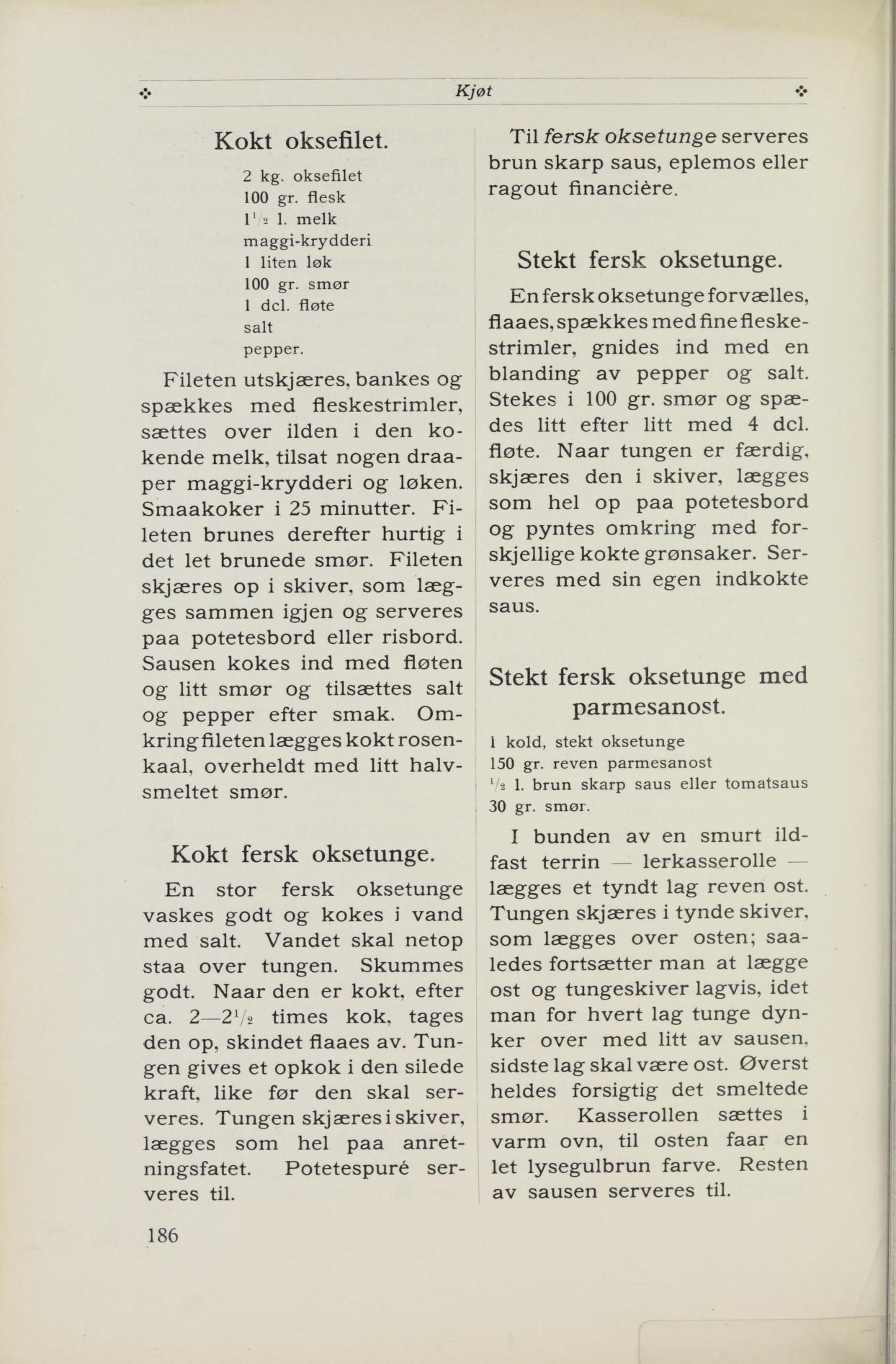
Fresh beef tongue is blanched, skinned, larded with pork, seasoned, and roasted in butter while basted with 4 dl of cream. Sliced, arranged whole on mashed potatoes with boiled vegetables and its own reduced sauce.

Source: Henriette Schønberg Erken, Stor kokebok, 1914-utg. s. 186 (falt i det fri)

Be the first to rate

About the dish

Beef tongue was a highly esteemed ingredient in Erken's day and appears in many variations in "Stor kokebok." Here it is roasted fresh, larded with pork, and arranged "whole" on mashed potatoes – that is, sliced and reassembled back into the shape of the tongue.

How to make it

  1. 1

    Blanch the tongue

    Blanch the fresh beef tongue in boiling water and peel off the skin.

  2. 2

    Lard and season

    Lard the tongue with fine strips of pork and rub it with a mixture of salt and pepper.

  3. 3

    Roast

    Roast the tongue in butter and baste little by little with the cream until it is tender, about 2–2½ hours.

  4. 4

    Plating

    Slice the tongue, arrange it whole on mashed potatoes, and garnish around it with various boiled vegetables. Serve the reduced sauce alongside.

Changes from the original

Amounts for the pork and vegetables are estimated, as the original ingredient list is incomplete on the page. Measures are converted to modern units (dl/g). "Blanching" is explained as a brief boil in boiling water.

In stores now

Clean, minimally processed groceries matched to the ingredients — approximate prices.

Product data and prices via Kassalapp. Prices are updated daily and may vary.

Time machine – what changed?

Pick two editions and see what Henriette Schønberg Erken added, removed or changed between them.

1914 (proofread, p. 186) → Modernised~80% of the text changedremovedadded
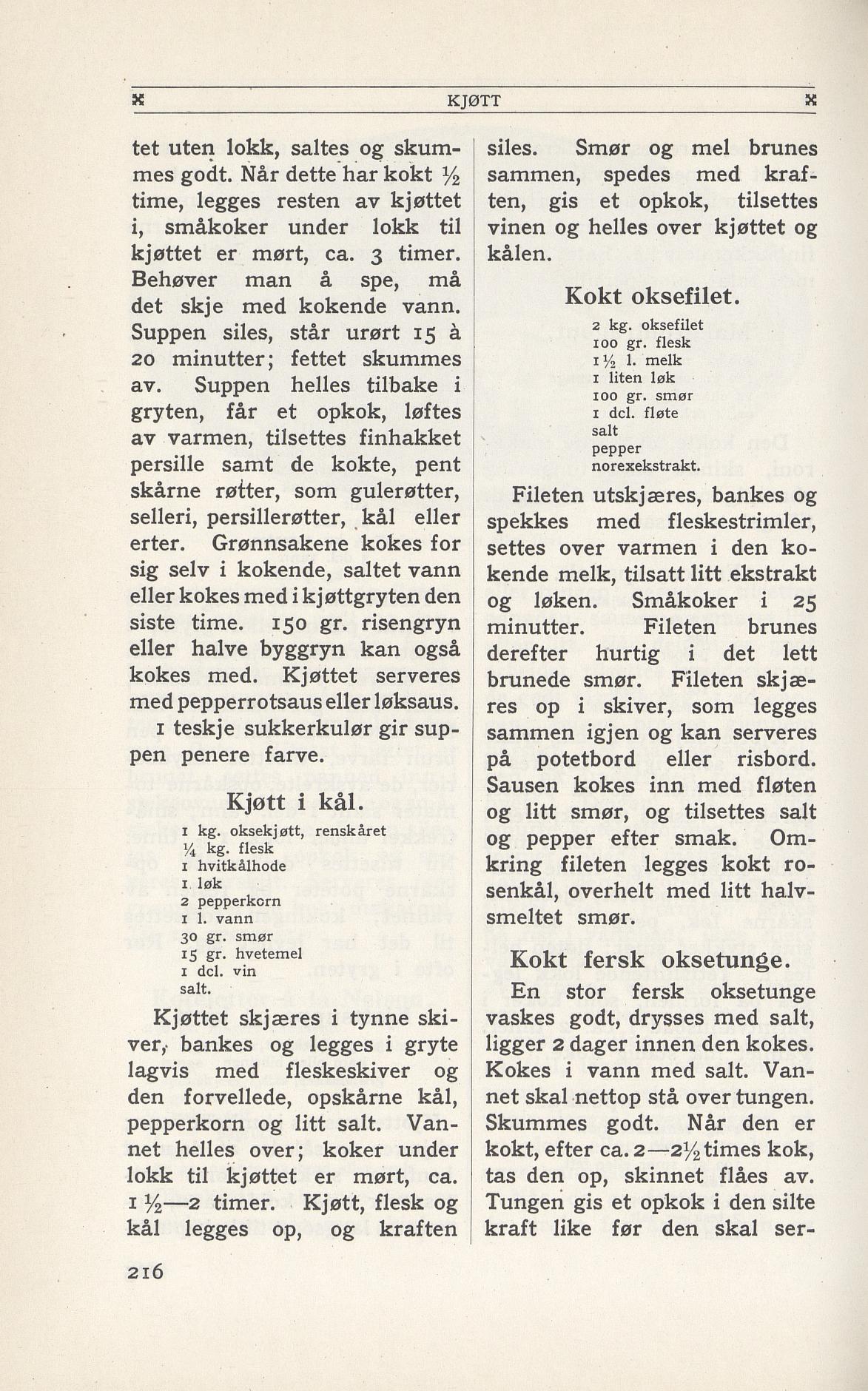
1 stk fersk oksetunge (ca. 1,5 kg). 100 gr. flesk g ferskt sideflesk (i fine strimler til spekking). 100 gr. g smør (til steking). 4 del. fløte dl fløte. salt (etter smak). pepper forskjellige kokte grønsaker. En fersk oksetunge forvælles, flaaes, spækkes (etter smak). 800 g blandede grønnsaker (kokte, til pynt). 1 kg poteter (til potetstappe). Forvell den ferske oksetungen i kokende vann og flå av skinnet.. Spekk tungen med fine fleskestrimler, gnides ind fleskestrimler og gni den inn med en blanding av pepper salt og salt. Stekes pepper.. Stek tungen i 100 gr. smør og spædes spe litt efter om litt med 4 del. fløte. Naar tungen er færdig, skjæres fløten til den er mør, ca. 2–2½ time.. Skjær tungen i skiver, lægges legg den opp som hel op paa potetesbord på potetstappe og pyntes omkring pynt rundt med forskjellige kokte grønsaker. Serveres med sin egen indkokte saus. grønnsaker. Server den innkokte sausen til.
Note on Modernised

Mengder for flesk og grønnsaker er anslått, da originalens ingrediensliste er ufullstendig på siden. Mål er omregnet til moderne enheter (dl/g). «Forvælles» er forklart som forvelling i kokende vann.

Community interpretations

Be the first to share your own version.

See interpretations →

Frequently asked questions

Why should the tongue be blanched?
Blanching (a brief boil) allows the tough outer skin to be peeled off easily. After skinning, the tongue is larded with fine strips of pork and rubbed with salt and pepper.
How long does the dish take?
Around 3 hours in all, including blanching and slow roasting. The tongue is roasted in 100 g of butter and basted little by little with 4 deciliters of cream.
How is it served?
The tongue is sliced, arranged whole on a bed of potatoes, garnished with various boiled vegetables, and served with its own reduced sauce.
Where does the recipe come from?
From Henriette Schønberg Erken's "Stor kokebok" from 1914, page 186. It is intended for 6 servings.

Equipment for this dish

Advertisement

We may earn a commission if you buy through these links. It does not affect the price.

Related recipes

More dishes in the same category from the archive

Read also

Kommentarer

Ingen kommentarer ennå. Bli den første til å dele!