Skip to content

Roast Fresh Beef Tongue with Parmesan

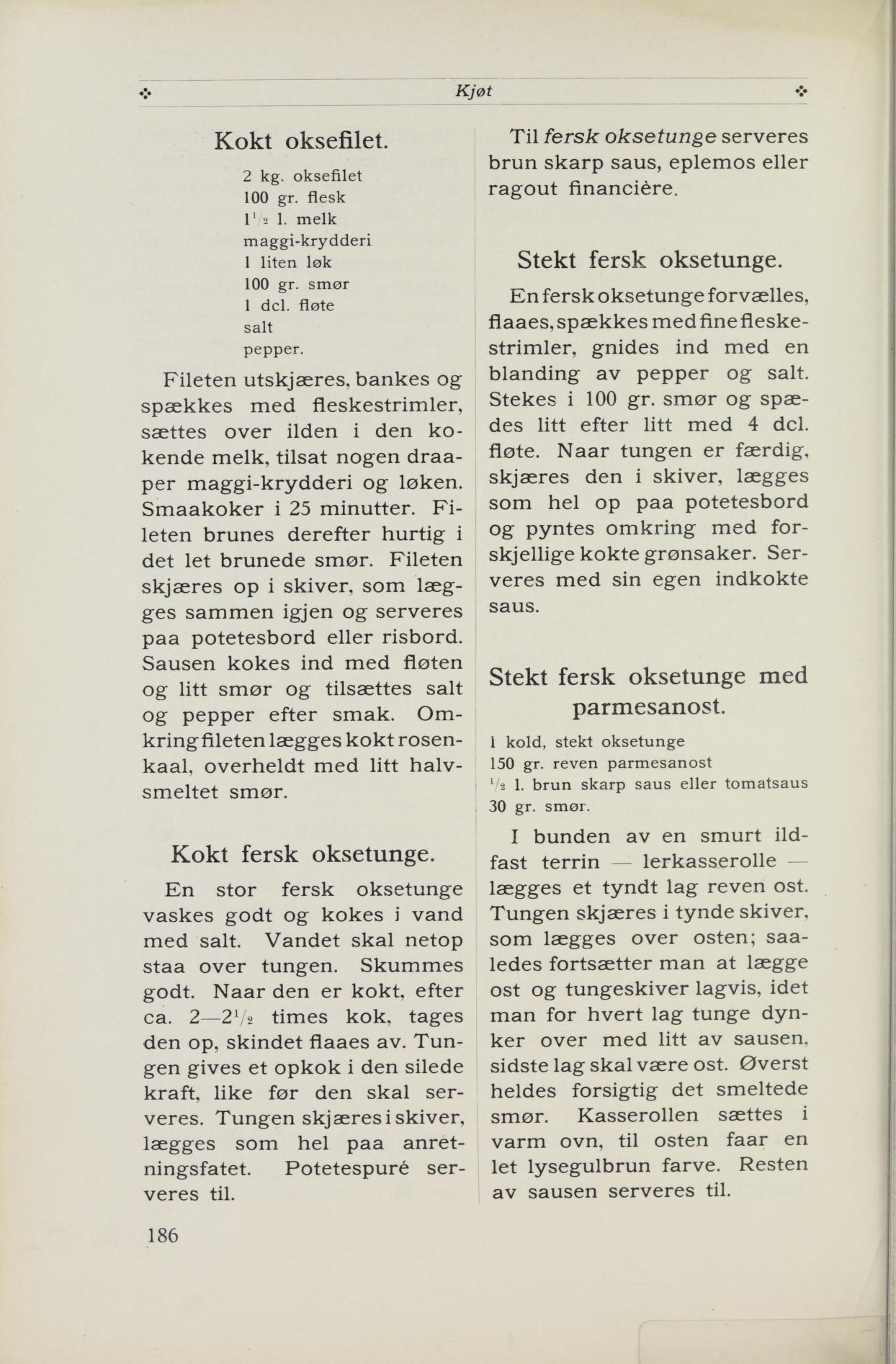
Cold roast beef tongue in thin slices layered with grated Parmesan and a sharp brown sauce or tomato sauce in a baking dish, topped with melted butter and gratinated until the cheese is golden.

Source: Henriette Schønberg Erken, Stor kokebok, 1914-utg. s. 186 (falt i det fri)

Be the first to rate

About the dish

A typical leftovers dish from "Stor kokebok": cold roast beef tongue layered with Parmesan and sauce and gratinated in an earthenware dish. Erken was keen that nothing should go to waste, and gratinated "terrines" were an elegant way to use up roasting leftovers.

How to make it

  1. 1

    Prepare the dish

    Grease a baking dish and lay a thin layer of grated Parmesan in the bottom.

  2. 2

    Layer

    Cut the tongue into thin slices. Layer the tongue slices and cheese alternately, moistening each layer of tongue with a little sauce. The top layer should be cheese.

  3. 3

    Gratinate

    Carefully pour the melted butter over the top. Place the dish in a hot oven (about 200 °C (390 °F)) until the cheese is light golden brown, 20–25 minutes.

  4. 4

    Serve

    Serve the rest of the sauce alongside.

Changes from the original

Measures are converted to modern units (dl/g). "Clay casserole" is given as a baking dish. Oven temperature is estimated, as the original only says "hot oven."

In stores now

Clean, minimally processed groceries matched to the ingredients — approximate prices.

Product data and prices via Kassalapp. Prices are updated daily and may vary.

Time machine – what changed?

Pick two editions and see what Henriette Schønberg Erken added, removed or changed between them.

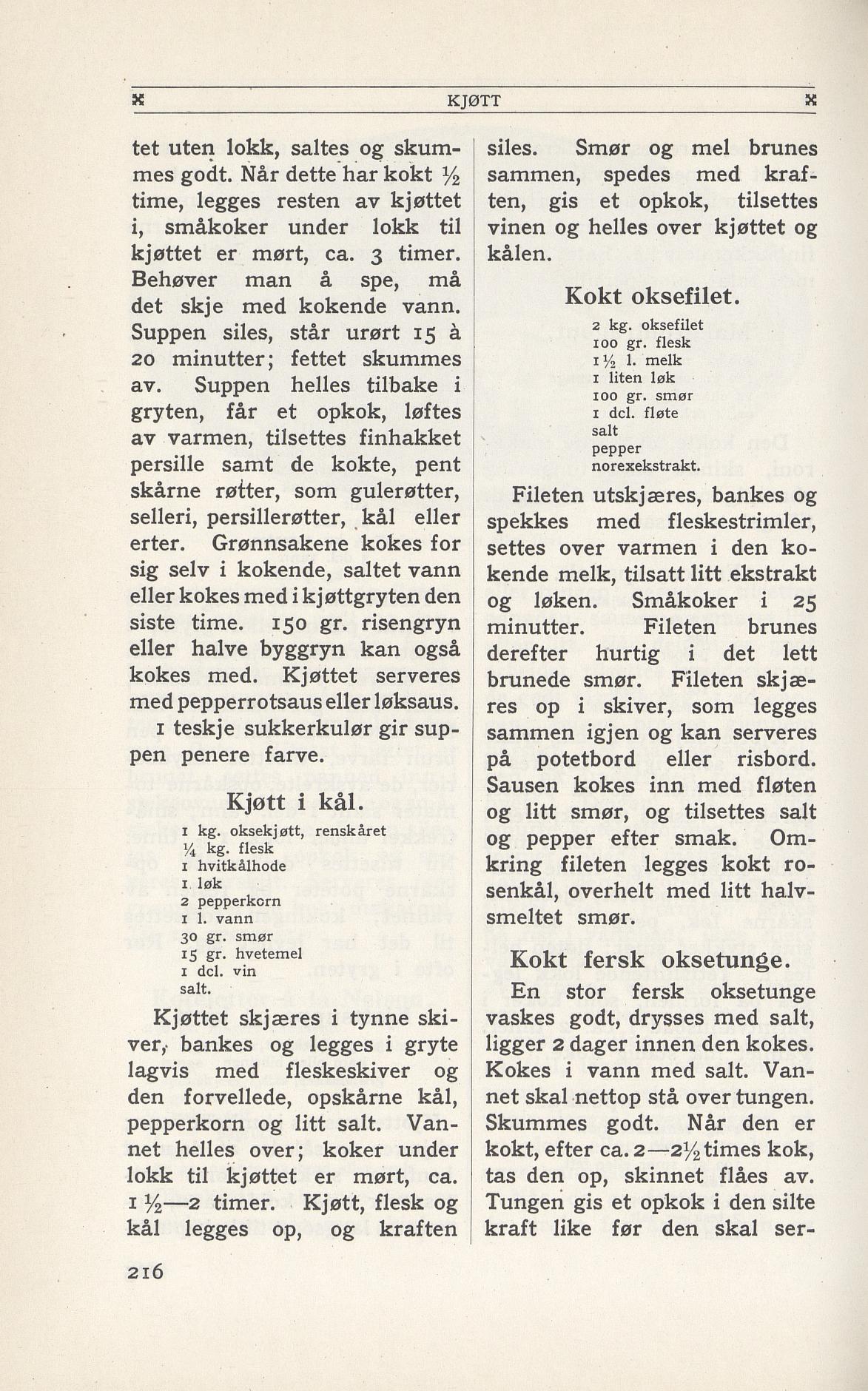
Modernised → 1949 (proofread, p. 216)~76% of the text changedremovedadded
1 stk kald, kold, stekt oksetunge. oksetunge 150 g revet parmesan. 5 dl gr. reven skarp ost 1/2 1. brun skarp saus eller tomatsaus. tomatsaus 30 g smør (smeltet). Smør gr. smør. I bunnen av en ildfast form og legg smurt ildfastterrin — lerkasserolle — legges et tynt lag revet parmesan i bunnen.. Skjær tungen reven ost. Tungen skjæres i tynne skiver. Legg tungeskiver og skiver, som legges over osten; således fortsetter man å legge ost lagvis, og dynk tungeskiver lagvis, idet man for hvert lag tunge dynker over med litt saus. Øverste av sausen, siste lag skal være ost.. Hell ost. Øverst helles forsiktig det smeltede smøret over. Sett formen smør. Kasserollen settes i varm ovn (ca. 200 °C) ovn, til osten er lyst gyllenbrun, 20–25 minutter.. Server resten får en lett lysegulbrun farve. Resten av sausen serveres til.
Note on Modernised

Mål er omregnet til moderne enheter (dl/g). «Lerkasserolle» er angitt som ildfast form. Ovnstemperatur er anslått, da originalen bare sier «varm ovn».

Community interpretations

Be the first to share your own version.

See interpretations →

Frequently asked questions

Can I use leftover boiled or roasted tongue?
Yes, this recipe is made precisely for a cold, ready-roasted beef tongue. The tongue is cut into thin slices and layered with grated Parmesan in a greased baking dish.
How do I build the layers?
Begin with a thin layer of grated cheese in the bottom, then tongue slices moistened with a little sauce, and continue alternating. The top layer should be cheese, and finally 30 g of melted butter is carefully poured over.
How long should the dish stay in the oven?
It is placed in a hot oven until the cheese takes on a light yellow-brown color – the whole dish takes around 45 minutes in total. The rest of the sharp brown sauce or tomato sauce is served on the side.
Where does the recipe come from?
From Henriette Schønberg Erken's "Stor kokebok" (1914), page 186. It is intended for 4 servings.

Equipment for this dish

Advertisement

We may earn a commission if you buy through these links. It does not affect the price.

Related recipes

More dishes in the same category from the archive

Read also

Kommentarer

Ingen kommentarer ennå. Bli den første til å dele!