Skip to content

Tart Red Currant Juice

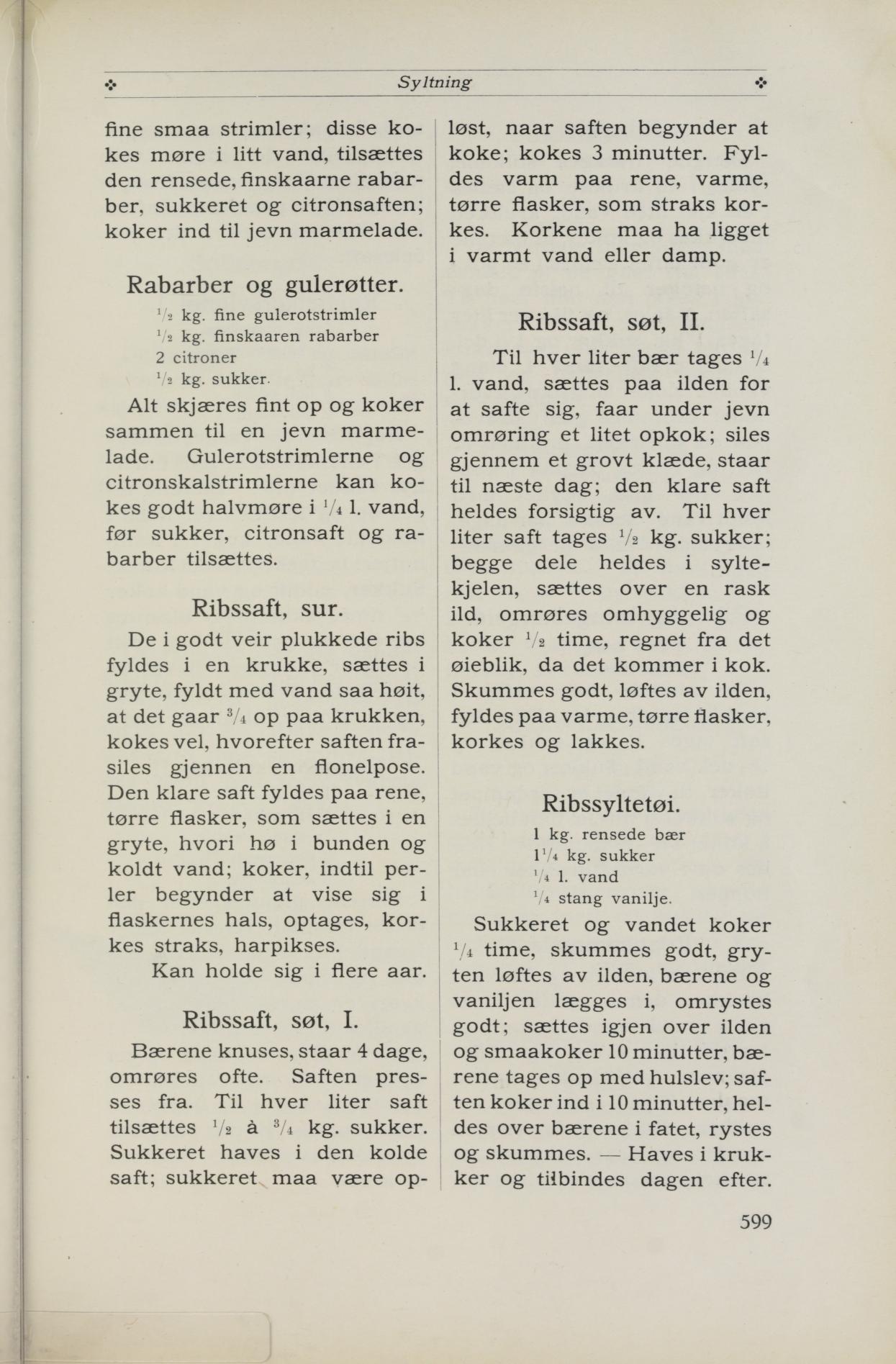
Unsweetened tart red currant juice: the berries are juiced in a jar in a water bath, the juice is strained through a flannel bag, bottled, and sterilized in a water bath until beads form in the bottleneck; keeps for several years.

Source: Henriette Schønberg Erken, Stor kokebok, 1914-utg. s. 599 (falt i det fri)

Be the first to rate

About the dish

Unsweetened, preserved red currant juice from the preserving chapter of "Stor kokebok" (1914). The juice was sterilized in the bottle in a water bath with hay in the bottom of the pot, so the bottles would not crack.

How to make it

  1. 1

    Steam out the juice

    Fill the currants into a jar. Set the jar in a pot with water reaching ¾ of the way up the jar, and let it boil well.

  2. 2

    Strain the juice

    Strain the juice through a flannel bag so it turns completely clear.

  3. 3

    Fill the bottles

    Fill the clear juice into clean, dry bottles.

  4. 4

    Sterilize in a water bath

    Set the bottles in a pot with hay (or a kitchen towel) in the bottom and cold water around them. Boil until beads begin to appear in the bottleneck.

  5. 5

    Cork and store

    Take the bottles out, cork at once, and seal with resin or tight screw caps. The juice can keep for several years.

Changes from the original

Measurements and method are kept; resin-sealing can today be replaced with tight screw caps. The hay in the bottom of the pot can be swapped for a kitchen towel. The steps are written in modern language.

Time machine – what changed?

Pick two editions and see what Henriette Schønberg Erken added, removed or changed between them.

1914 (proofread, p. 599) → Modernised~85% of the text changedremovedadded
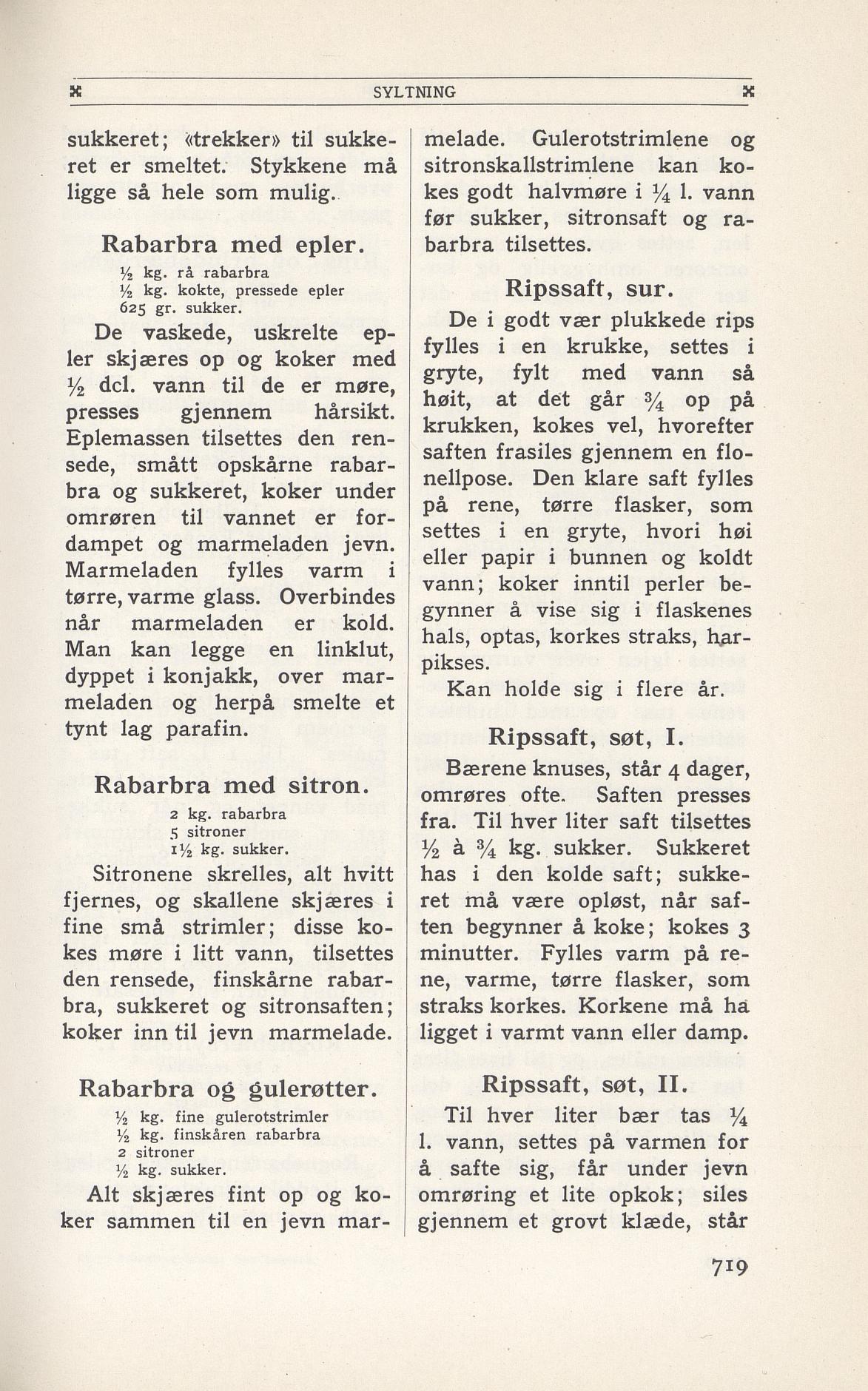
Ribs, plukket i godt veir De 4 kg rips (plukket i godt veir plukkede ribs fyldes vær). Fyll ripsen i en krukke, sættes krukke. Sett krukken i gryte, fyldt en gryte med vand saa høit, at det gaar vann som står 3/4 op paa opp på krukken, kokes vel, hvorefter og la det koke godt.. Sil saften frasiles gjennem fra gjennom en flonelpose. Den flanellpose så den blir helt klar.. Fyll den klare saft fyldes paa saften på rene, tørre flasker, som sættes flasker.. Sett flaskene i en gryte, hvori gryte med hø (eller et kjøkkenhåndkle) i bunden bunnen og koldt vand; koker, indtil perler begynder at kaldt vann omkring. Kok til det begynner å vise sig seg perler i flaskernes hals, optages, korkes straks, harpikses. Kan flaskehalsen.. Ta flaskene opp, kork straks og forsegl med harpiks eller tette skrukorker. Saften kan holde sig seg i flere aar. år.

Note on Modernised

Mål og fremgangsmåte er beholdt; harpiksing kan i dag erstattes med tette skrukorker. Høet i bunnen av gryta kan byttes med et kjøkkenhåndkle. Trinnene er skrevet i moderne språk.

Community interpretations

Be the first to share your own version.

See interpretations →

Frequently asked questions

Why should the currants be picked in fine weather?
Berries picked in dry, fine weather contain less rainwater and keep better, so the juice is more durable and concentrated. This is a classic piece of advice from Schønberg Erken (Stor kokebok, 1914).
How is the juice extracted?
The currants are filled into a jar that is set in a pot with water reaching ¾ of the way up the jar. Everything is boiled well, and the juice is then strained through a flannel bag so it turns clear.
How is the juice preserved in the bottle?
The clear juice is filled into clean, dry bottles that are set in a pot with hay in the bottom and cold water. Boil until beads appear in the bottleneck, take the bottles out, cork at once, and seal with resin.
How long does the juice keep?
According to the recipe, the corked and resin-sealed juice can keep for several years. Reckon on about 4 hours of work and boiling in all.

Related recipes

More dishes in the same category from the archive

Read also

Kommentarer

Ingen kommentarer ennå. Bli den første til å dele!