Skip to content

Rosehip Wine

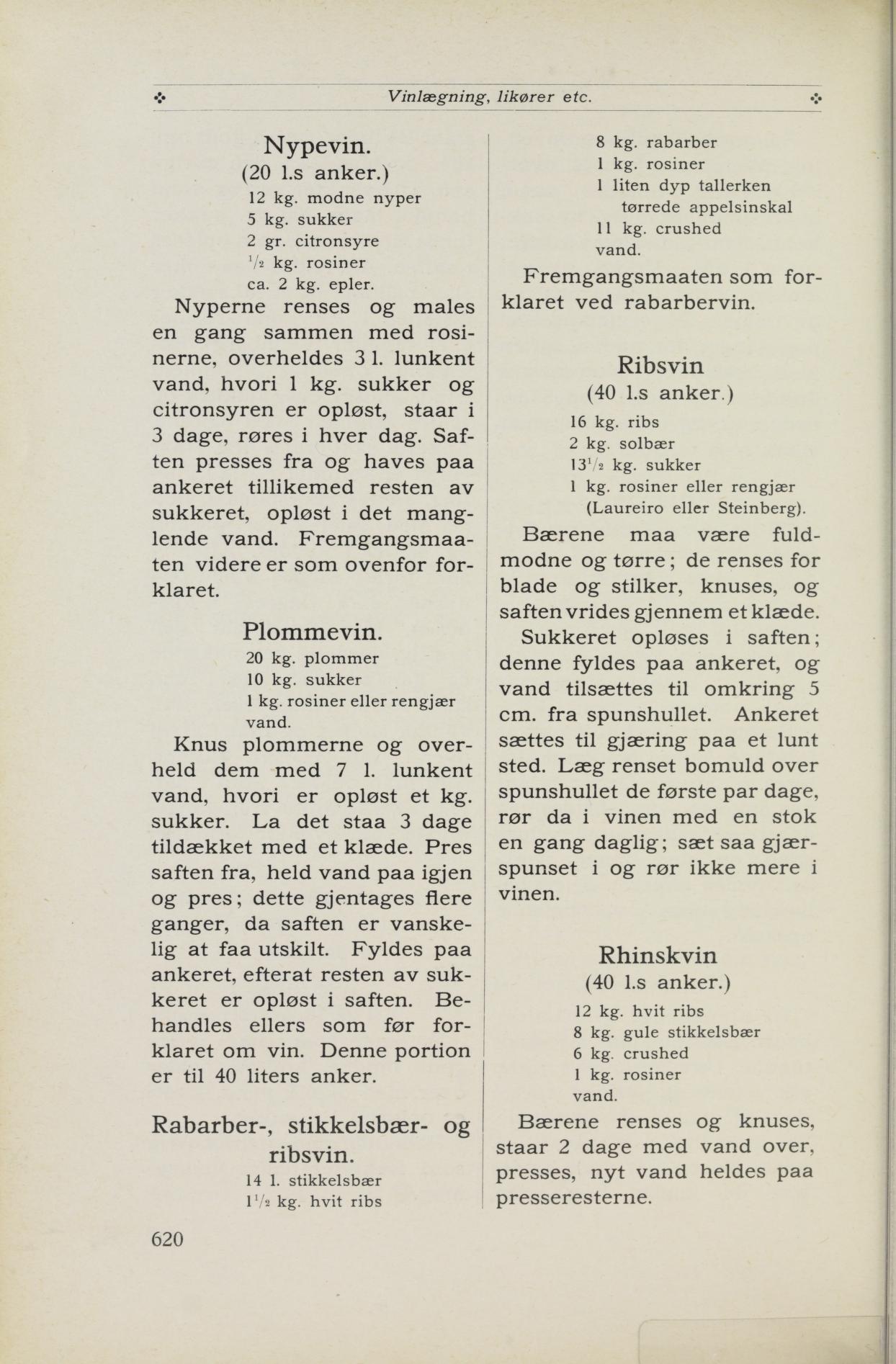
Erken's rosehip wine for a 20-liter cask: 12 kg rosehips are ground with 1.5 kg raisins, steeped 3 days in lukewarm sugar water with citric acid, pressed, and fermented in the cask with a total of 5 kg sugar, apples, and dried orange peel.

Source: Henriette Schønberg Erken, Stor kokebok, 1914-utg. s. 620 (falt i det fri)

Be the first to rate

About the dish

From the chapter "Vinlægning, likører etc." (winemaking, liqueurs, etc.) in Henriette Schønberg Erken's "Stor kokebok" (1914). Homemade rosehip wine in a 20-liter cask; the recipe refers to the general winemaking method explained earlier in the chapter (fermentation in a cask in a warm place, cotton over the bunghole the first days, daily stirring, then a fermentation lock).

How to make it

  1. 1

    Clean and grind the rosehips

    Clean the rosehips and grind them once together with the raisins.

  2. 2

    Place in lukewarm sugar water

    Dissolve 1 kg of the sugar and the citric acid in 3 liters of lukewarm water and pour it over the rosehip and raisin mass. Let it stand covered for 3 days, and stir every day.

  3. 3

    Press the juice

    Press the juice from the mass.

  4. 4

    Fill the cask

    Pour the juice into a 20-liter cask together with the rest of the sugar dissolved in the water that is missing, plus the apples and the dried orange peel. Fill to about 5 cm from the bunghole.

  5. 5

    Fermentation

    Set the cask to ferment in a warm place. Lay cleaned cotton over the bunghole the first couple of days and stir the wine with a stick once daily; then insert the fermentation lock and stir no more.

  6. 6

    Aging

    When fermentation is over, drive the bung in tightly, carry the cask down to the cellar, and let it lie undisturbed until it is racked off clear into a new demijohn or cask.

Changes from the original

The ingredients are listed in modern units (kg, gram, liter) and modern Norwegian spelling. The method is divided into numbered steps, and the general fermentation process (cotton over the bunghole, daily stirring, fermentation lock, aging in the cellar) is written out from the chapter's shared description. The amount of water is not given exactly in the original beyond what fills the cask.

Tidsmaskin – hva endret seg?

Velg to utgaver og se hva Henriette Schønberg Erken la til, fjernet eller endret mellom dem.

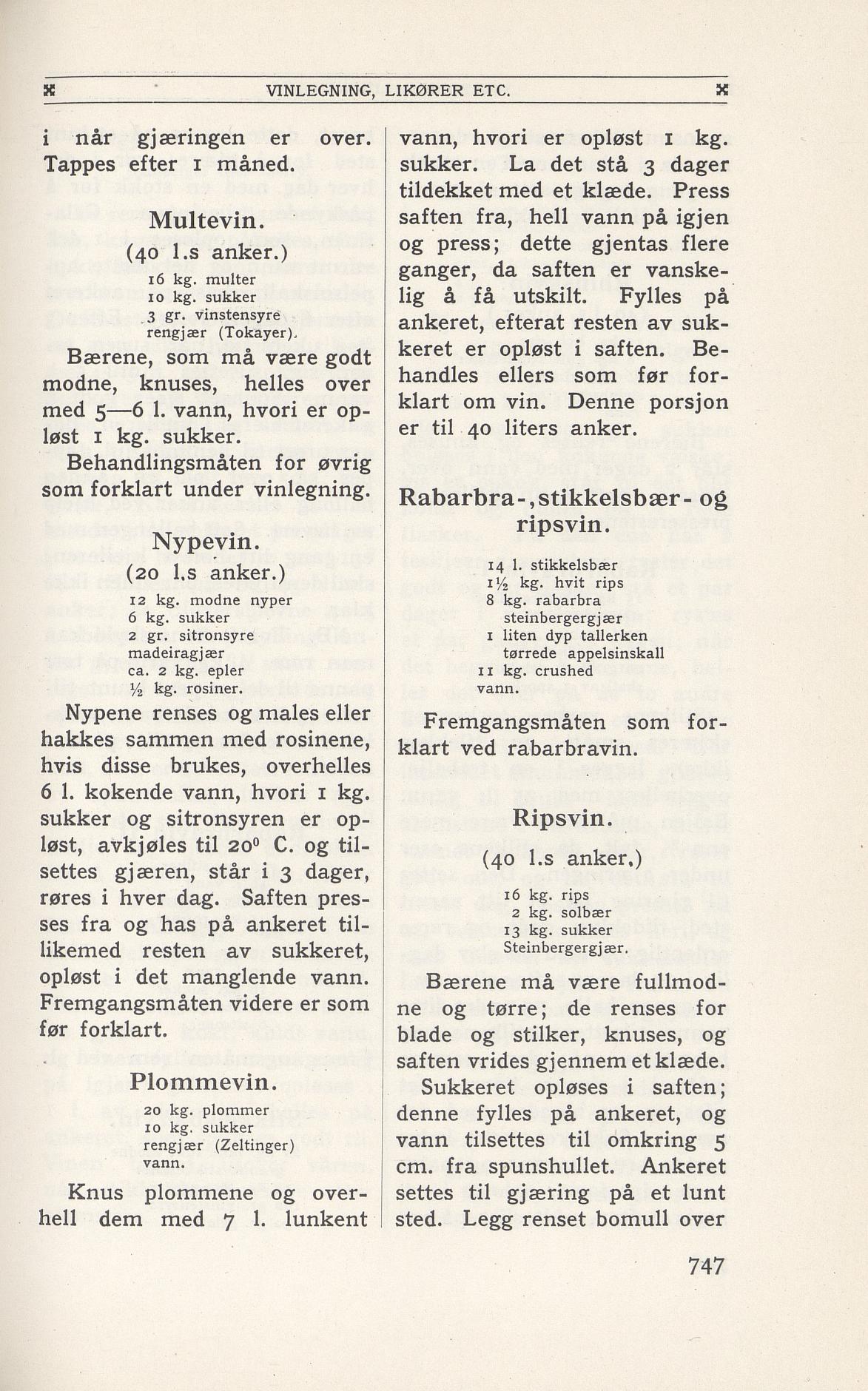
1914 (korrekturlest, s. 620)1949 (korrekturlest, s. 747)~58% av teksten endretfjernetlagt til
Nypevin. (20 l.s anker.) 12 kg. modne nyper 5 6 kg. sukker 2 gr. citronsyre 1 1/2 kg. rosiner sitronsyre madeiragjær ca. 2 kg. epler 1 liten dyp tallerken tørrede appelsinskal vand. Nyperne ½ kg. rosiner. Nypene renses og males en gang eller hakkes sammen med rosinerne, overheldes 3 l. lunkent vand, rosinene, hvis disse brukes, overhelles 6 1. kokende vann, hvori 1 kg. sukker og citronsyren sitronsyren er opløst, staar avkjøles til 20° C. og tilsettes gjæren, står i 3 dage, dager, røres i hver dag. Saften presses fra og haves paa has på ankeret tillikemed til likemed resten av sukkeret, opløst i det manglende vand. Fremgangsmaaten vann. Fremgangsmåten videre er som ovenfor forklaret. før forklart.

Community interpretations

Be the first to share your own version.

See interpretations

Frequently asked questions

How long does the rosehip wine take?
The startup itself takes 3 days: the ground rosehip mass with raisins stands in lukewarm sugar water for 3 days and is stirred every day. Then the juice is pressed off and poured into the cask, where the wine ferments and ages further (the total time in the recipe is estimated at about half a year).
What is needed for a 20-liter cask?
12 kg ripe rosehips, 5 kg sugar, 2 g citric acid, 1 1/2 kg raisins, about 2 kg apples, a small deep plate of dried orange peel, and water.
How are the rosehips treated?
The rosehips are cleaned and ground once together with the raisins. The mass is doused with 3 liters of lukewarm water in which 1 kg of the sugar and the citric acid are dissolved; the rest of the sugar is dissolved in the missing water and added to the cask together with the juice.
Where does the recipe come from?
From Henriette Schønberg Erken's "Stor kokebok" from 1914, page 620, in the chapter on fruit wine and berry wine.

Related recipes

More dishes in the same category from the archive

Read also

Kommentarer

Ingen kommentarer ennå. Bli den første til å dele!