Skip to content

Rusks II

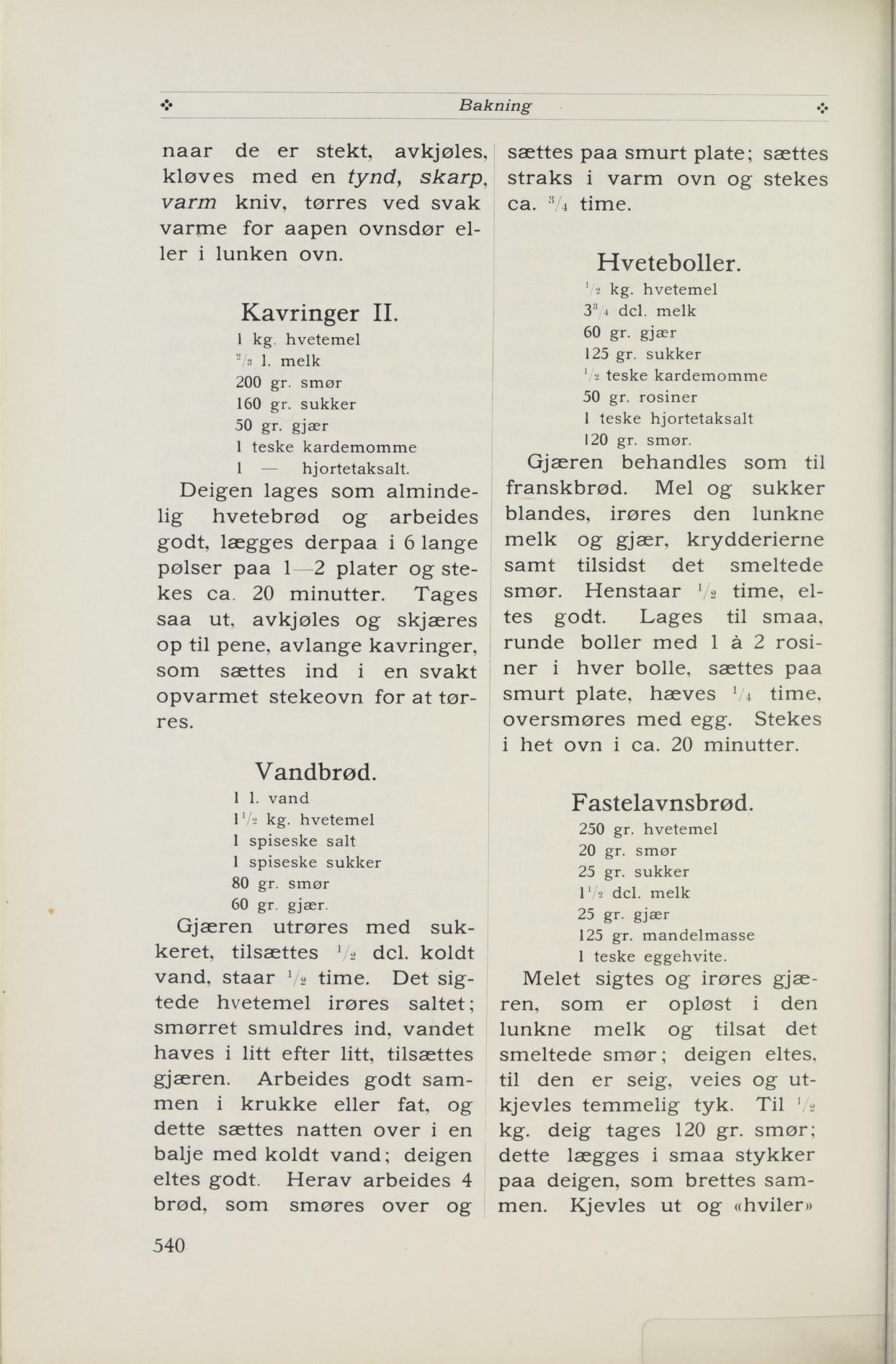
Erken's Rusks II (1914): a sweet cardamom wheat dough with 1 kg flour, 5 dl milk, 160 g sugar, 50 g yeast and 120 g butter, shaped into 6 long ropes, baked about 20 min, sliced and dried in a low oven into rusks.

Source: Henriette Schønberg Erken, Stor kokebok, 1914-utg. s. 540 (falt i det fri)

Be the first to rate

About the dish

Rusks were dried, keeping wheat baking that Erken counts as the household's reserve bread and travel food. The recipe is the second of two rusk variants in the bread chapter of "Stor kokebok" (1914) and is built on a sweet, cardamom-spiced wheat dough.

How to make it

  1. 1

    Dissolve the yeast

    Stir the yeast into the lukewarm milk together with a little of the sugar.

  2. 2

    Make the dough

    Mix the sifted flour with the rest of the sugar, the cardamom and the baker's ammonia. Add the yeast mixture and finally the butter. Work the dough well until it is smooth and glossy.

  3. 3

    Rise

    Let the dough rise covered until doubled in size, about 45 minutes.

  4. 4

    Shape the ropes

    Divide the dough into 6 pieces and roll each piece into a long rope. Place them on 1–2 greased baking sheets with good spacing, and let proof about 20 minutes.

  5. 5

    Bake

    Bake at 200 °C (390 °F) for about 20 minutes until the ropes are golden and baked through.

  6. 6

    Slice

    Cool the ropes completely and cut them into neat, oblong slices.

  7. 7

    Dry

    Lay the slices on sheets and dry them at low heat, about 100 °C (210 °F), until they are completely dry and light brown, 1½–2 hours. Cool and store dry.

Changes from the original

Ingredient quantities are converted to modern units (dl, tsp, g). Baker's ammonia is kept, but can be replaced by 1 tsp baking powder. The method is filled out with baking and drying temperatures, which the original only hints at ("a gently heated oven"). The dough "like ordinary wheat bread" is described in detail.

In stores now

Clean, minimally processed groceries matched to the ingredients — approximate prices.

Product data and prices via Kassalapp. Prices are updated daily and may vary.

Tidsmaskin – hva endret seg?

Velg to utgaver og se hva Henriette Schønberg Erken la til, fjernet eller endret mellom dem.

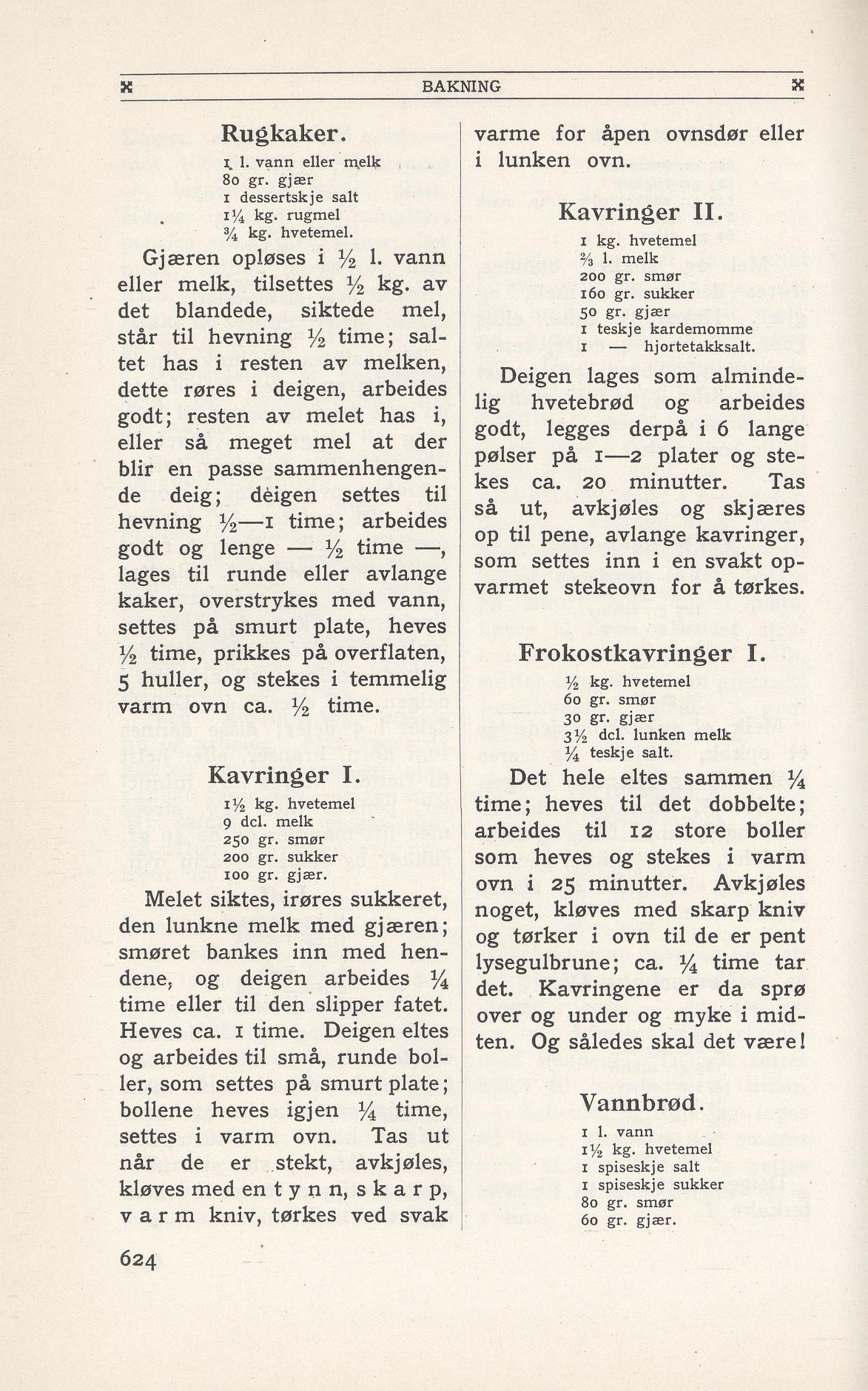
1914 (korrekturlest, s. 540)1949 (korrekturlest, s. 624)~41% av teksten endretfjernetlagt til
Kavringer II. 1 kg. hvetemel ½ ¾ l. melk 200 gr. smør 160 gr. sukker 50 gr. gjær 120 gr. smør 1 teske teskje kardemomme 1 teske hjortetaksalt. — hjortetakksalt. Deigen lages som almindelig hvetebrød og arbeides godt, lægges derpaa legges derpå i 6 lange pølser paa 1—2 plater og stekes ca. 20 minutter. Tages saa Tas så ut, avkjøles og skjæres op til pene, avlange kavringer, som sættes ind settes inn i en svakt opvarmet stekeovn for at tørres. å tørkes.
Community interpretations

Be the first to share your own version.

See interpretations

Frequently asked questions

How is the dough shaped?
The dough is made like ordinary wheat bread and worked well, then shaped into 6 long "ropes" placed on 1–2 baking sheets.
How long are they baked, and what happens afterward?
The lengths are baked about 20 minutes. Then they are taken out, cooled and cut into neat, oblong rusks that are set into a gently heated oven to dry.
What ingredients are needed?
1 kg wheat flour, ½ liter milk, 160 g sugar, 50 g yeast, 120 g butter, 1 teaspoon cardamom and 1 teaspoon baker's ammonia.
Where does the recipe come from?
From Henriette Schønberg Erken's "Stor kokebok" (1914), page 540. The recipe makes about 40 rusks.

Related recipes

More dishes in the same category from the archive

Read also

Kommentarer

Ingen kommentarer ennå. Bli den første til å dele!