Skip to content

Rusks I

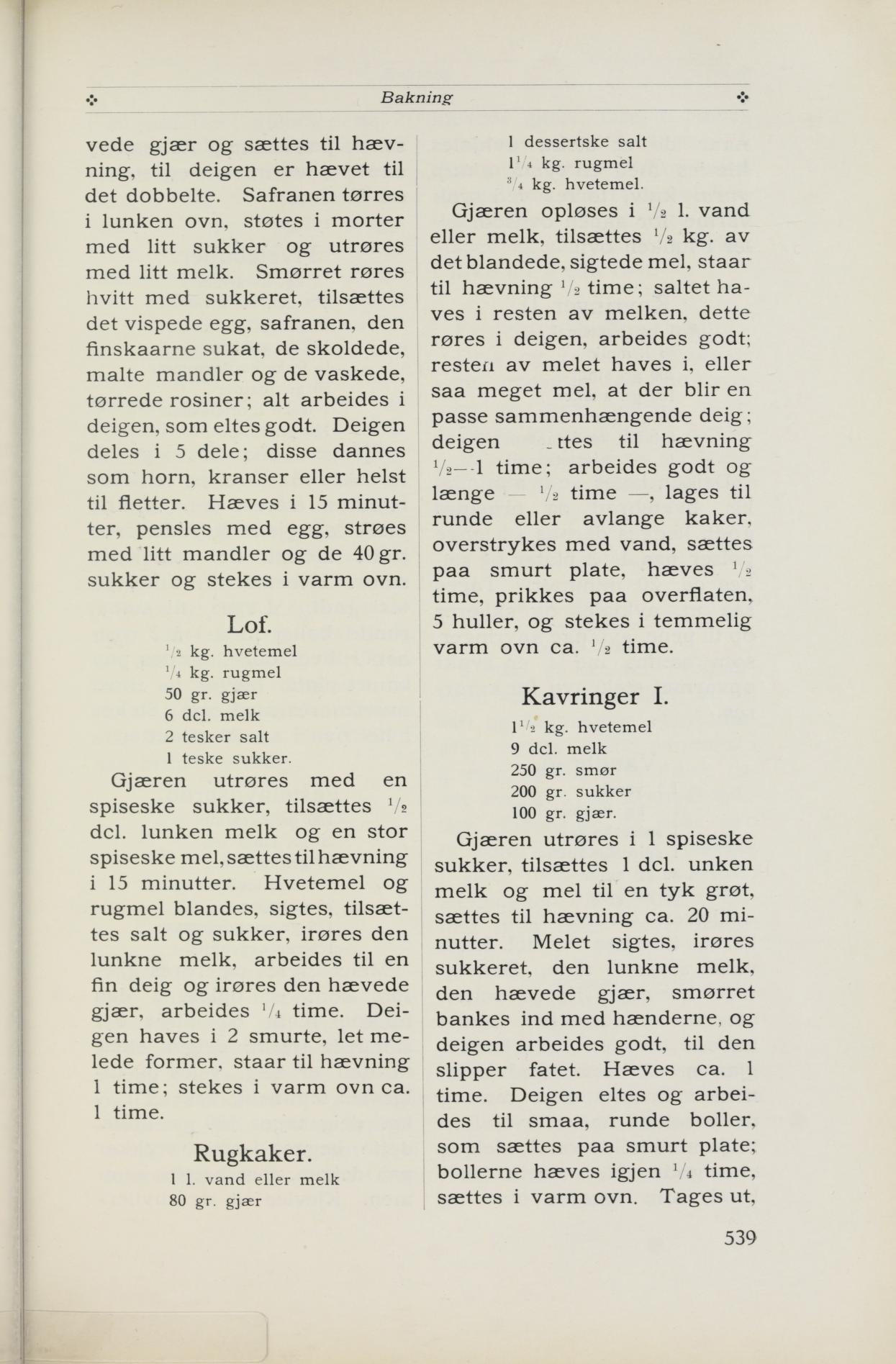
Rusks I from Erken 1914: a sweet bun dough of 1.25 kg wheat flour, 9 dl milk, 250 g butter, 200 g sugar and 100 g yeast. The dough is raised, shaped into small buns, baked in a hot oven, split with a warm knife after cooling and dried at low heat until crisp rusks.

Source: Henriette Schønberg Erken, Stor kokebok, 1914-utg. s. 539 (falt i det fri)

Be the first to rate

About the dish

Rusks were the household's keeping bread – sweet buns that are baked, split and slowly dried until crisp. Erken gives several variants; this first one is the richest, with butter and sugar in the dough.

How to make it

  1. 1

    Start the yeast

    Stir the yeast with 1 tablespoon of sugar, add 1 dl of lukewarm milk and enough flour to make a thick batter. Let this starter rise about 20 minutes.

  2. 2

    Make the dough

    Sift the flour and stir in the sugar, the lukewarm milk and the risen yeast. Knead the butter into the dough with your hands and work the dough well, until it comes away from the bowl.

  3. 3

    Rise

    Let the dough rise about 1 hour.

  4. 4

    Shape the buns

    Knead the dough and shape small, round buns. Place them on a greased baking sheet and let them proof about 15 minutes.

  5. 5

    Bake

    Bake the buns in a hot oven (about 220 °C (430 °F)) until baked through, about 12–15 minutes.

  6. 6

    Split and dry

    Take the buns out, let them cool and split them with a thin, sharp, warm knife. Dry the rusks at low heat with the oven door ajar or in a lukewarm oven (about 100 °C (210 °F)) until they are completely crisp.

Changes from the original

"del." is converted to deciliters. "Hot oven" is estimated at 220 °C (430 °F) for the buns and about 100 °C (210 °F) for the drying. The method is divided into steps, otherwise unchanged.

In stores now

Clean, minimally processed groceries matched to the ingredients — approximate prices.

Product data and prices via Kassalapp. Prices are updated daily and may vary.

Time machine – what changed?

Pick two editions and see what Henriette Schønberg Erken added, removed or changed between them.

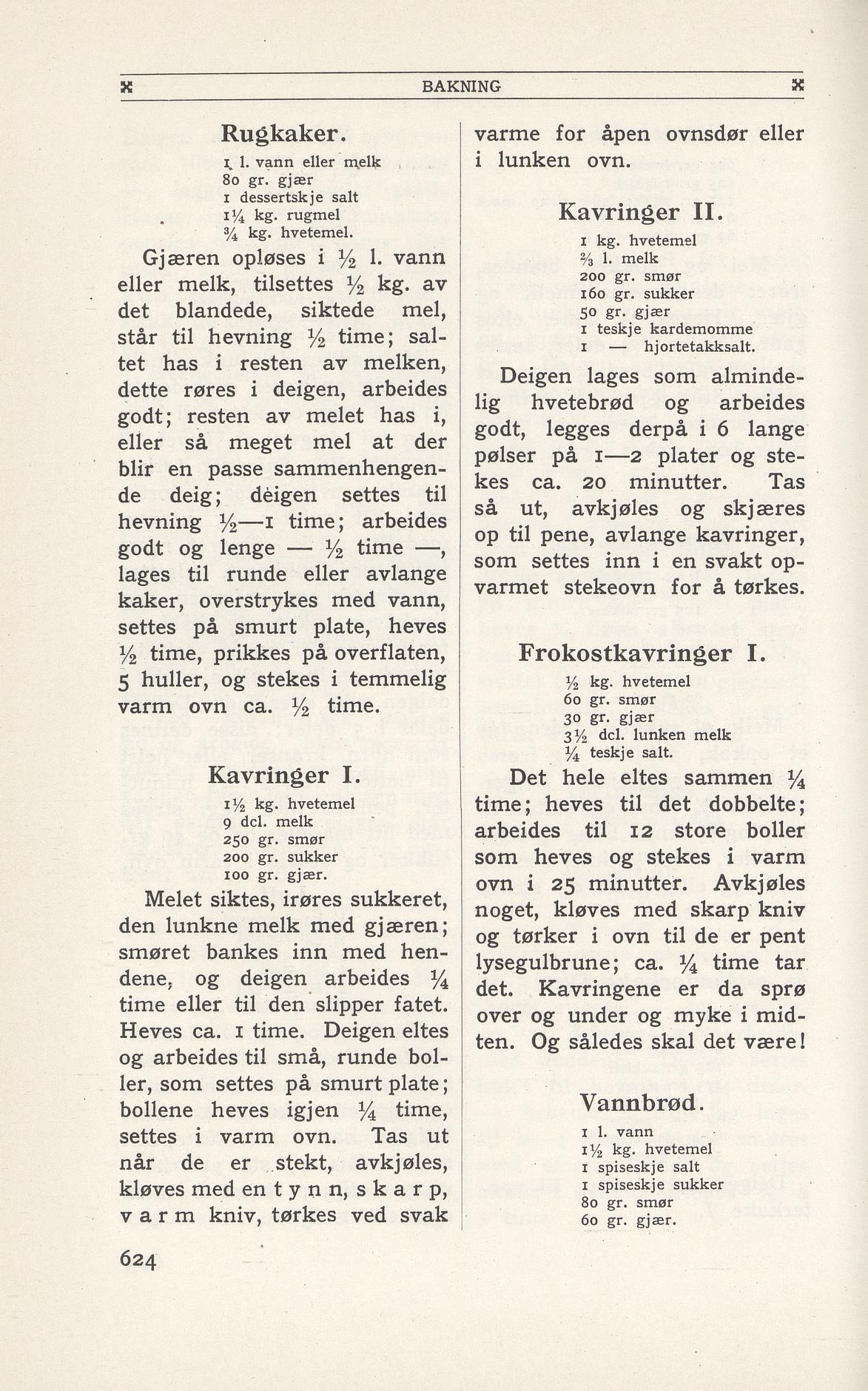
Modernised → 1949 (proofread, p. 624)~79% of the text changedremovedadded
1,25 kg hvetemel. 9 dl 1½ kg. hvetemel ¾ dl. melk (lunken). 250 g gr. smør (romtemperert). 200 g sukker. gr. sukker 100 g fersk gr. gjær. 1 ss sukker (til gjærblandingen). Rør gjæren ut med 1 spiseskje sukker, tilsett 1 dl lunken melk og mel til en tykk grøt. La forblandingen heve ca. 20 minutter.. Sikt melet og rør inn Melet siktes, irøres sukkeret, den lunkne melken og den hevede gjæren. Bank melk med gjæren; smøret bankes inn i deigen med hendene hendene, og arbeid deigen godt, arbeides ¾ time eller til den slipper bollen.. La deigen heve fatet. Heves ca. 1 time.. Elt deigen time. Deigen eltes og form arbeides til små, runde boller. Sett dem boller, som settes på smurt stekeplate og la dem etterheve ca. 15 minutter.. Stek plate; bollene heves igjen ¾ time, settes i varm ovn (ca. 220 °C) til ovn. Tas ut når de er gjennomstekte, ca. 12–15 minutter.. Ta bollene ut, la dem avkjøles og kløyv dem stekt, avkjøles, kløves med en tynn, skarp, varm kniv. Tørk kavringene kniv, tørkes ved svak varme med for åpen ovnsdør eller i lunken ovn (ca. 100 °C) til de er helt sprø. ovn.

Note on Modernised

«del.» er omregnet til desiliter. «Varm ovn» er anslått til 220 °C for bollene og ca. 100 °C for tørkingen. Framgangsmåten er delt i trinn, ellers uendret.

Community interpretations

Be the first to share your own version.

See interpretations →

Frequently asked questions

Why must the rusks be split when cooled, and how?
After baking, the buns are cooled and split with a thin, sharp, warm knife. A warm knife gives a cleaner cut, and the halves then dry more evenly.
How are the rusks dried?
At low heat – with the oven door ajar or in a lukewarm oven – until they are dry through and crisp.
How long does the rising take?
The yeast is set to rise about 20 minutes in the starter, the dough rises about 1 hour, and the shaped buns proof about 15 minutes before going into a hot oven.
What is in the dough?
1¼ kg wheat flour, 9 dl milk, 250 g butter, 200 g sugar and 100 g yeast. The butter is kneaded into the dough by hand, and the dough is worked until it comes away from the bowl. The recipe is from Henriette Schønberg Erken's "Stor kokebok" (1914), p. 539.

Equipment for this dish

Advertisement

We may earn a commission if you buy through these links. It does not affect the price.

Related recipes

More dishes in the same category from the archive

Read also

Kommentarer

Ingen kommentarer ennå. Bli den første til å dele!