Skip to content

Veal Chop (côtelette de veau)

Classic pan-fried veal chops: chops are cut from the veal rack with the rib bone scraped clean, lightly pounded, seasoned with salt and pepper and fried about 10 minutes in very hot butter, turned as the juices rise. Arranged on a warm platter with the bones toward the center, garnished with lettuce, and the frying butter cooked down with a little veal stock poured over.

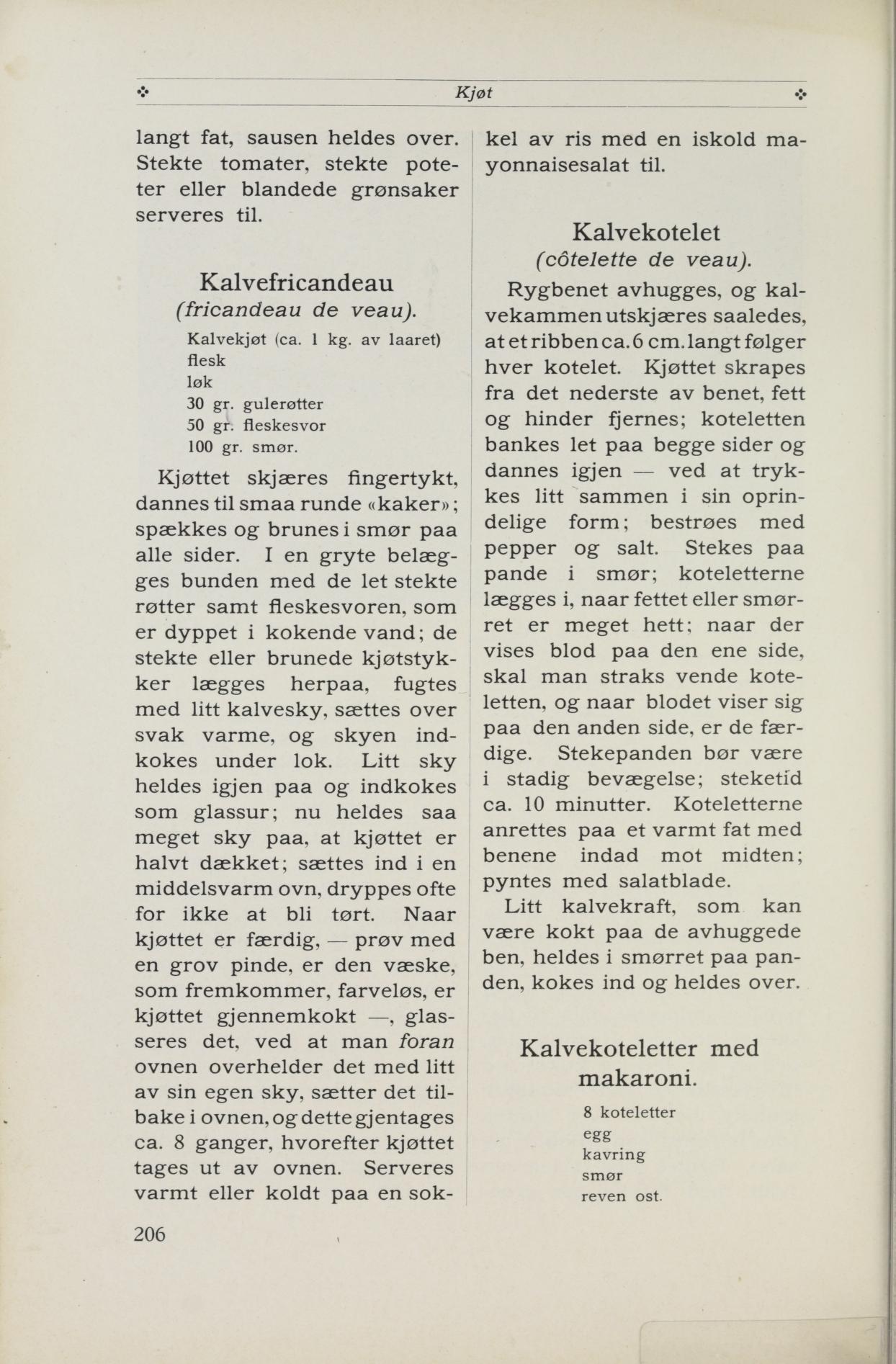
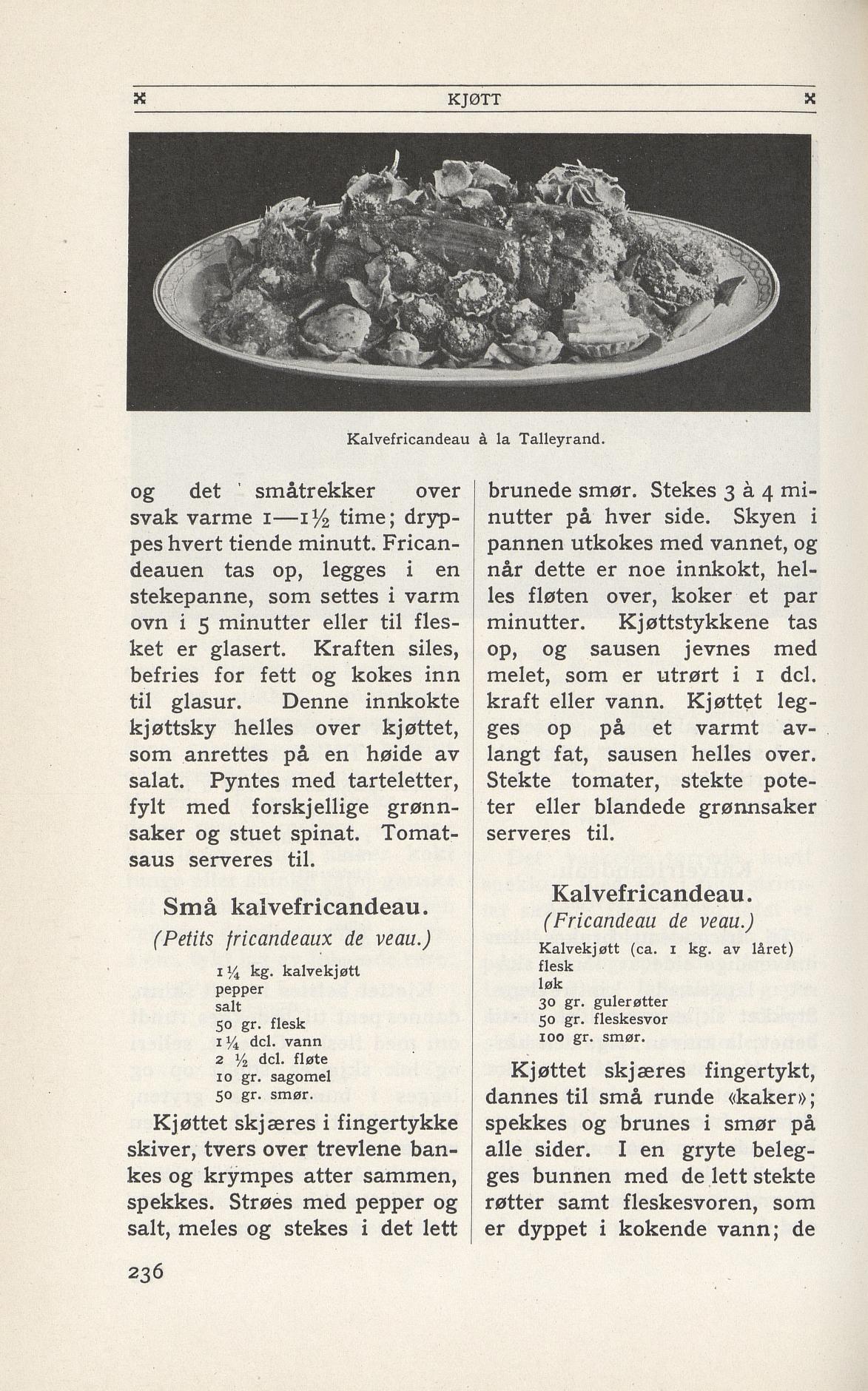
Source: Henriette Schønberg Erken, Stor kokebok, 1914-utg. s. 206 (falt i det fri)

Be the first to rate

About the dish

A basic recipe for pan-fried veal chops in the French style. Erken emphasizes how the chop should be trimmed ("frenched") and shaped, and the classic trick of reading the degree of doneness from the juices that rise to the surface.

How to make it

  1. 1

    Cut out the chops

    Cut off the backbone and carve out the veal rack so that each chop gets an about 6 cm rib bone. Scrape the meat from the lower part of the bone and remove fat and membranes.

  2. 2

    Pound and shape

    Pound the chops lightly on both sides and press them back into their original shape. Sprinkle with pepper and salt.

  3. 3

    Fry

    Heat the butter in the pan until very hot and lay in the chops. When the juices appear on the top side, turn the chop at once; when the juices appear on the other side, they are done. Keep the pan constantly moving. Frying time about 10 minutes.

  4. 4

    Arrange

    Place the chops on a warm platter with the bones toward the center, and garnish with lettuce leaves.

  5. 5

    Make the jus

    Pour a little veal stock into the frying butter in the pan, cook it down and pour it over the chops.

Changes from the original

Quantities have been added in modern measures where the original only names the ingredients, and "veal stock" has been specified. The frying time is kept (about 10 minutes). The use of pan and butter is described in modern language.

In stores now

Clean, minimally processed groceries matched to the ingredients — approximate prices.

Product data and prices via Kassalapp. Prices are updated daily and may vary.

Tidsmaskin – hva endret seg?

Velg to utgaver og se hva Henriette Schønberg Erken la til, fjernet eller endret mellom dem.

1914 (korrekturlest, s. 206)1949 (korrekturlest, s. 236)~42% av teksten endretfjernetlagt til
Kalvekam pepper salt smør litt kalvekraft. Rygbenet (Cotelette de veau.) Ryggbenet avhugges, og kalvekammen utskjæres saaledes, således at et ribben ca. 6 cm. langt følger hver kotelet. kotelett. Kjøttet skrapes fra det nederste av benet, fett og hinder hinner fjernes; koteletten bankes let paa lett på begge sider og dannes igjen — ved at å trykkes litt sammen i sin oprindelige form; bestrøes med pepper og salt. Stekes paa pande på panne i smør; koteletterne lægges i, naar kotelettene legges i når fettet eller smørret smøret er meget hett; naar når der vises blod paa den ene side, skal man straks vende koteletten, og naar når blodet viser sig paa den anden annen side, er de færdige. Stekepanden ferdige. Stekepannen bør være i stadig bevægelse; bevegelse; steketid ca. 10 minutter. Koteletterne Kotelettene anrettes paa et varmt fat med benene indad innad mot midten; pyntes med salatblade. Litt kalvekraft, som kan være kokt paa de avhuggede ben, heldes helles i smørret paa panden, smøret på pannen, kokes ind inn og heldes helles over.

Community interpretations

Be the first to share your own version.

See interpretations

Frequently asked questions

Which part of the veal is used for chops?
The veal rack. The backbone is cut off, and the rack is carved so that an about 6 cm rib bone follows each chop. The meat is scraped from the lower part of the bone, and fat and membranes are removed.
How long are the chops fried, and how do I know they are done?
The frying time is about 10 minutes. Lay the chop in very hot butter; when juices appear on the top, turn it at once, and when the juices appear on the other side, it is done. Keep the pan constantly moving.
How is the chop arranged?
On a warm platter with the bones toward the center. The recipe uses only pepper, salt, butter and a little veal stock.
Where does the recipe come from?
From Henriette Schønberg Erken's "Stor kokebok" (1914), page 206. It serves 4.

Related recipes

More dishes in the same category from the archive

Read also

Kommentarer

Ingen kommentarer ennå. Bli den første til å dele!