Skip to content

Lobster cutlets I (cotelettes de homard)

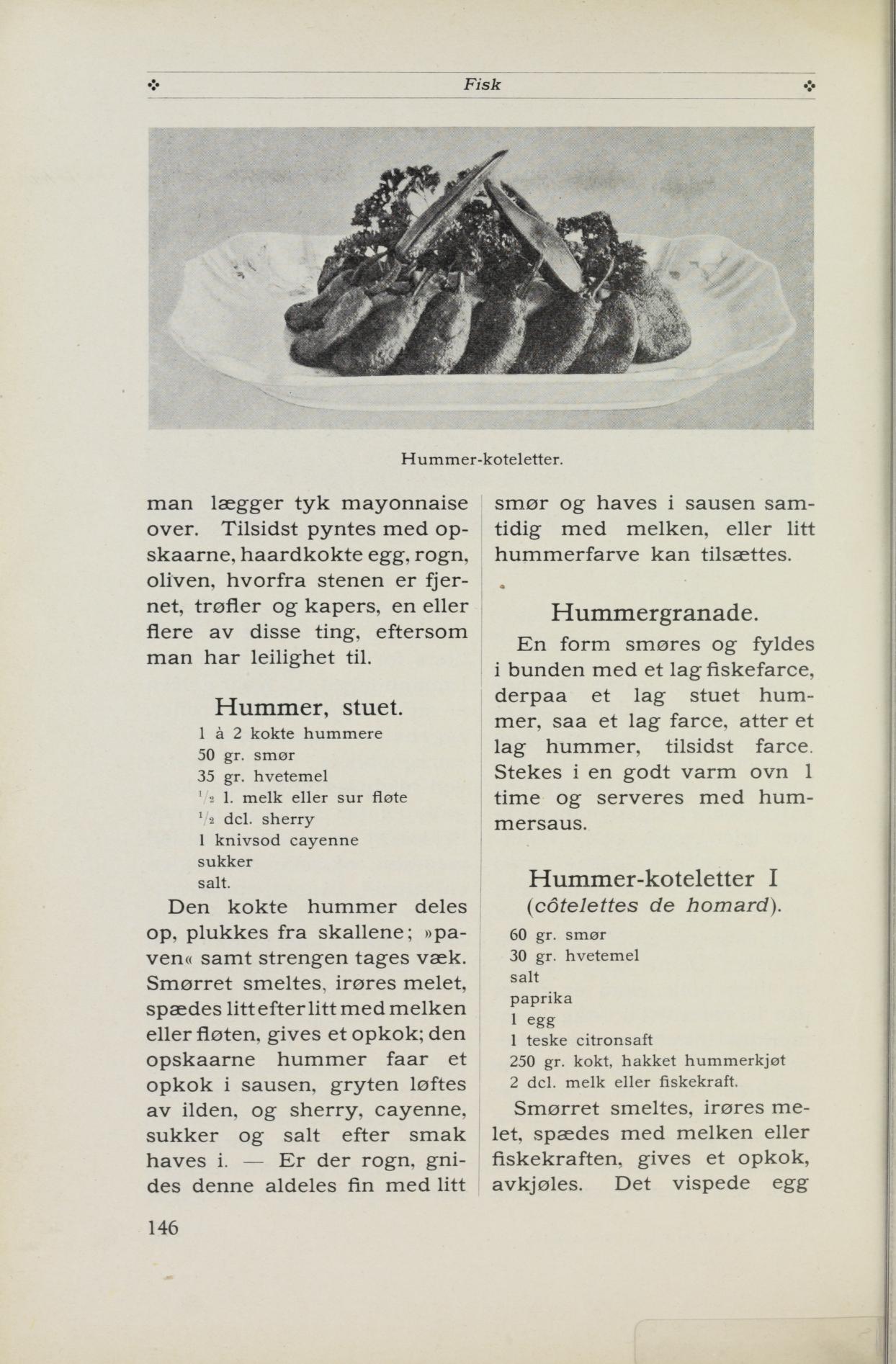
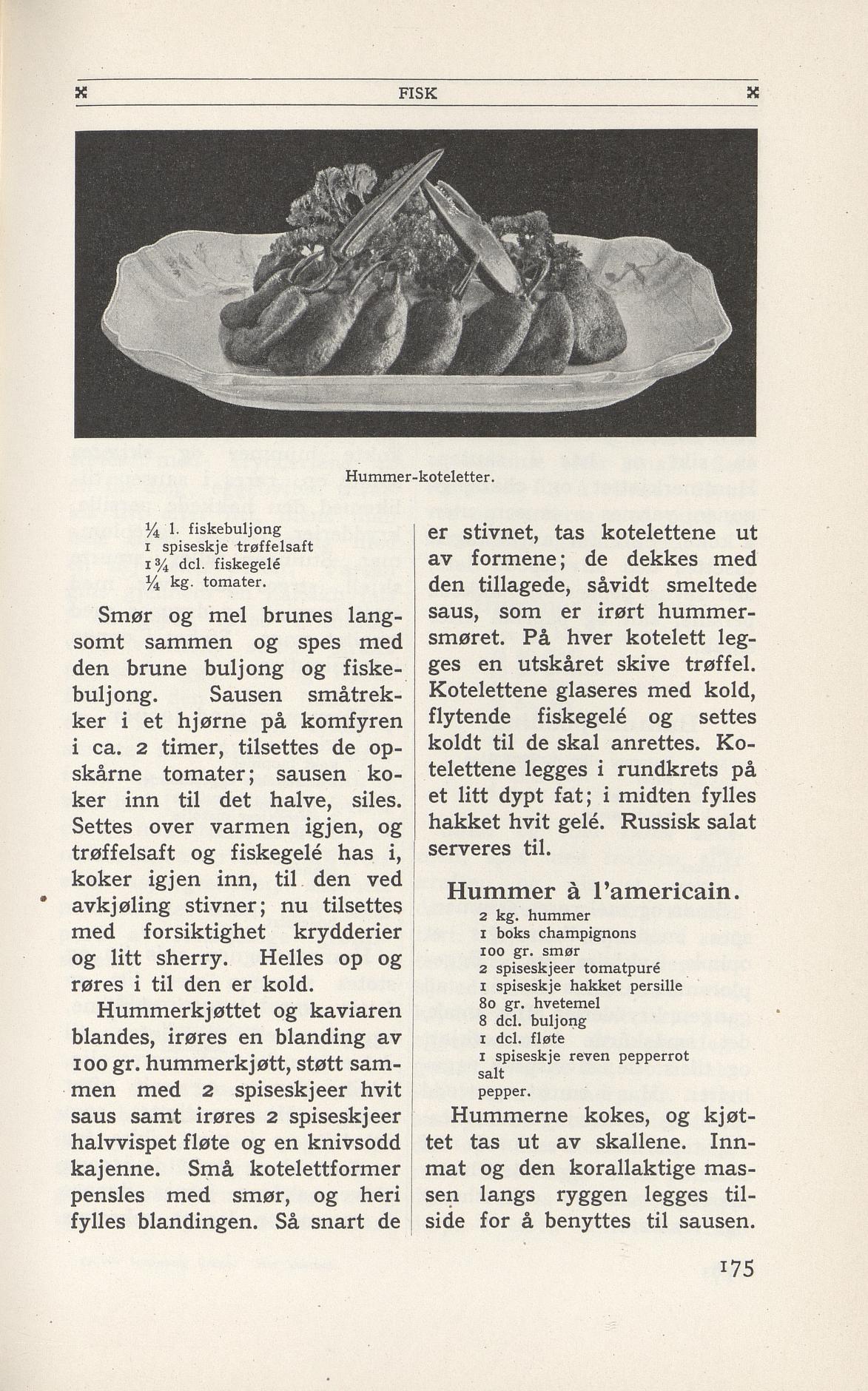
Lobster cutlets I from Erken 1914: a thick lobster stew of butter, flour, milk/fish stock, egg, and chopped lobster meat is cooled until firm, shaped into cutlets, breaded in egg and rusk, and fried golden in fat; garnished with lobster legs and arranged around the claws on a bed of rice or potato with parsley.

Source: Henriette Schønberg Erken, Stor kokebok, 1914-utg. s. 146 (falt i det fri)

Be the first to rate

About the dish

Lobster cutlets are a classic croquette dish from the French-inspired party kitchen: a thick lobster stew is shaped into small cutlets with a lobster leg as the "bone." Erken arranges them around the claws on a bed of rice or mashed potato.

How to make it

  1. 1

    Make the thick stew

    Melt the butter, stir in the flour, and thin with milk or fish stock. Bring it to a boil and let the mixture cool.

  2. 2

    Mix the forcemeat

    Stir in the beaten egg, the chopped lobster meat, the lemon juice, and salt and paprika to taste.

  3. 3

    Cool

    Spread the stew out on a platter and let it stand until completely cold and firm, preferably a few hours.

  4. 4

    Shape the cutlets

    Shape the mixture into cutlets, rounded at one end and pointed at the top.

  5. 5

    Bread and fry

    Turn the cutlets in beaten egg and rusk crumbs and fry them light golden-brown in hot fat (about 175 °C (345 °F)). Let them drain on paper.

  6. 6

    Arrange

    Stick a lobster leg into the pointed end of each cutlet. Arrange the cutlets on a platter, one slightly overlapping the next, around the large claws that are stuck into a bed of rice or mashed potato garnished with parsley.

Changes from the original

Lard for deep-frying has been replaced with neutral oil or butter (lard can be used). "Rusk" is given as crushed rusk crumbs or breadcrumbs, and egg and rusk for breading are specified in addition to the egg in the forcemeat. Units are modernized to grams, dl, and teaspoons, and the frying is given with a temperature.

In stores now

Clean, minimally processed groceries matched to the ingredients — approximate prices.

Product data and prices via Kassalapp. Prices are updated daily and may vary.

Time machine – what changed?

Pick two editions and see what Henriette Schønberg Erken added, removed or changed between them.

Modernised → 1914 (proofread, p. 146)~80% of the text changedremovedadded
60 g smør. gr. smør 30 g hvetemel. gr. hvetemel 2 dl del. melk eller fiskekraft. fiskekraft 250 g kokt hummerkjøtt (finhakket). gr. kokt, hakket hummerkjøt 1 stk egg (til farsen). 1 teskje sitronsaft. teske citronsaft salt (etter smak). paprikapulver (etter smak). 1 stk egg (til panering). 1 dl kavringsmuler (eller griljermel, til panering). 4 dl nøytral olje eller smult (til steking). 4 stk hummerben (til pynt, ett i hver kotelett). hummerklør (til anretning). persille (til pynt). Smelt smøret, rør inn melet og spe paprika. Smørret smeltes, irøres melet, spædes med melk melken eller fiskekraft. La det få fiskekraften, gives et oppkok og avkjøl massen.. Rør inn det opkok, avkjøles. Det vispede egget, det hakkede egg irøres, hummerkjøttet, sitronsaften samt salt citronsaften og paprika etter smak.. Bre stuingen krydderier efter smak. Stuingen lægges utover et fat og la den stå fat, til den er helt kald ganske kold og stiv, gjerne noen timer.. Form massen til koteletter, stiv. Dannes i koteletform, runde i den ene enden kant og spisse oppover.. Vend kotelettene spidse opover, vendes i sammenvispet egg og kavringsmuler kavring og stek dem lyst stekes lyse gulbrune i varmt fett (ca. 175 °C). La dem renne av på papir.. Stikk et hummerben i smult. I den spisse enden av hver kotelett. Legg kotelettene på spidse ende stikkes et hummerben. Koteletterne arrangeres paa fat, den ene litt over den andre, anden, rundt de store klørne klør, som er stukket ned i en bord av ris risbord eller potetstappe pyntet potetesbord belagt med persille.

Note on Modernised

Smult til fritering er erstattet med nøytral olje eller smør (smult kan brukes). «Kavring» er angitt som knuste kavringsmuler eller griljermel, og det er presisert egg og kavring til panering i tillegg til egget i farsen. Enheter er modernisert til gram, dl og teskje, og stekingen er angitt med temperatur.

Community interpretations

Be the first to share your own version.

See interpretations →

Frequently asked questions

Why does the recipe take so long (about 225 minutes)?
The cooking itself is quick, but the stew of butter, flour, milk/fish stock, egg, and lobster meat must be spread out on a platter and become completely cold and firm before it can be shaped into cutlets. This cooling accounts for most of the time.
How do you get the cutlet shape and the "bone"?
The firm stew is shaped rounded at one end and pointed at the top, turned in egg and rusk, and fried light golden-brown in lard. A lobster leg is stuck into the pointed end to imitate the cutlet bone.
How much lobster is needed, and how is the dish served?
It takes 250 g boiled, chopped lobster meat for 4 servings. The cutlets are arranged on a platter, one slightly overlapping the next, around the large claws that are stuck into a bed of rice or potato garnished with parsley.
Can I use fish stock instead of milk?
Yes, the original recipe from Schønberg Erken's "Stor kokebok" (1914, p. 146) gives 2 dl milk or fish stock—both work in the base stew.

Related recipes

More dishes in the same category from the archive

Read also

Kommentarer

Ingen kommentarer ennå. Bli den første til å dele!