Skip to content

Homemade yeast

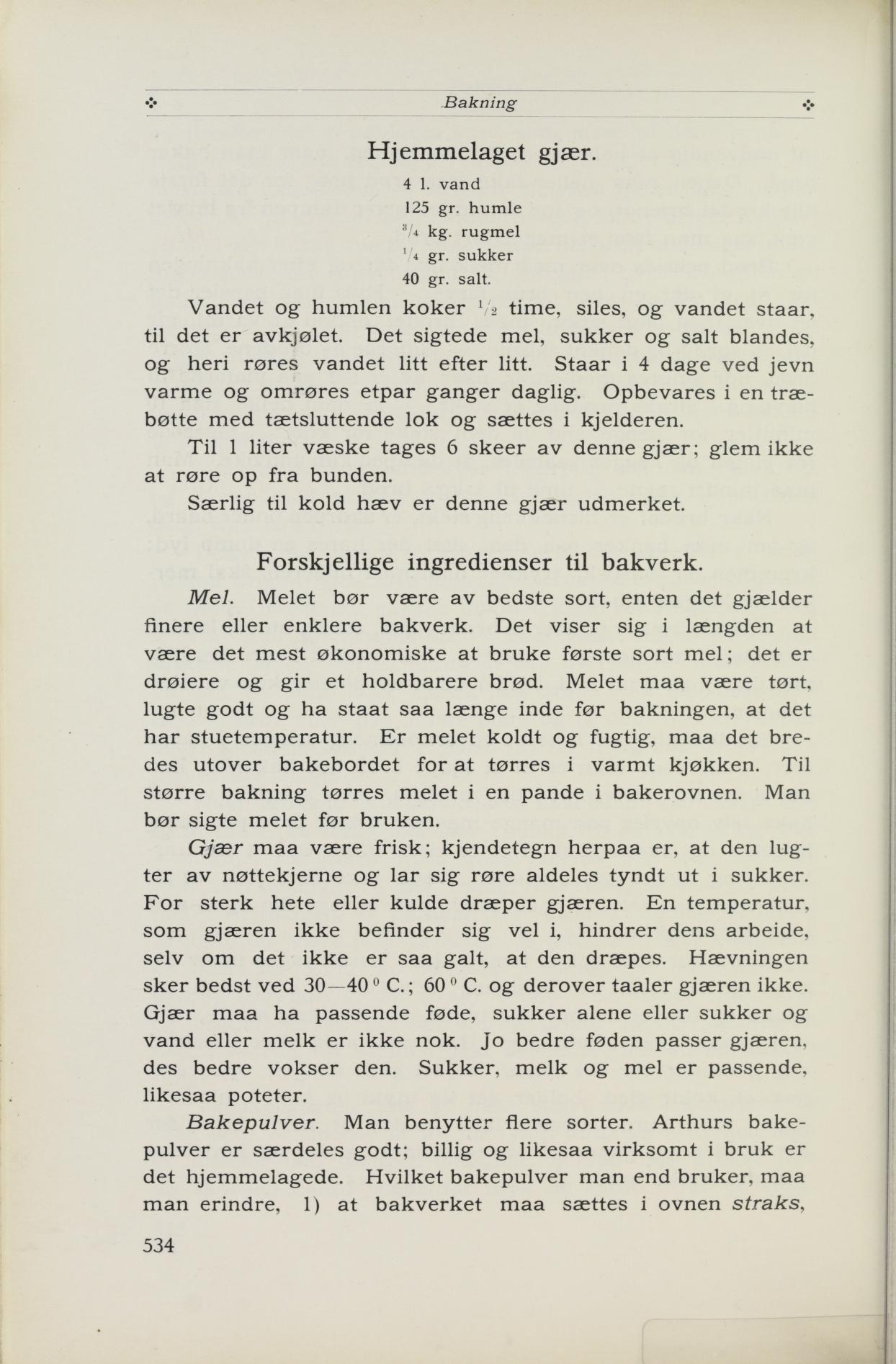
Henriette Schønberg Erken's recipe for homemade hop yeast: 4 l water is boiled 1 1/2 hours with 125 g hops, strained and cooled, stirred into 750 g sifted rye flour with sugar and salt, left 4 days in even warmth with daily stirring and stored in a wooden bucket in the cellar. 6 spoons per liter of liquid; especially suited to cold-rising.

Source: Henriette Schønberg Erken, Stor kokebok, 1914-utg. s. 534 (falt i det fri)

Be the first to rate

About the dish

From the chapter on baking, in the section on various ingredients for baked goods. Before commercial yeast became widely available, people made their own sourdough-like hop yeast, which was stored in a wooden bucket in the cellar and used as a leavening agent, especially for cold-rising.

How to make it

  1. 1

    Boil the hop decoction

    Boil the water and hops together for 1 1/2 hours.

  2. 2

    Strain and cool

    Strain off the hop decoction and let the water stand until completely cooled.

  3. 3

    Mix the dry ingredients

    Mix the sifted rye flour with the sugar and salt.

  4. 4

    Stir together

    Stir the hop water into the flour mixture little by little, until you have a smooth, thin batter.

  5. 5

    Let the yeast work

    Let the mixture stand for 4 days in even warmth, and stir a couple of times daily.

  6. 6

    Storage

    Pour the yeast into a wooden bucket with a tight-fitting lid and place it in the cellar.

  7. 7

    Use

    Use 6 tablespoons of yeast per 1 liter of liquid in the dough. Remember to stir well up from the bottom before measuring. The yeast is especially excellent for cold-rising.

Changes from the original

Measurements are given in modern units (liters, grams). The amount of sugar in the OCR text is uncertain and rendered as 14 g. «Skeer» (spoons) is interpreted as tablespoons. The method is divided into numbered steps in modern spelling; the content itself is unchanged.

Time machine – what changed?

Pick two editions and see what Henriette Schønberg Erken added, removed or changed between them.

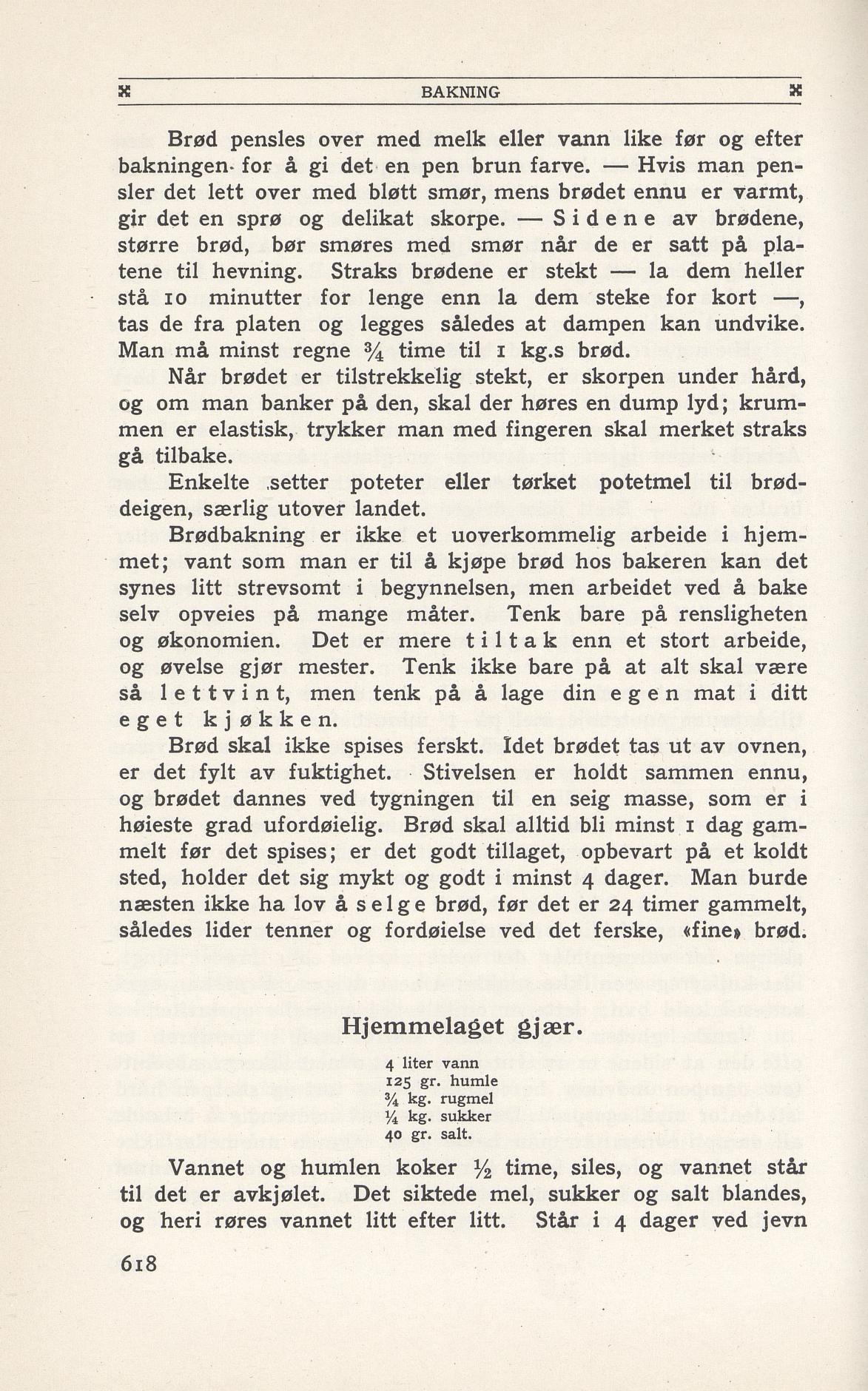
Modernised → 1949 (proofread, p. 618)~77% of the text changedremovedadded
4 l vann. liter vann 125 g gr. humle (tørket). 750 g ¾ kg. rugmel (siktet). 14 g ¾ kg. sukker (mengden er usikker i originalteksten). 40 g gr. salt. Kok vannet Vannet og humlen sammen i 1 1/2 time.. Sil av humleavkoket koker ¾ time, siles, og la vannet stå står til det er helt avkjølt.. Bland det avkjølet. Det siktede rugmelet med mel, sukker og salt.. Rør humlevannet inn i melblandingen salt blandes, og heri røres vannet litt om litt, til en jevn, tynn røre.. La blandingen stå efter litt. Står i 4 døgn dager ved jevn varme, varme og rør om omrøres et par ganger daglig.. Hell gjæren daglig. Opbevares i en trebøtte med tettsluttende lokk og sett den settes i kjelleren.. Bruk 6 spiseskjeer gjær til 1 kjelleren. Til i liter væske i deigen. Husk tas 6 skjeer av denne gjær; glem ikke å røre godt opp op fra bunnen før du måler opp. Gjæren er særlig utmerket bunnen. Særlig til kaldheving. kold hevning er denne gjær utmerket.

Note on Modernised

Mål er oppgitt i moderne enheter (liter, gram). Mengden sukker i OCR-teksten er usikker og gjengitt som 14 g. «Skeer» er tolket som spiseskjeer. Fremgangsmåten er delt i nummererte trinn med moderne rettskriving; selve innholdet er uendret.

Community interpretations

Be the first to share your own version.

See interpretations →

Frequently asked questions

How long does it take to make this yeast?
The hops boil for 1 1/2 hours in the water, then it is strained and cooled. After the flour, sugar and salt are stirred in, the mixture must stand for 4 days in even warmth and be stirred a couple of times daily – about four days in all.
Which ingredients are needed?
4 liters water, 125 g hops, 3/4 kg rye flour, 14 g sugar and 40 g salt.
How is the yeast stored and used?
It is stored in a wooden bucket with a tight-fitting lid in the cellar. Use 6 spoons of yeast per liter of liquid, and remember to stir up from the bottom. The recipe is from Schønberg Erken's «Stor kokebok» (1914) and is especially well suited to cold-rising.

Equipment for this dish

Advertisement

We may earn a commission if you buy through these links. It does not affect the price.

Related recipes

More dishes in the same category from the archive

Read also

Kommentarer

Ingen kommentarer ennå. Bli den første til å dele!