Skip to content

Pike Fish Forcemeat

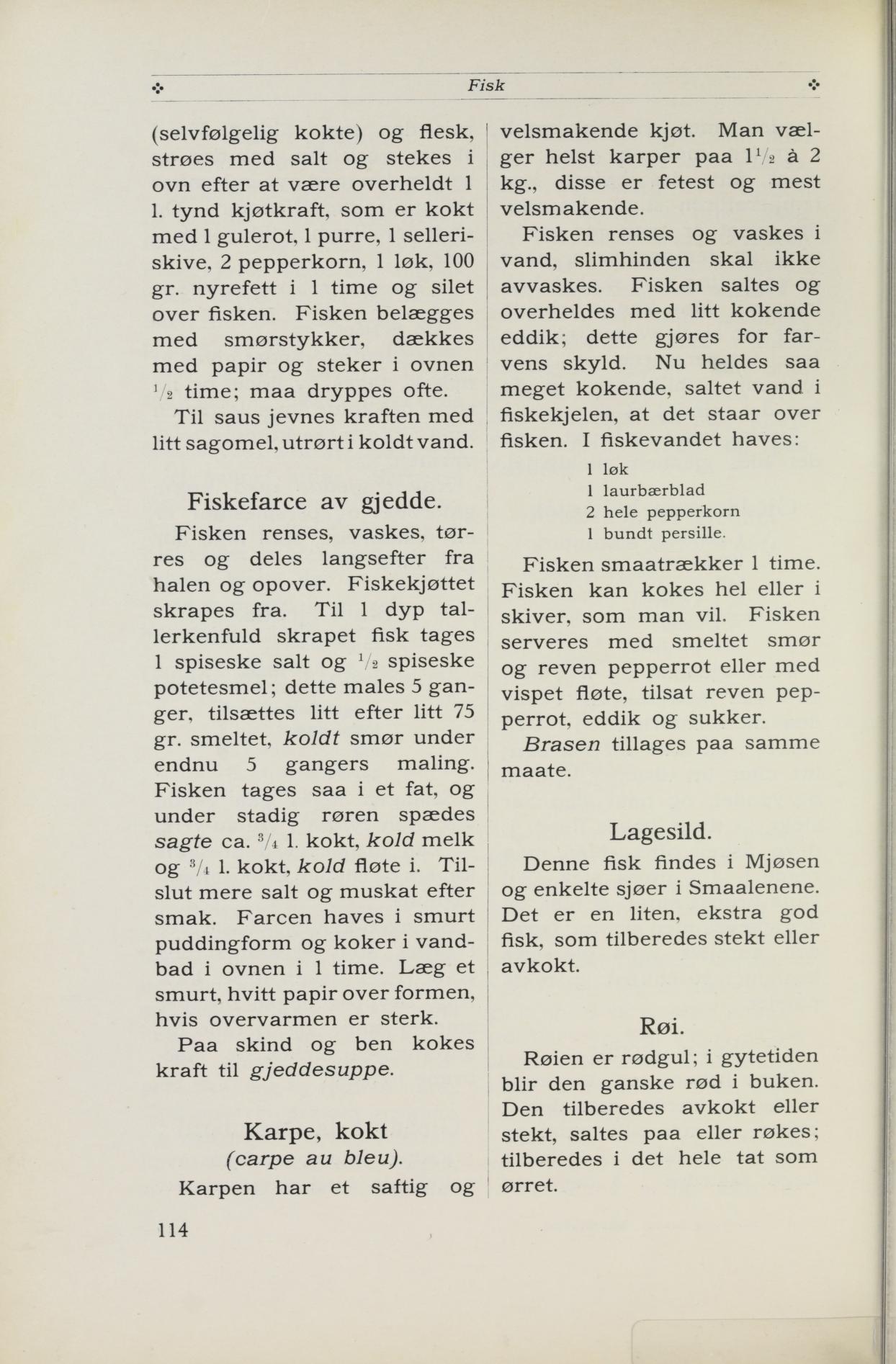
Erken's pike forcemeat (fiskefarse av gjedde): scraped pike flesh is ground with salt and potato starch, mixed with melted butter, thinned with cold milk and cream, and baked as a pudding in a water bath in the oven for 1 hour. Skin and bones are simmered into pike soup.

Source: Henriette Schønberg Erken, Stor kokebok, 1914-utg. s. 114 (falt i det fri)

Be the first to rate

About the dish

Pike was a highly prized freshwater fish in Norwegian lakes, and its firm, lean flesh was especially well suited to forcemeat. Erken lets nothing go to waste: the skin and bones are simmered into stock for pike soup. Grinding it in a meat grinder several times gives the fine, airy texture that characterizes a good fish forcemeat.

How to make it

  1. 1

    Clean the fish

    Clean and rinse the pike, dry it well, and split it lengthwise from the tail upward. Scrape the fish flesh free of skin and bones.

  2. 2

    Grind with salt and potato starch

    Mix the fish flesh with salt and potato starch and grind the mixture five times (or run it well in a food processor).

  3. 3

    Add the butter

    Add the melted, cooled butter a little at a time while grinding the forcemeat five more times.

  4. 4

    Thin with milk and cream

    Put the forcemeat in a dish and thin it carefully with boiled, cooled milk and cream while stirring constantly. Season to taste with more salt and nutmeg.

  5. 5

    Cook in a water bath

    Fill the forcemeat into a well-greased pudding mold and bake it in a water bath in the oven for 1 hour at about 160 °C (320 °F). Lay a piece of greased parchment over the mold if the top heat is strong.

  6. 6

    Stock from the scraps

    Simmer stock from the skin and bones to make pike soup.

Changes from the original

Measures have been converted to modern units; "1 deep plateful of scraped fish" is estimated at about 600 g of clean fish flesh. The OCR was unclear for the milk and cream amounts (written "8/4" and "3/i"); these are interpreted as 3/4 liter milk and 1/4 liter cream. Potato starch replaces "potetesmel," and the 5 + 5 grindings are described as repeated grinding or running in a food processor.

In stores now

Clean, minimally processed groceries matched to the ingredients — approximate prices.

Product data and prices via Kassalapp. Prices are updated daily and may vary.

Time machine – what changed?

Pick two editions and see what Henriette Schønberg Erken added, removed or changed between them.

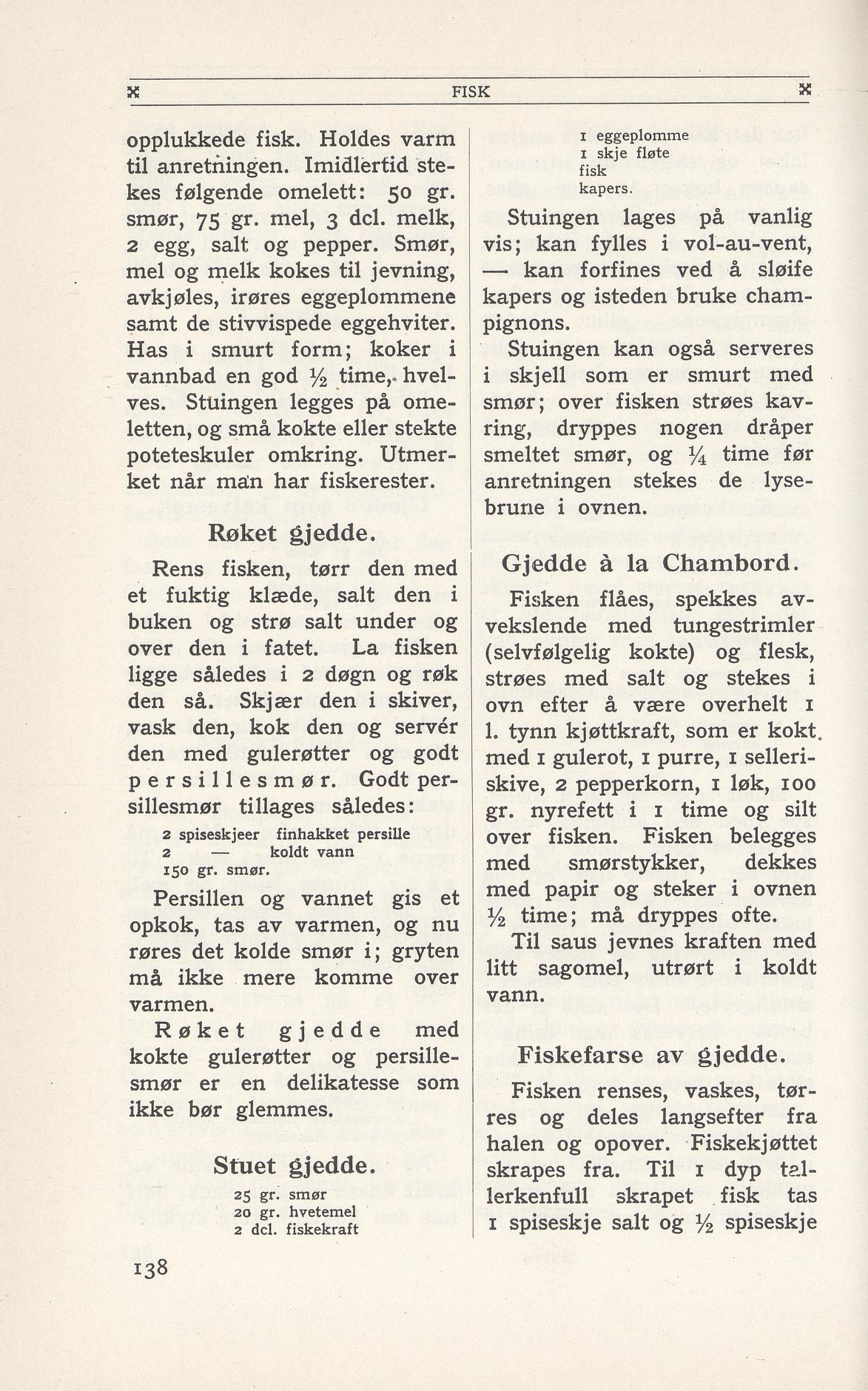
1949 (proofread, p. 138) → Modernised~85% of the text changedremovedadded
Fiskefarse av gjedde. Fisken renses, vaskes, tørres 600 g skrapet gjeddekjøtt (reint fiskekjøtt uten skinn og deles langsefter bein). 1 ss salt. 0,5 ss potetmel. 75 g smør (smeltet og avkjølt). 7,5 dl melk (kokt og avkjølt). 2,5 dl fløte (kokt og avkjølt). salt (etter smak). muskat (etter smak). smør til formen. Rens og vask gjedda, tørk den godt og del den langsetter fra halen og opover. Fiskekjøttet skrapes fra. Til 1 dyp tallerkenfull skrapet fisk tas 1 spiseskje oppover. Skrap fiskekjøttet fritt fra skinn og bein.. Bland fiskekjøttet med salt og ½ spiseskje potetesmel; dette males 5 ganger, tilsettes potetmel og kvern blandingen fem ganger (eller kjør den godt i foodprosessor).. Tilsett det smeltede, avkjølte smøret litt efter etter litt 75 gr. smeltet, koldt smør under ennu 5 gangers maling. Fisken tas så mens farsen kvernes fem ganger til.. Ha farsen i et fat, fat og under stadig røren spedes sakte ca. ¾ l. spe forsiktig med kokt, koldt avkjølt melk og ¾ l. kokt, koldt fløte i. Tilslutt mere under stadig røring. Smak til med mer salt og muskat efter smak. Farsen has muskat.. Fyll farsen i en godt smurt puddingform og koker kok den i vannbad i ovnen i 1 time. time ved ca. 160 °C. Legg et smurt, hvitt papir smurt bakepapir over formen, hvis formen om overvarmen er sterk. På sterk.. Kok kraft av skinn og ben kokes kraft bein til gjeddes suppe. gjeddesuppe.

Note on Modernised

Mål er omregnet til moderne enheter; «1 dyp tallerkenfuld skrapet fisk» er anslått til ca. 600 g reint fiskekjøtt. OCR-en var utydelig for melke- og fløtemengden (skrevet «8/4» og «3/i»); det er tolket som 3/4 liter melk og 1/4 liter fløte. Potetmel erstatter «potetesmel», og malingen 5 + 5 ganger beskrives som gjentatt kverning eller kjøring i foodprosessor.

Community interpretations

Be the first to share your own version.

See interpretations →

Frequently asked questions

How long should the forcemeat cook?
The forcemeat is filled into a greased pudding mold and cooked in a water bath in the oven for about 1 hour. Allow around 110 minutes total, including cleaning, scraping, and grinding the fish.
Why should the milk and cream be boiled and cold?
The milk and cream are boiled first and cooled completely before being thinned in a little at a time while stirring constantly. Cold liquid helps the forcemeat bind and keeps it from separating.
How many times is the fish ground?
The scraped fish is ground 5 times with salt and potato starch, then 75 g of melted, cooled butter is added a little at a time during another 5 grindings – 10 times in all.
How is the pike prepared before making the forcemeat?
The fish is cleaned, rinsed, and dried, split lengthwise from the tail upward, and the flesh is scraped from the skin and bones. The recipe uses 1 deep plateful of scraped fish.

Equipment for this dish

Advertisement

We may earn a commission if you buy through these links. It does not affect the price.

Related recipes

More dishes in the same category from the archive

Read also

Kommentarer

Ingen kommentarer ennå. Bli den første til å dele!