Skip to content

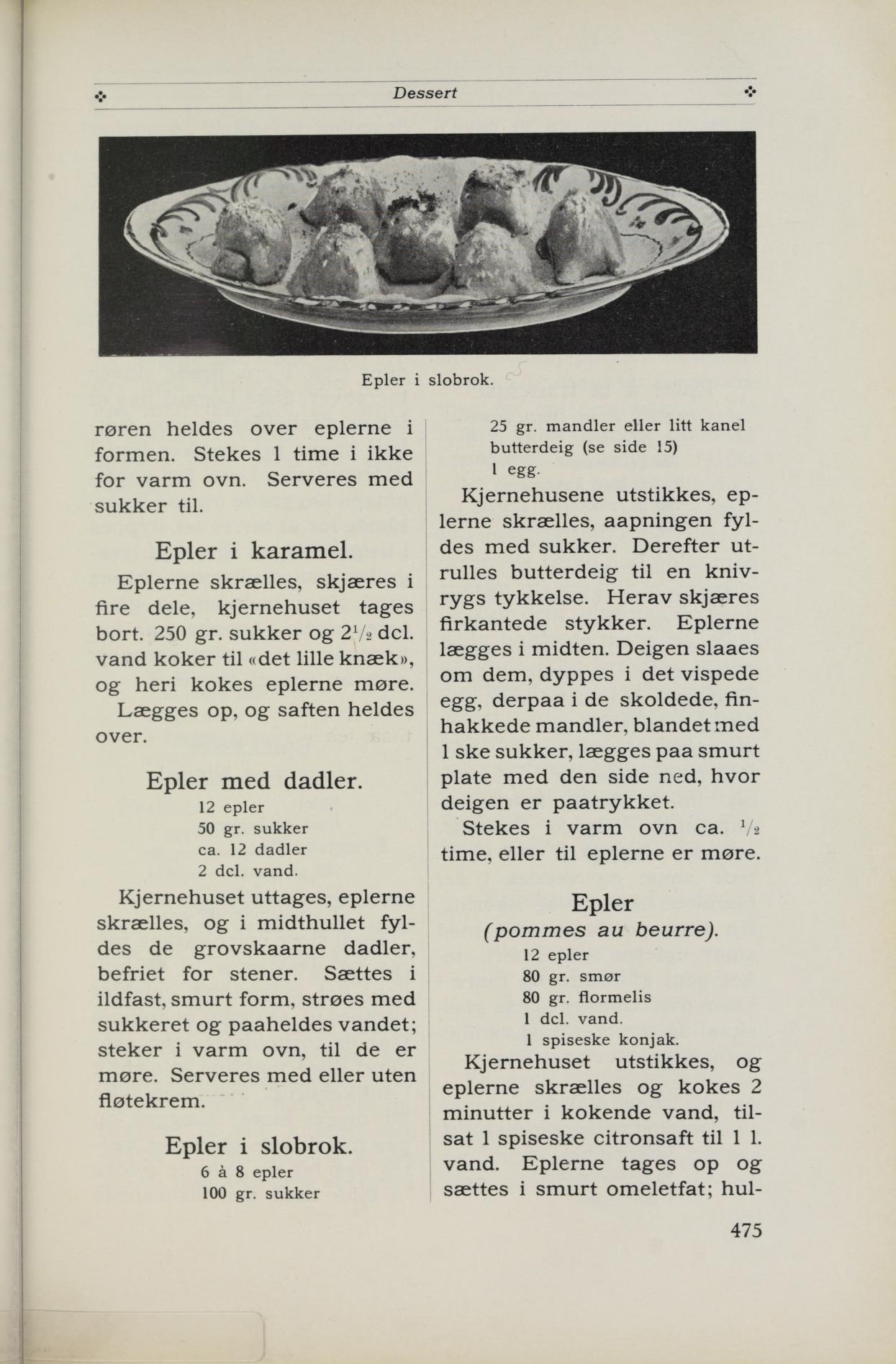
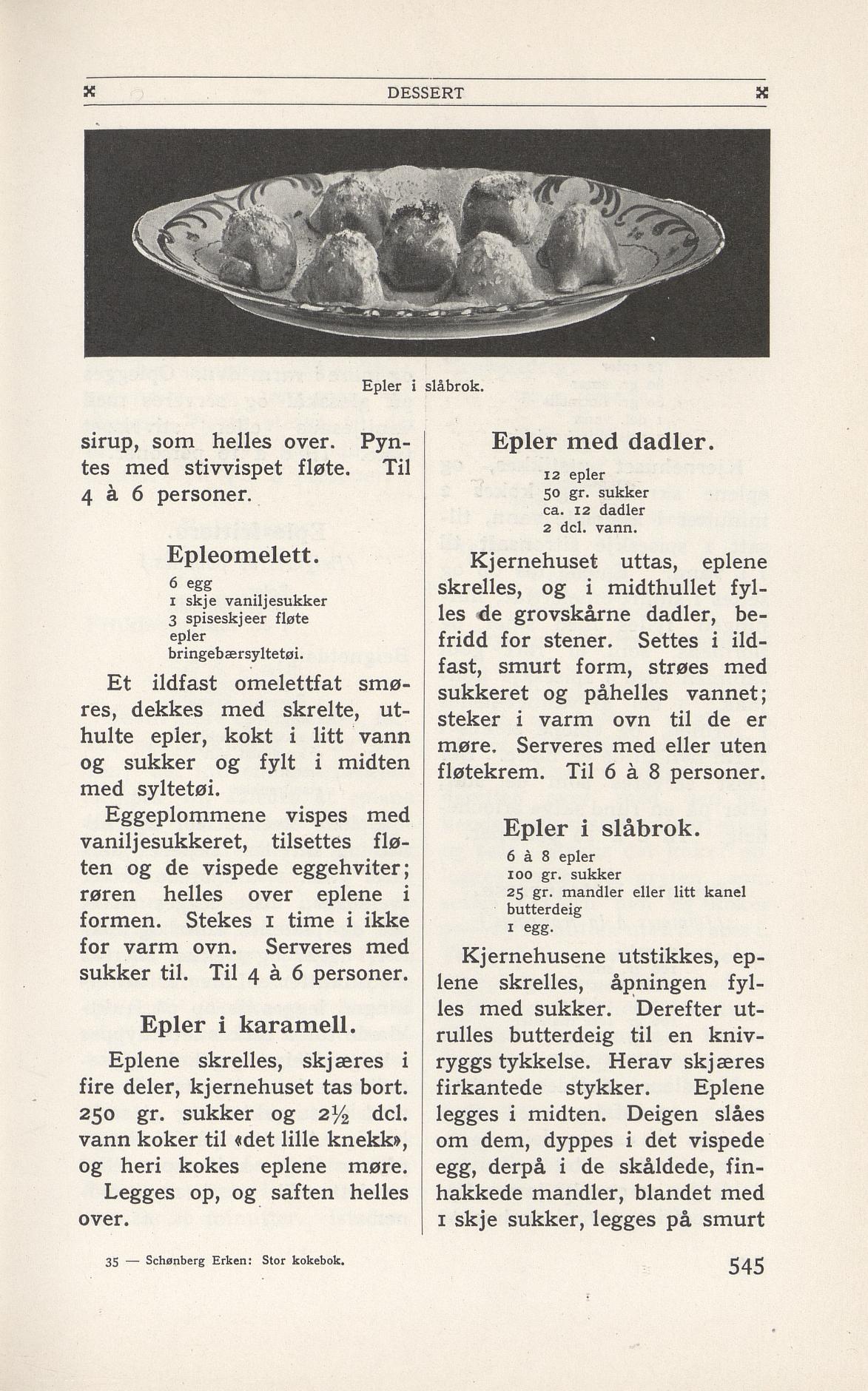
Apples in Dressing Gowns (Epler i slåbrok)

Apples in dressing gowns (epler i slåbrok, whole apples wrapped in puff pastry): peeled, cored apples filled with sugar, wrapped in puff pastry, dipped in egg and chopped almonds, and baked about 30 min in a hot oven. From Erken's Stor kokebok 1914, page 475.

Source: Henriette Schønberg Erken, Stor kokebok, 1914-utg. s. 475 (falt i det fri)

Be the first to rate

About the dish

"Epler i slåbrok" – apples in a morning robe – is a classic still made today. Erken uses puff pastry made from her own recipe on page 15 and garnishes with blanched, finely chopped almonds.

How to make it

  1. 1

    Prepare the apples

    Core and peel the apples. Fill the opening with sugar.

  2. 2

    Wrap the apples

    Roll out the puff pastry about 3 mm thick and cut it into square pieces. Place an apple in the center of each piece and fold the pastry up around the apple.

  3. 3

    Coat

    Blanch and finely chop the almonds and mix them with 1 tablespoon sugar. Brush or dip the apples in beaten egg and turn them in the almond mixture. Cinnamon can be used instead of almonds.

  4. 4

    Bake

    Place the apples on a greased baking sheet with the seam side down. Bake about 30 minutes in a hot oven (about 200 °C (390 °F)), until the pastry is golden and the apples are tender.

Changes from the original

The puff pastry is given as ready-made puff pastry with an estimated quantity (the original refers to its own recipe on page 15). "Thickness of a knife's back" has been converted to about 3 mm, and "hot oven" to about 200 °C (390 °F).

In stores now

Clean, minimally processed groceries matched to the ingredients — approximate prices.

Product data and prices via Kassalapp. Prices are updated daily and may vary.

Time machine – what changed?

Pick two editions and see what Henriette Schønberg Erken added, removed or changed between them.

1949 (proofread, p. 545) → Modernised~86% of the text changedremovedadded
6 å 8 7 stk epler (6–8 stk, jevnstore). 100 gr. g sukker (1 spiseskje settes av til mandelblandingen). 25 gr. g mandler eller (eller litt kanel i stedet). 600 g butterdeig (hjemmelaget eller ferdig). 1 egg. Kjernehusene utstikkes, eplene skrelles, stk egg (sammenpisket). Stikk ut kjernehuset og skrell eplene. Fyll åpningen fylles med sukker. Derefter utrulles butterdeig til en knivryggs tykkelse. Herav skjæres sukker.. Kjevle butterdeigen ut ca. 3 mm tykk og skjær firkantede stykker. Eplene legges i midten. Deigen slåes Legg et eple midt på hvert stykke og brett deigen opp om dem, dyppes i det vispede egg, derpå i de skåldede, finhakkede mandler, blandet eplet.. Skåld og finhakk mandlene og bland dem med 1 skje sukker, legges spiseskje sukker. Pensle eller dypp eplene i sammenpisket egg og vend dem i mandelblandingen. Kanel kan brukes i stedet for mandler.. Legg eplene på smurt plate stekeplate med den side ned hvor deigen er påtrykket. Stekes skjøten ned. Stek ca. 30 minutter i varm ovn ca. ½ time, eller (ca. 200 °C), til eplene deigen er gyllen og eplene møre. Til 6 å 8 personer.

Note on Modernised

Butterdeigen er angitt som ferdig butterdeig med mengdeanslag (originalen viser til egen oppskrift side 15). «Knivrygs tykkelse» er omregnet til ca. 3 mm, og «varm ovn» til ca. 200 °C.

Community interpretations

Be the first to share your own version.

See interpretations →

Frequently asked questions

What are "apples in dressing gowns"?
They are whole, peeled apples with the core removed, filled with sugar and wrapped in puff pastry – the "dressing gown." They are brushed with egg, dipped in chopped almonds and sugar, and baked until the apples are tender.
How long and at what temperature should they be baked?
In a hot oven for about half an hour, or until the apples are tender. Place them on a greased sheet with the seam (where the pastry is pressed together) facing down.
What ingredients do I need?
6–8 apples, 100 g sugar, 25 g almonds (or a little cinnamon instead), puff pastry, and 1 egg. Roll the puff pastry out to the thickness of a knife's back and cut it into square pieces.
Where does the recipe come from?
From Henriette Schønberg Erken's Stor kokebok (1914), page 475.

Related recipes

More dishes in the same category from the archive

Read also

Kommentarer

Ingen kommentarer ennå. Bli den første til å dele!