Skip to content

Apple Paste

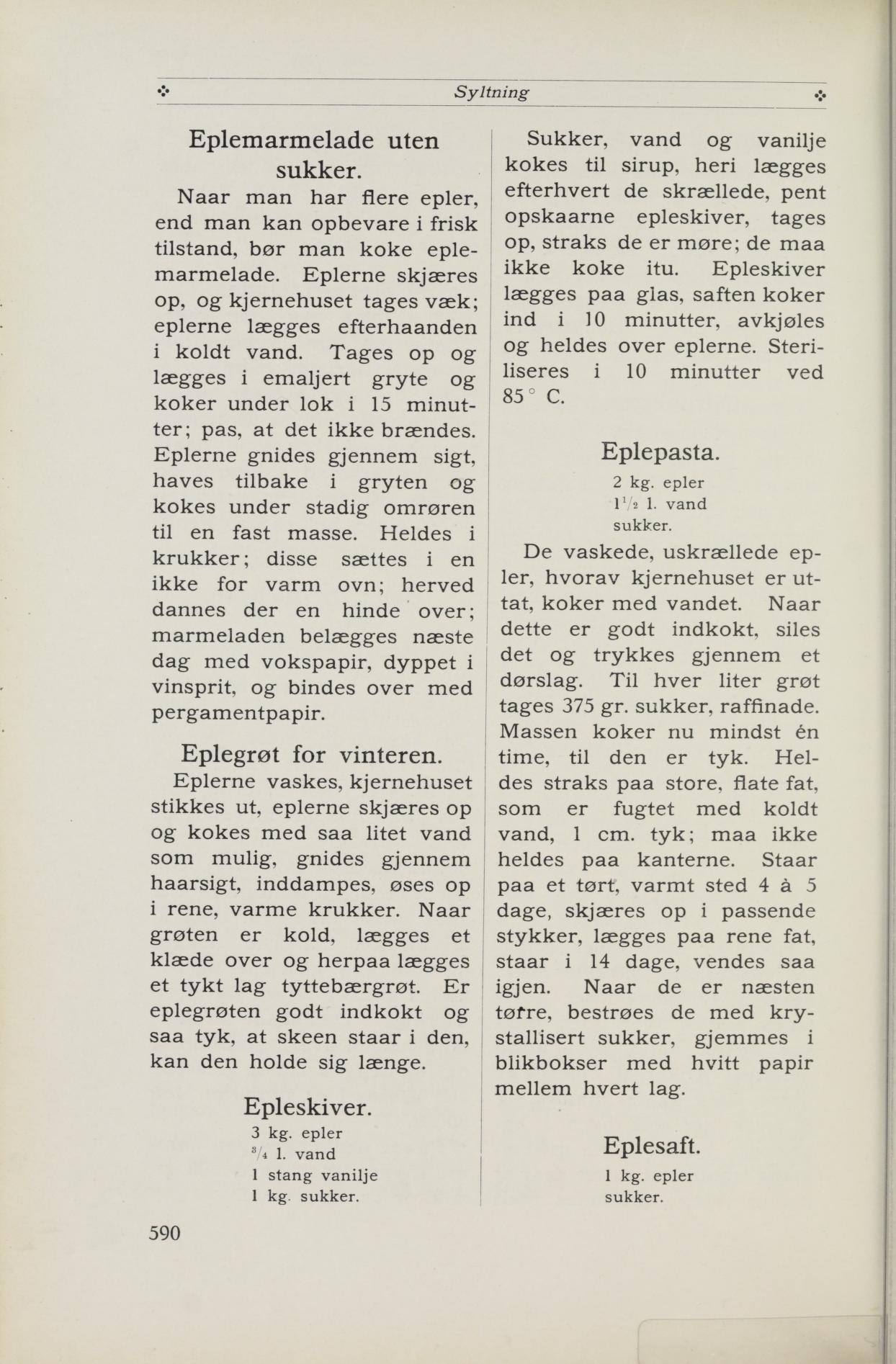
Apple paste (Erken 1914): 2 kg unpeeled apples are cooked with 5 dl water, passed through a sieve, cooked at least 1 hour with 375 g sugar per liter of purée, poured 1 cm thick onto moistened platters, dried 4–5 days, cut into pieces, dried a further 14 days, sugared, and stored in tins.

Source: Henriette Schønberg Erken, Stor kokebok, 1914-utg. s. 590 (falt i det fri)

Be the first to rate

About the dish

Apple paste is a dried fruit confection – the forerunner of today's fruit leather and pâte de fruits. The long air-drying on platters allows the mass to be cut into pieces and stored in tins through the winter.

How to make it

  1. 1

    Cook the apples

    Wash the apples, remove the cores, but leave the skin on. Cook the apples with the water until it is well reduced.

  2. 2

    Pass

    Strain the mass and press it through a colander.

  3. 3

    Cook with sugar

    Allow 375 g sugar for each liter of apple purée. Let the mass cook at least one hour, until it is thick.

  4. 4

    Pour out

    Pour the mass out immediately onto large, flat platters moistened with cold water, in a layer 1 cm thick. Do not pour it over the edges.

  5. 5

    Dry

    Let the paste stand in a dry, warm place for 4–5 days. Then cut it into suitable pieces, place them on clean platters, and let them stand for 14 days. Then turn them.

  6. 6

    Sugar and store

    When the pieces are almost dry, sprinkle them with granulated sugar and place them in airtight tins with white paper between each layer.

Changes from the original

Measurements in modern units; "refined sugar" is modernized to white sugar. The drying can be done in a low oven as an alternative to a warm room. Tin boxes are replaced by airtight containers.

Tidsmaskin – hva endret seg?

Velg to utgaver og se hva Henriette Schønberg Erken la til, fjernet eller endret mellom dem.

1914 (korrekturlest, s. 590)1949 (korrekturlest, s. 709)~43% av teksten endretfjernetlagt til
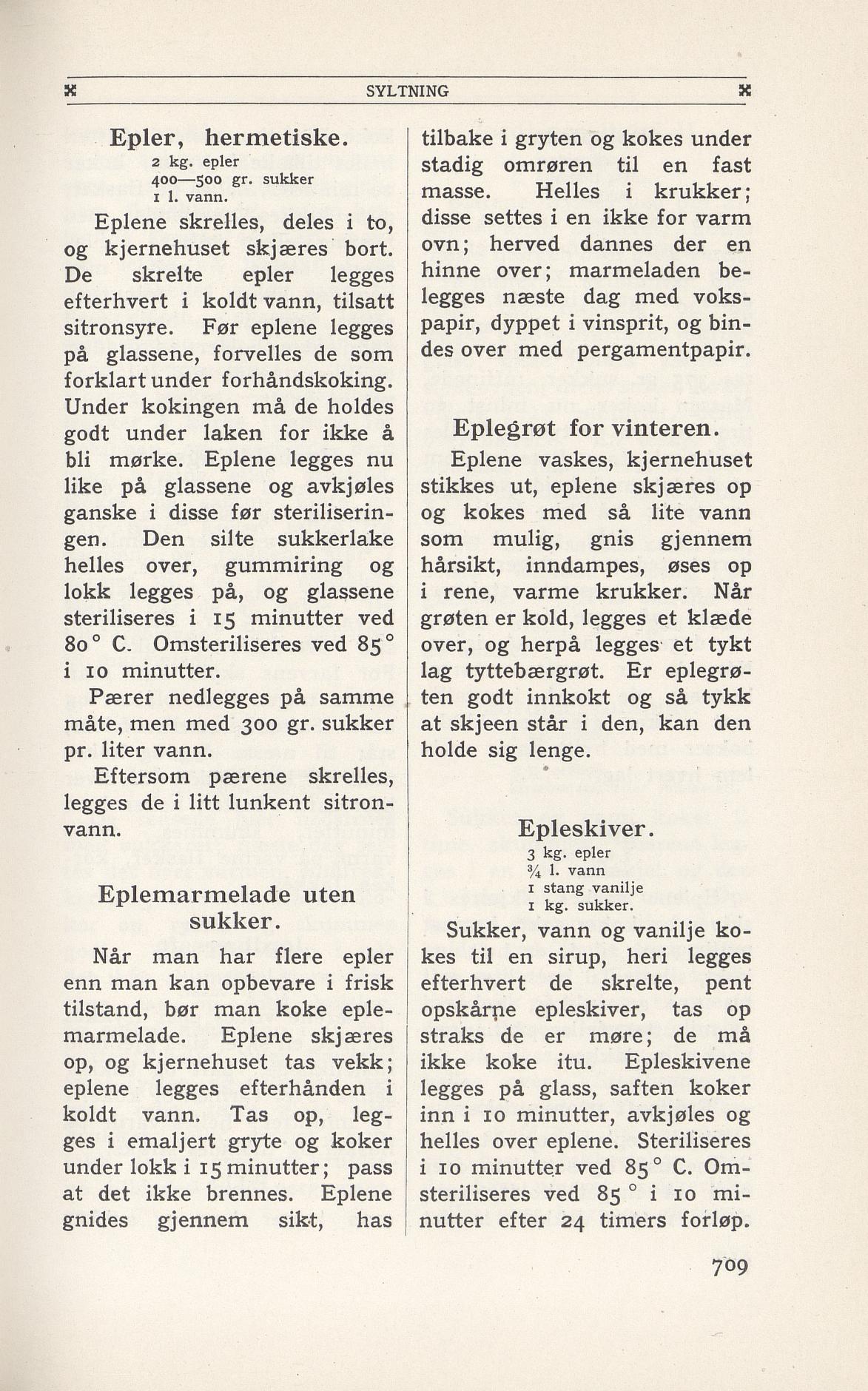
2 kg. epler 1/2 l. vand vann sukker. De vaskede, uskrællede uskrelte epler, hvorav kjernehuset er uttat, uttatt, koker med vandet. Naar vannet. Når dette er godt indkokt, innkokt, siles det og trykkes gjennem et dørslag. Til hver liter grøt tages tas 375 gr. sukker, raffinade. Massen koker nu mindst minst én time, time til den er tyk. Heldes tykk. Helles straks paa store, flate fat, som er fugtet fuktet med koldt vand, vann, 1 cm. tyk; maa tykk; må ikke heldes paa kanterne. Staar paa helles på kantene. Står på et tørt, varmt sted 4 à å 5 dage, dager, skjæres op i passende stykker, lægges paa legges på rene fat, staar står i 14 dage, dager, vendes saa igjen. Naar Når de er næsten tørre, bestrøes de med krystallisert sukker, gjemmes i blikbokser blikk bokser med hvitt papir mellem hvert lag.
Community interpretations

Be the first to share your own version.

See interpretations

Frequently asked questions

Must the apples be peeled?
No. The recipe uses washed, unpeeled apples – only the cores are removed. The apples are cooked with 1/2 liter of water, strained, and pressed through a colander.
How much sugar should I use?
375 grams of refined sugar per liter of apple purée. The mass is then cooked for at least one hour until it is thick.
How long does the drying take?
The paste is poured 1 cm thick onto large, flat platters moistened with cold water and left in a warm, dry place for 4–5 days. Then it is cut into pieces that stand for 14 days on clean platters, are turned, and when they are almost dry are sprinkled with granulated sugar.
How is the apple paste stored?
In tins (airtight containers) with white paper between each layer, so the pieces do not stick together.

Related recipes

More dishes in the same category from the archive

Read also

Kommentarer

Ingen kommentarer ennå. Bli den første til å dele!