Skip to content

Apple Jelly

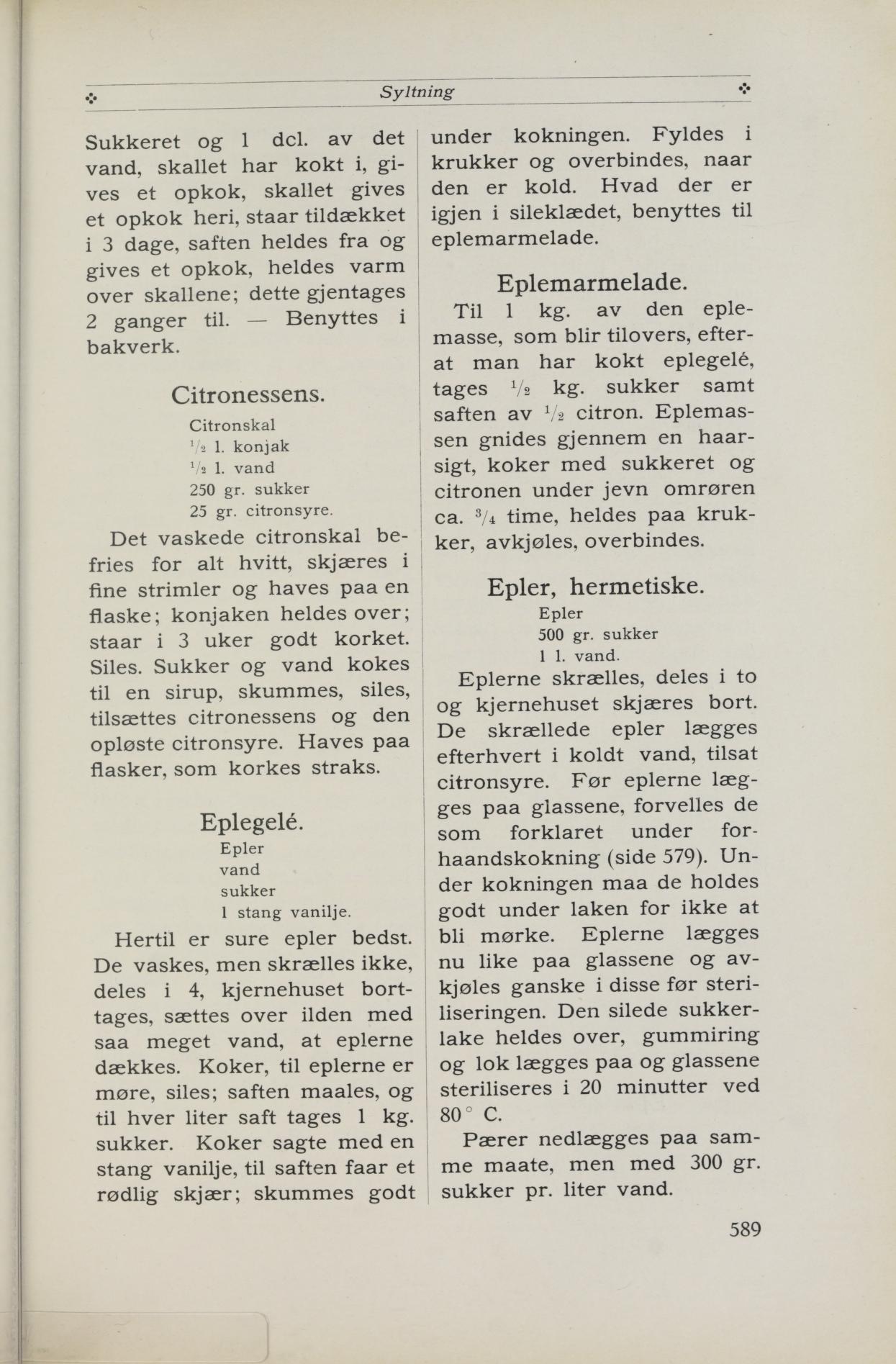
Classic apple jelly from Erken 1914: tart apples are boiled tender in water, the juice is strained, boiled with 1 kg sugar per liter and a vanilla pod until it takes on a reddish tinge; the remaining pulp is used for apple marmalade.

Source: Henriette Schønberg Erken, Stor kokebok, 1914-utg. s. 589 (falt i det fri)

Be the first to rate

About the dish

Apple jelly was the housewife's way of using up the apple harvest: the juice became jelly, and the remains in the straining cloth became apple marmalade. The recipe is in the preserving chapter of 'Stor kokebok' (1914).

How to make it

  1. 1

    Cut the apples

    Wash the apples, but do not peel them. Quarter them and cut away the cores.

  2. 2

    Boil

    Put the apples in a pot with enough water to cover them, and boil until they are completely tender.

  3. 3

    Strain the juice

    Pour the mass into a cloth or a jelly bag and let the juice strain off. Measure the juice.

  4. 4

    Boil the jelly

    Take 1 kg sugar per liter of juice. Boil gently with a vanilla pod until the juice takes on a reddish tinge, and skim well during boiling.

  5. 5

    Fill the jars

    Fill the jelly into jars and cover when it is completely cold.

  6. 6

    Use the leftovers

    The apple pulp left in the straining cloth is used for apple marmalade.

Changes from the original

Quantities have been made concrete for a practical batch (3 kg apples), the ratio of 1 kg sugar per liter of juice has been kept. Units modernized (kg, l). The straining cloth is given as a cloth or jelly bag.

Time machine – what changed?

Pick two editions and see what Henriette Schønberg Erken added, removed or changed between them.

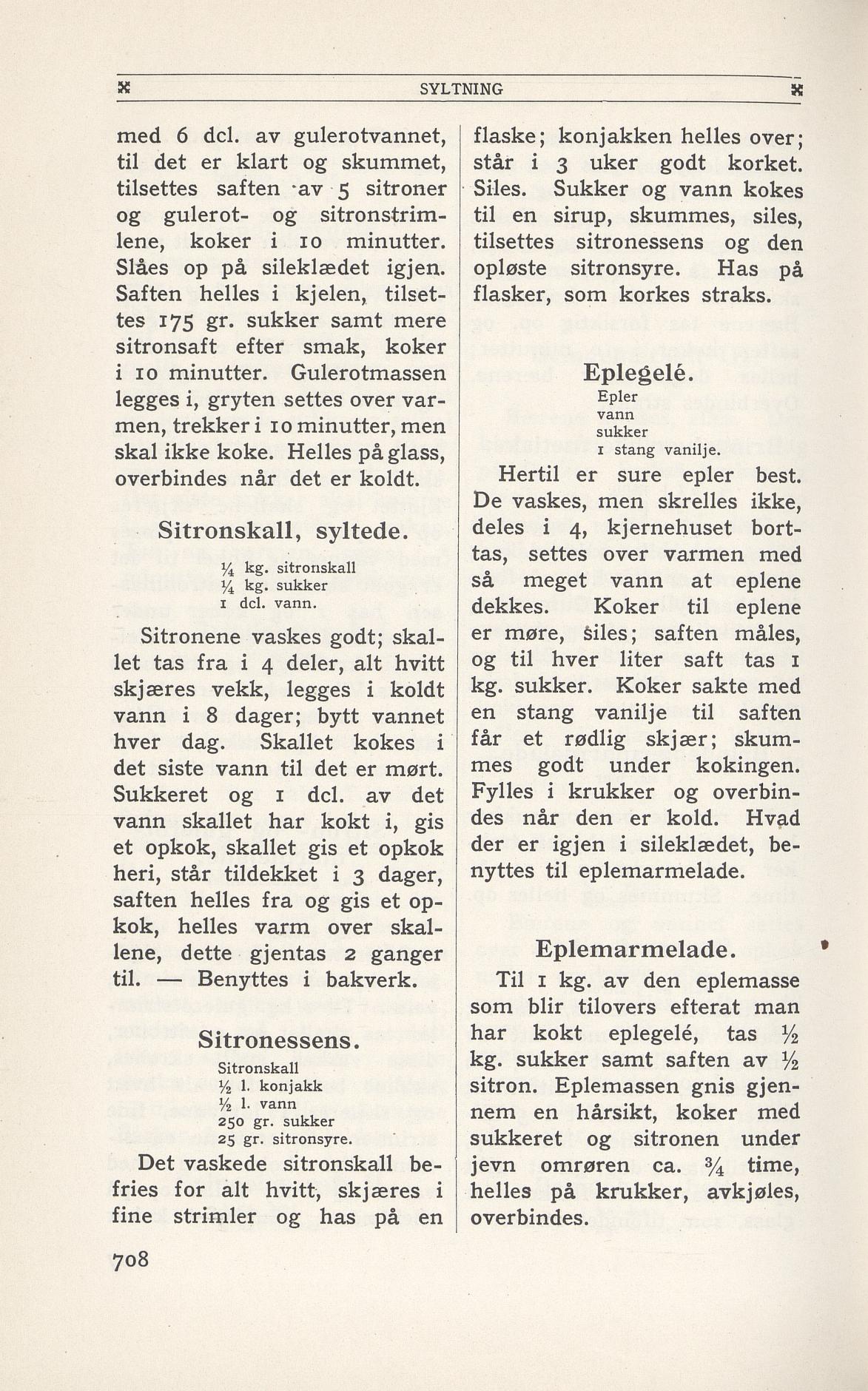
Modernised → 1949 (proofread, p. 708)~80% of the text changedremovedadded
3 kg Epler vann sukker i stang vanilje. Hertil er sure epler (vaskes, best. De vaskes, men skrelles ikke). vann (nok til å dekke eplene). 1 kg sukker (per liter silt saft). 1 stk vaniljestang. Vask eplene, men ikke skrell dem. Del dem i fire og skjær bort kjernehuset.. Legg eplene ikke, deles i en kjele 4, kjernehuset borttaes, settes over varmen med så mye meget vann at de er dekket, og kok eplene dekkes. Koker til de eplene er helt møre.. Hell massen i et klede eller en geléspose og la møre. Siles; saften sile av. Mål saften.. Ta 1 kg sukker per måles, og til hver liter saft. Kok forsiktig saft tas 1 kg. sukker. Koker sakte med en vaniljestang stang vanilje til saften får et rødlig skjær, og skum skjær; skum­mes godt under kokingen.. Fyll geléen kokingen. Fylles i krukker og bind over overbin­des når den er helt kald.. Eplemassen som kold. Hvad­der er igjen i silekledet, brukes sileklædet, be­nyttes til eplemarmelade.

Note on Modernised

Mengder er konkretisert til en praktisk porsjon (3 kg epler), forholdet 1 kg sukker per liter saft er beholdt. Enheter modernisert (kg., l.). Silekle er angitt som klede eller geléspose.

Community interpretations

Be the first to share your own version.

See interpretations →

Frequently asked questions

Which apples are best for apple jelly?
Tart apples are best. They are washed but not peeled – they are quartered and the cores are removed.
How much sugar should I use?
The juice is measured after straining, and you take 1 kg sugar per liter of juice. A vanilla pod is boiled along with it.
How do I know the jelly is done?
It is boiled slowly until the juice takes on a reddish tinge, and skimmed well along the way. Fill it into jars and cover when it is cold.
Can I use the leftovers from the straining cloth?
Yes, what is left in the straining cloth is used for apple marmalade – according to Schønberg Erken's 'Stor kokebok' (1914).

Related recipes

More dishes in the same category from the archive

Read also

Kommentarer

Ingen kommentarer ennå. Bli den første til å dele!