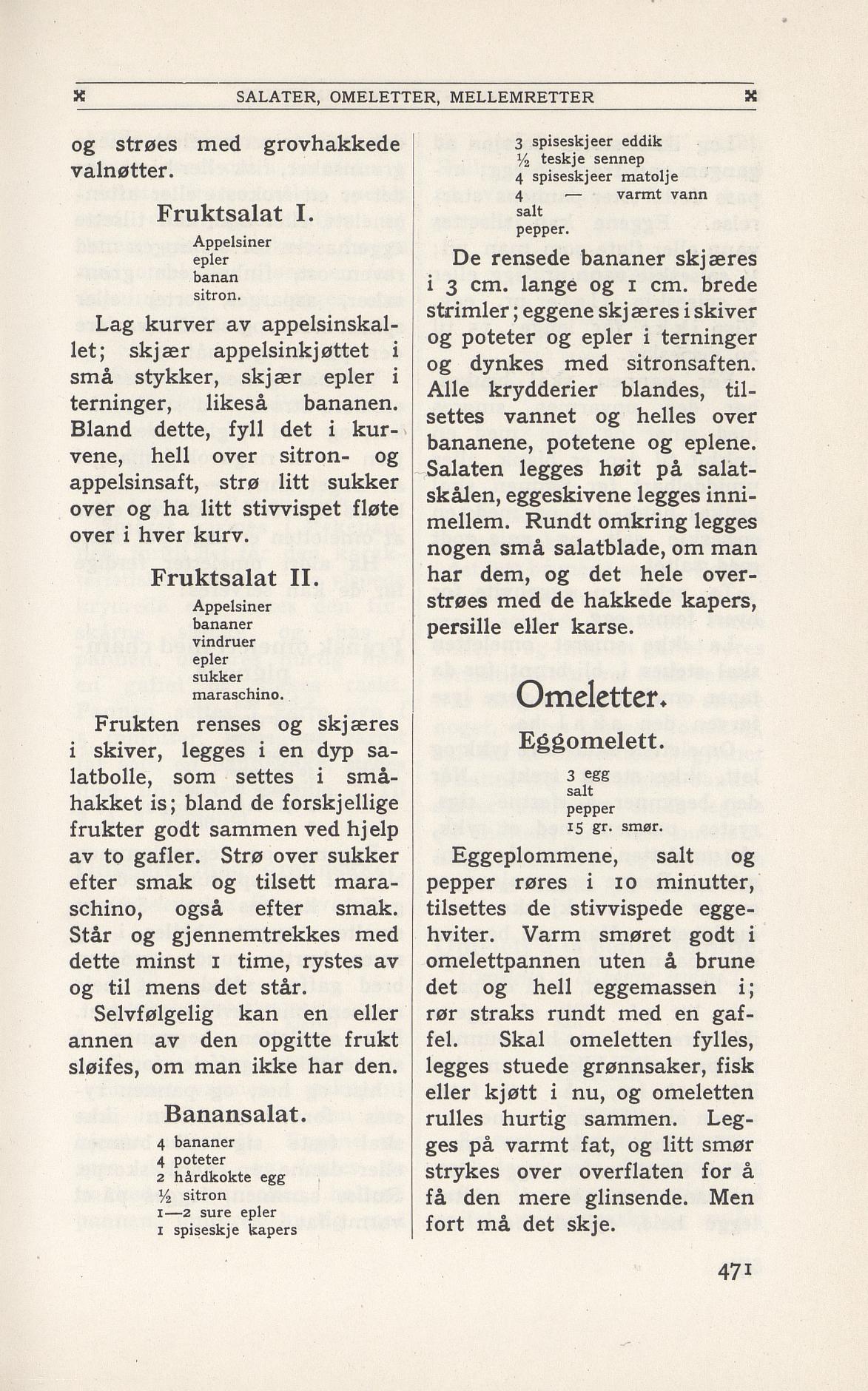
Original 1914 recipe
Verbatim from the first edition of the Big Cookbook.
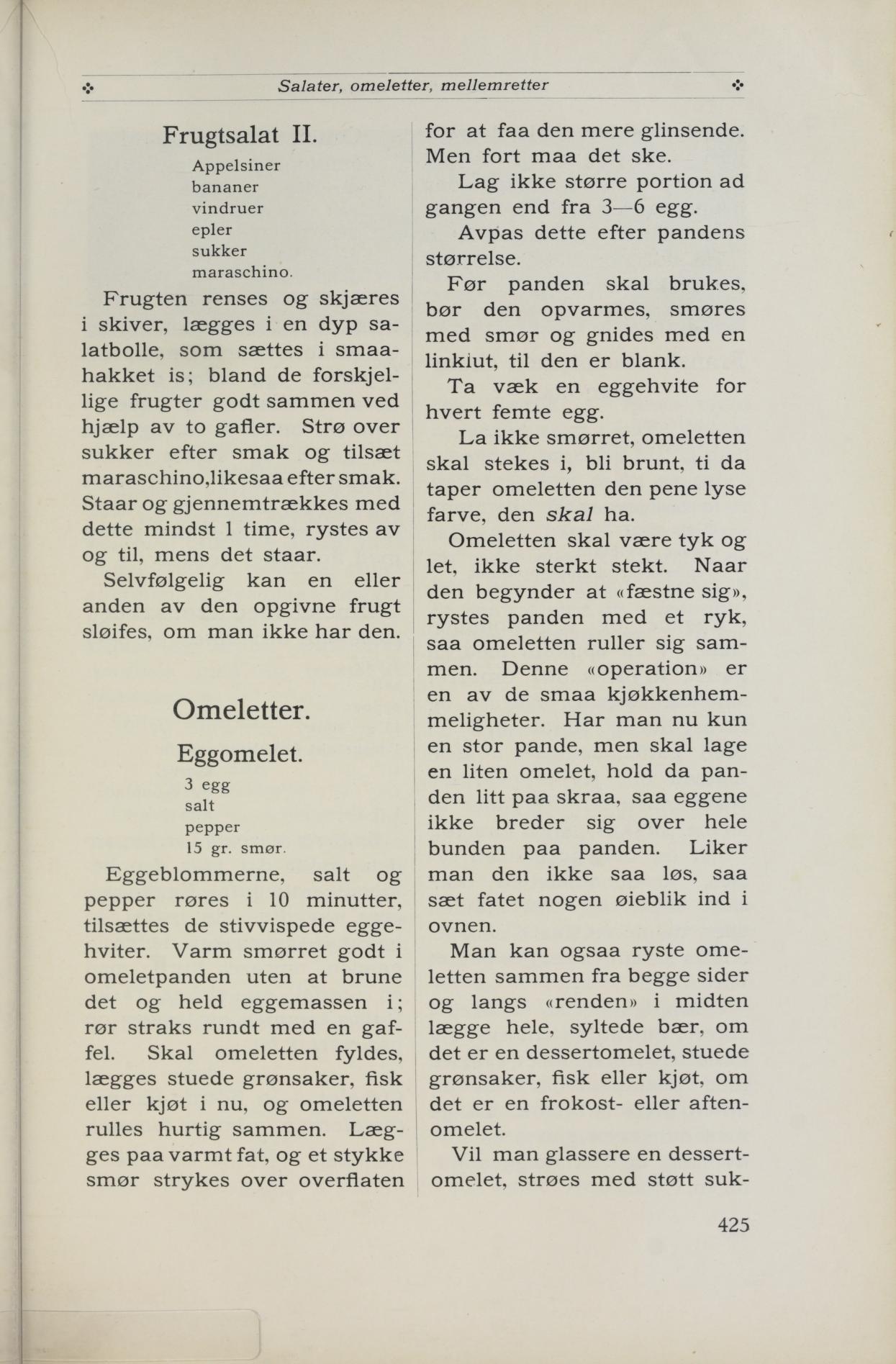
Erken's basic egg omelette (1914): 3 eggs, salt, pepper, and 15 g butter. Egg yolks beaten 10 minutes with salt and pepper, stiffly beaten whites folded in, cooked in pale butter in a hot omelette pan, optionally filled with creamed vegetables, fish, meat, or preserved berries, rolled up and brushed with butter. Includes advice on the pan, egg quantity, and glazing with burnt sugar.
Source: Henriette Schønberg Erken, Stor kokebok, 1914-utg. s. 425 (falt i det fri)
The basic recipe in Erken's omelette section, with her detailed advice on the omelette pan, the amount of eggs, the color of the butter, and the little "kitchen secrets" of shaking the omelette together. It can be made both as a breakfast/supper omelette filled with creamed vegetables, fish, or meat, and as a dessert omelette with preserved berries and a burnt-sugar pattern.
Prepare the pan
Heat the omelette pan before use, grease it with butter, and rub it with a linen cloth until it is shiny. Do not make a larger portion than 3–6 eggs at a time, adjusted to the size of the pan; if many eggs are used, remove one egg white for every fifth egg.
Beat the egg yolks
Beat the egg yolks, salt, and pepper together for 10 minutes.
Fold in the egg whites
Beat the egg whites stiff and fold them gently into the egg yolk mixture.
Cook the omelette
Heat the butter well in the omelette pan without browning it – browned butter makes the omelette lose its nice, pale color. Pour in the egg mixture and stir immediately with a fork. The omelette should be thick and light, not heavily cooked.
Fill and roll up
If the omelette is to be filled, put in the creamed vegetables, fish, or meat now, and roll the omelette up quickly. When it begins to set, jerk the pan sharply so the omelette rolls itself together. If you have only a large pan for a small omelette, hold the pan slightly tilted so the eggs do not spread over the whole bottom.
Plate
Place the omelette on a warm platter and brush a piece of butter over the surface so it becomes glossy – but this must be done quickly. If you want it firmer, put the platter into the oven for a few moments.
Variations
The omelette can also be shaken together from both sides, and along the "channel" in the middle you place whole preserved berries for a dessert omelette, or creamed vegetables, fish, or meat for a breakfast or supper omelette. A dessert omelette can be glazed: sprinkle powdered sugar over it and make brown patterns in the sugar with a red-hot, clean iron after the omelette is on the platter.
Serving
Never have omelettes ready before they can be served.
Quantities are kept (3 eggs, 15 g butter); salt and pepper are given as a pinch/to taste. Filling is listed as an optional ingredient. Erken's general advice on the pan, egg whites, and cooking is brought in as its own step in modern language.
Original 1914 recipe
Verbatim from the first edition of the Big Cookbook.

Revised 1949 recipe
From the revised edition of the Big Cookbook.

Clean, minimally processed groceries matched to the ingredients — approximate prices.
Egg
Smør
Product data and prices via Kassalapp. Prices are updated daily and may vary.
Note on Modernised
Mengder er beholdt (3 egg, 15 g smør); salt og pepper er angitt som knivsodd/etter smak. Fyll er ført opp som valgfri ingrediens. Erkens generelle råd om panne, eggehviter og steking er ført inn som eget trinn i moderne språk.
Be the first to share your own version.
More dishes in the same category from the archive
Ingen kommentarer ennå. Bli den første til å dele!