Original 1914 recipe
Verbatim from the first edition of the Big Cookbook.
ProofreadPage 448
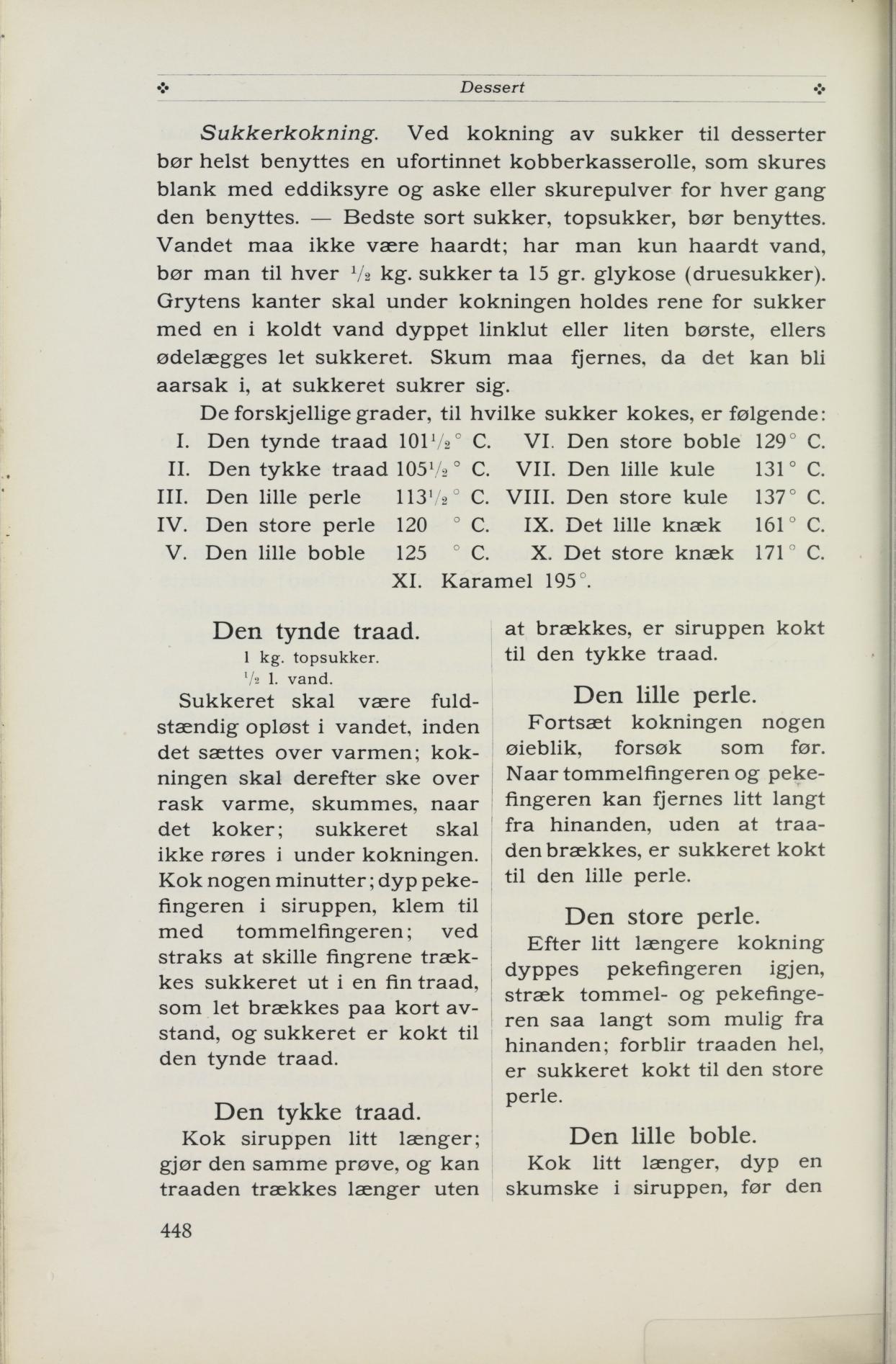
Den tynde traad.
1 kg. topsukker.
1 l. vand.
Sukkerkokning. Ved kokning av sukker til desserter bør helst benyttes en ufortinnet kobberkasserolle, som skures blank med eddiksyre og aske eller skurepulver for hver gang den benyttes. — Bedste sort sukker, topsukker, bør benyttes. Vandet maa ikke være haardt; har man kun haardt vand, bør man til hver ½ kg. sukker ta 15 gr. glykose (druesukker). Grytens kanter skal under kokningen holdes rene for sukker med en i koldt vand dyppet linklut eller liten børste, ellers ødelægges let sukkeret. Skum maa fjernes, da det kan bli aarsak i, at sukkeret sukrer sig.
De forskjellige grader, til hvilke sukker kokes, er følgende:
I. Den tynde traad 101½° C. II. Den tykke traad 105½° C. III. Den lille perle 113½° C. IV. Den store perle 120° C. V. Den lille boble 125° C. VI. Den store boble 129° C. VII. Den lille kule 131° C. VIII. Den store kule 137° C. IX. Det lille knæk 161° C. X. Det store knæk 171° C. XI. Karamel 195° C.
Sukkeret skal være fuldstændig opløst i vandet, inden det sættes over varmen; kokningen skal derefter ske over rask varme, skummes, naar det koker; sukkeret skal ikke røres i under kokningen.
Den tynde traad: Kok nogen minutter; dyp pekefingeren i siruppen, klem til med tommelfingeren; ved straks at skille fingrene trækkes sukkeret ut i en fin traad, som let brækkes paa kort avstand, og sukkeret er kokt til den tynde traad.
Den tykke traad: Kok siruppen litt længer; gjør den samme prøve, og kan traaden trækkes længer uten at brækkes, er siruppen kokt til den tykke traad.
Den lille perle: Fortsæt kokningen nogen øieblik, forsøk som før. Naar tommelfingeren og pekefingeren kan fjernes litt langt fra hinanden, uden at traaden brækkes, er sukkeret kokt til den lille perle.
Den store perle: Efter litt længere kokning dyppes pekefingeren igjen, stræk tommel- og pekefingeren saa langt som mulig fra hinanden; forblir traaden hel, er sukkeret kokt til den store perle.
Den lille boble: Kok litt længer, dyp en skumske i siruppen, før den let over gryten og blæs gjennem hullerne. Hvis der viser sig smaa bobler paa den anden side, er sukkeret kokt til den lille boble.