Skip to content

Rhubarb in Water

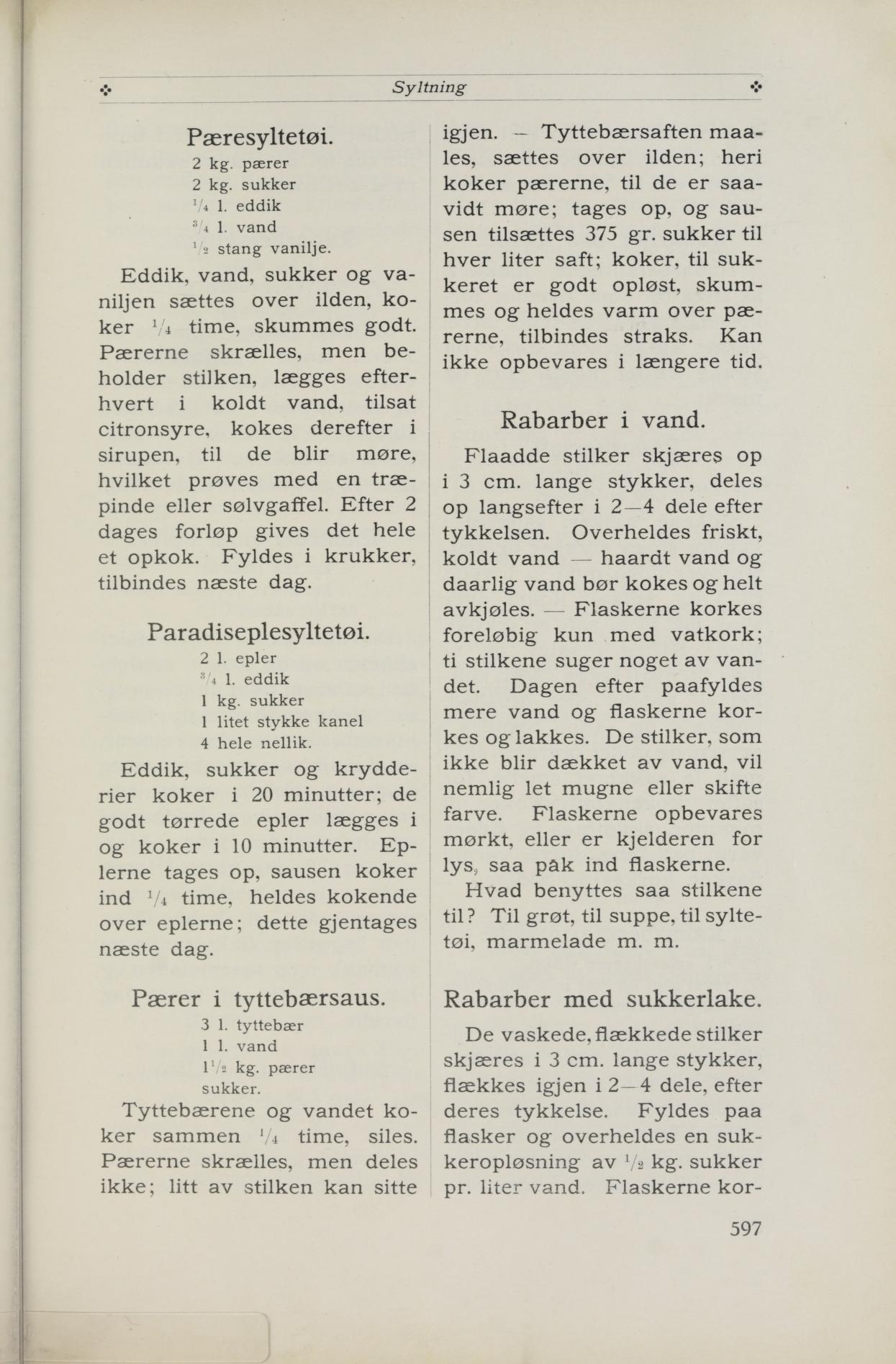
Rhubarb in water (Erken 1914): rhubarb stalks are peeled, cut into 3 cm pieces split lengthwise, placed in bottles and covered with cold water. Corked loosely the first day, topped up with water the next day, corked and sealed, stored dark. Used for porridge, soup and jam.

Source: Henriette Schønberg Erken, Stor kokebok, 1914-utg. s. 597 (falt i det fri)

Be the first to rate

About the dish

The simplest form of rhubarb preservation before freezers existed: the stalks were placed in bottles with cold water. Erken reminds us that the stalks are later used for porridge, soup, jam and marmalade.

How to make it

  1. 1

    Cut the stalks

    Peel the stalks and cut them into 3 cm long pieces. Split the pieces lengthwise into 2 to 4 parts depending on thickness.

  2. 2

    Fill the bottles

    Place the stalks in bottles and pour over fresh, cold water. Hard or poor water should be boiled and cooled completely first.

  3. 3

    Loose cork the first day

    Cork the bottles for now only with a loose cotton plug, since the stalks soak up some of the water.

  4. 4

    Top up and cork

    The next day top up with more water, and cork and seal the bottles. Stalks not covered by water easily grow moldy or change color.

  5. 5

    Storage

    Set the bottles in the dark. If the cellar is too light, wrap the bottles. The stalks are later used for porridge, soup, jam and marmalade.

Changes from the original

No ingredient list in the original; it has been set up with rhubarb and water. The method is broken into numbered steps in modern Norwegian. "Cotton cork" explained as a loose cotton plug.

Time machine – what changed?

Pick two editions and see what Henriette Schønberg Erken added, removed or changed between them.

1914 (proofread, p. 597) → Modernised~86% of the text changedremovedadded
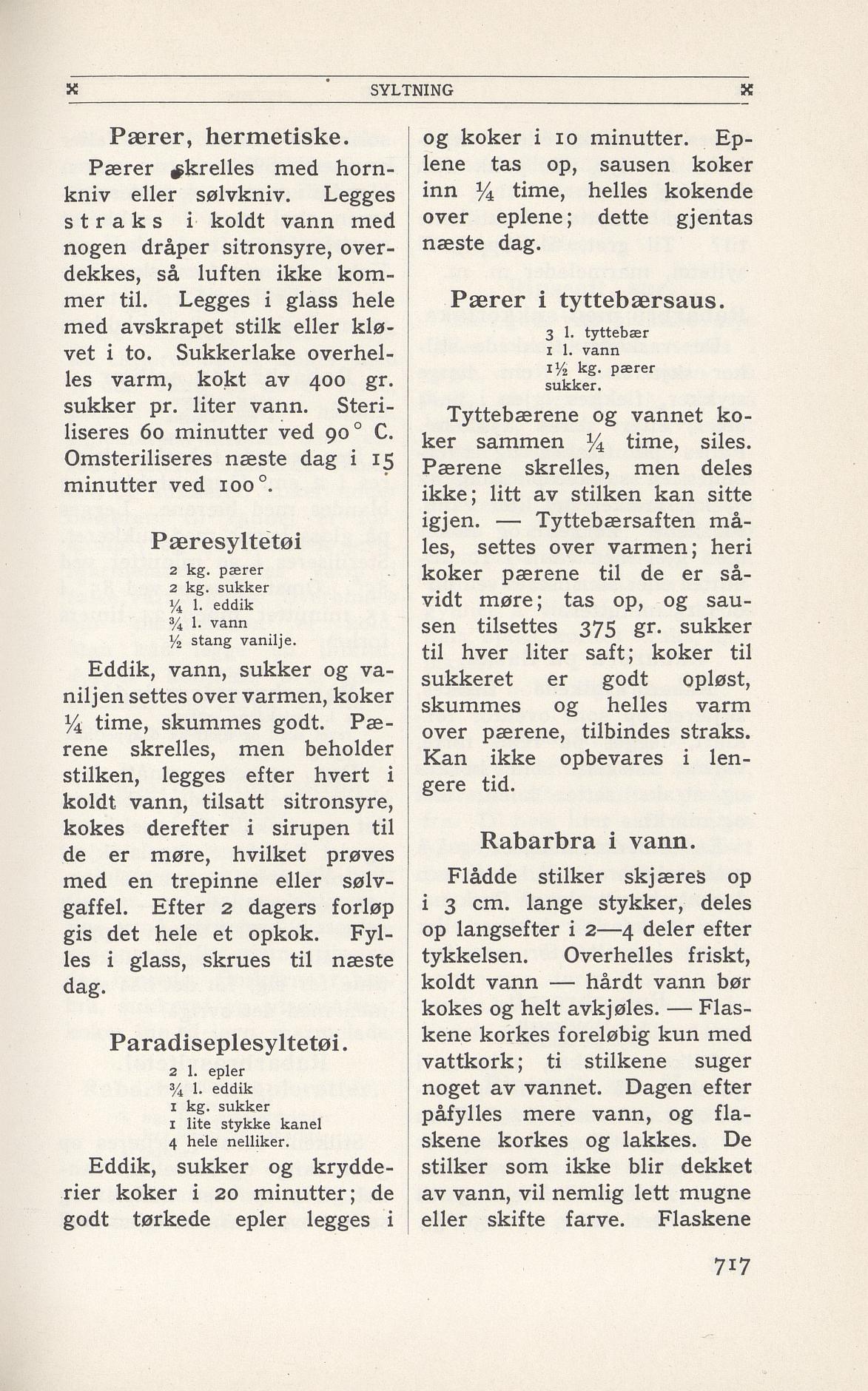
Flaadde stilker skjæres op rabarbrastilker (flådde). friskt, kaldt vann (hardt eller dårlig vann kokes og avkjøles helt). Flå stilkene og skjær dem i 3 cm. cm lange stykker, deles op langsefter stykker. Del stykkene på langs i 2—4 dele efter tykkelsen. Overheldes friskt, koldt vand — haardt vand 2–4 deler etter tykkelsen.. Legg stilkene på flasker og daarlig vand hell over friskt, kaldt vann. Hardt eller dårlig vann bør kokes og avkjøles helt avkjøles. — Flaskerne korkes foreløbig kun først.. Kork flaskene foreløpig bare med vatkork; ti en løs bomullspropp, siden stilkene suger noget opp noe av vandet. vannet.. Dagen efter paafyldes mere vand etter fylles det på mer vann, og flaskerne flaskene korkes og lakkes. De stilker, Stilker som ikke blir dækket er dekket av vand, vil nemlig let mugne eller skifte farve. Flaskerne opbevares mørkt, vann muggner lett eller er kjelderen skifter farge.. Sett flaskene mørkt. Er kjelleren for lys, saa pak ind flaskerne. Hvad benyttes saa stilkene til? Til grøt, pakkes flaskene inn. Stilkene brukes senere til grøt, suppe, til syltetøi, marmelade m. m. syltetøy og marmelade.

Note on Modernised

Ingen ingrediensliste i originalen; den er satt opp med rabarbra og vann. Fremgangsmåten er delt i nummererte trinn på moderne norsk. «Vatkork» forklart som løs bomullspropp.

Community interpretations

Be the first to share your own version.

See interpretations →

Frequently asked questions

Why should the bottles first be closed only with a cotton plug?
Because the rhubarb stalks soak up some of the water during the first day. The next day you top up with more water, cork properly and seal the bottles.
What do I do if the water is hard or of poor quality?
Then the water should be boiled and cooled completely before it is poured over the stalks. Otherwise, use fresh, cold water directly.
How should the bottles be stored?
In the dark. If the cellar is too light, wrap the bottles. All stalks must also be covered by water, otherwise they may grow moldy or change color.
What can the water-preserved rhubarb be used for?
According to Schønberg Erken's "Stor kokebok" (1914), for porridge, soup, jam, marmalade and more.

Related recipes

More dishes in the same category from the archive

Read also

Kommentarer

Ingen kommentarer ennå. Bli den første til å dele!