Skip to content

Macaroni (basic recipe)

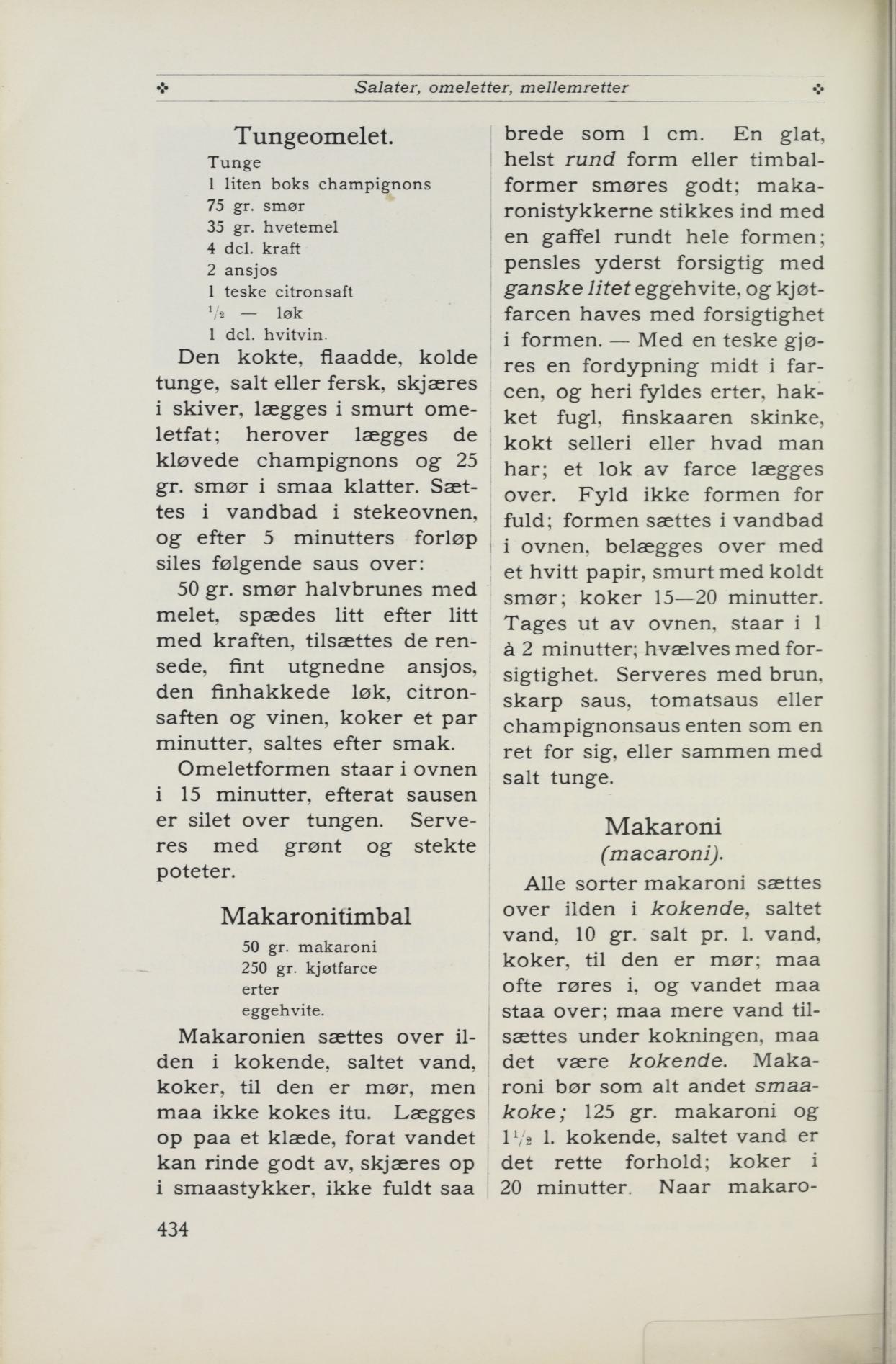
Erken's basic instruction for macaroni (1914): 125 g macaroni is simmered in 1½ liters of boiling water with 10 g salt per liter for about 20 minutes, drained in a sieve, cut into pieces, and tossed dry in a pot over the heat. Macaroni should not be cooled after boiling.

Source: Henriette Schønberg Erken, Stor kokebok, 1914-utg. s. 434 (falt i det fri)

Be the first to rate

About the dish

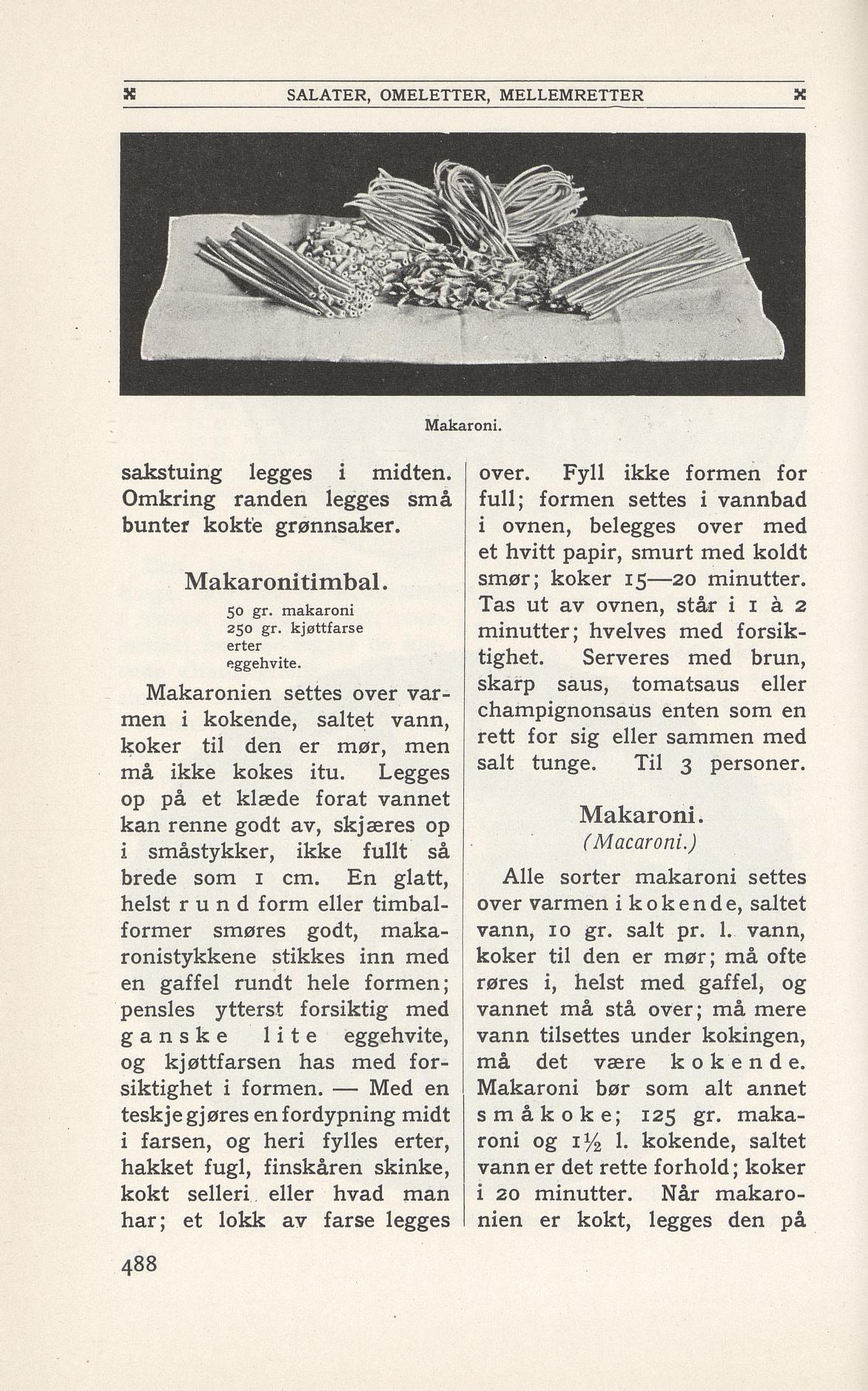
This is Erken's basic instruction for boiling macaroni, which introduces a series of macaroni dishes (à l'italienne, creamed, à la Napolitaine, with crayfish, with tomato sauce). At the time, macaroni was sold in long tubes that were boiled whole and then cut up.

How to make it

  1. 1

    Bring the water to a boil

    Bring 1½ liters of water to a boil with 10 g salt per liter.

  2. 2

    Boil the macaroni

    Place the macaroni in the boiling, salted water and let it simmer until tender, about 20 minutes. Stir often, and make sure the water covers the macaroni. If you need to top up the water, it must be boiling.

  3. 3

    Drain

    Place the boiled macaroni in a sieve so all the water drains off.

  4. 4

    Cut up

    Lay the macaroni tubes side by side on the cutting board and cut through all of them at once.

  5. 5

    Dry over the heat

    Place the macaroni in a pot and toss it over the heat until the pieces are dry. Macaroni, like all dough products, should not be cooled after boiling.

Changes from the original

The amounts are drawn from the original's text and set out as an ingredient list (the original gives them running in the text). Otherwise no changes beyond modern step division.

Time machine – what changed?

Pick two editions and see what Henriette Schønberg Erken added, removed or changed between them.

1949 (proofread, p. 488) → Modernised~83% of the text changedremovedadded
Alle sorter 125 g makaroni settes over varmen i kokende, saltet vann, (alle sorter, lange rør). 1,5 l vann (kokende). 15 g salt (10 g per liter vann). Kok opp 1½ liter vann med 10 gr. g salt pr. 1. vann, koker per liter.. Legg makaronien i det kokende, saltede vannet og la den småkoke til den er mør; må ofte røres i, helst med gaffel, mør, ca. 20 minutter. Rør ofte, og sørg for at vannet må stå over; må mere vann tilsettes under kokingen, står over makaronien. Skal du etterfylle vann, må det være kokende. Makaroni bør som alt annet småkoke; 125 gr. makaroni og 1½ 1. kokende, saltet vann er det rette forhold; koker i 20 minutter. Når makaronien er kokt, legges kokende.. Legg den kokte makaronien på en sikt, forat sil så alt vannet kan komme helt fra, legges derefter langs hinannen renner av.. Legg makaronirørene ved siden av hverandre på fjelen, fjølen og man skjærer gjennem skjær gjennom alle på en gang. Legges én gang.. Legg makaronien i en gryte og rystes rist den over varmen til de bitene er tørre. Makaroni skal skal, som alle deigprodukter deigprodukter, ikke avkjøles efter etter kokingen.

Note on Modernised

Mengdene er hentet fra originalens tekst og satt opp som ingrediensliste (originalen oppgir dem løpende i teksten). Ellers ingen endringer utover moderne trinninndeling.

Community interpretations

Be the first to share your own version.

See interpretations →

Frequently asked questions

How much water and salt do I need for 125 g of macaroni?
1½ liters of boiling water with 10 g salt per liter. That is the correct ratio according to the recipe.
How long should the macaroni boil?
About 20 minutes, at a simmer, until tender. Stir often, and make sure the water always covers the macaroni. If you top up with more water, it must be boiling.
What do I do after boiling?
Pour the macaroni into a sieve so all the water drains off, lay the tubes side by side on the cutting board, and cut through all of them at once. Then toss them in a pot over the heat until they are dry. The macaroni should not be cooled after boiling.
Where does the recipe come from?
From Henriette Schønberg Erken's Stor kokebok (1914), page 434, in the chapter on side dishes.

Related recipes

More dishes in the same category from the archive

Read also

Kommentarer

Ingen kommentarer ennå. Bli den første til å dele!