Skip to content

Crayfish Timbale

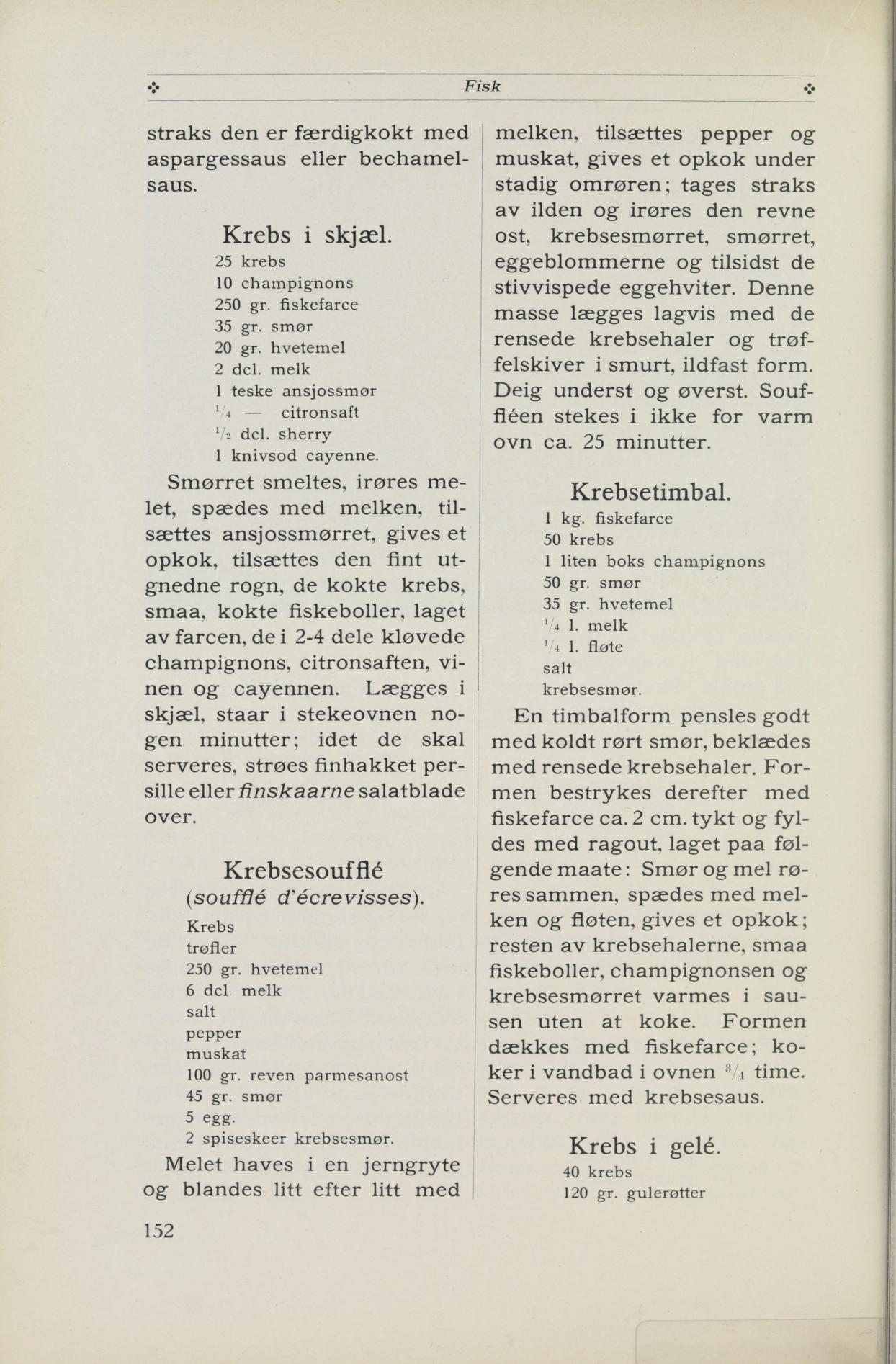
Crayfish timbale from Erken's Stor kokebok 1914: a mold lined with crayfish tails and fish forcemeat, filled with a ragout of crayfish tails, fish balls, mushrooms and crayfish butter in cream sauce, covered with forcemeat and steamed in a water bath for ½ hour. Served with crayfish sauce.

Source: Henriette Schønberg Erken, Stor kokebok, 1914-utg. s. 152 (falt i det fri)

Be the first to rate

About the dish

A timbale is a mold lined with forcemeat and filled with ragout, steamed in a water bath — a classic festive dish in Erken's party kitchen. Crayfish timbale with crayfish sauce was one of the most elaborate fish dishes in the book.

How to make it

  1. 1

    Prepare the mold

    Brush a timbale mold well with cold, creamed butter and line it with cleaned crayfish tails.

  2. 2

    Add the forcemeat

    Spread fish forcemeat in a layer about 2 cm thick inside the mold.

  3. 3

    Make the ragout

    Stir together butter and flour, thin with milk and cream, and bring to a boil. Salt to taste.

  4. 4

    Mix the ragout

    Fold in the rest of the crayfish tails, small poached fish balls, the mushrooms and the crayfish butter without cooking further.

  5. 5

    Fill and cover

    Fill the ragout into the mold and cover with a layer of fish forcemeat.

  6. 6

    Steam in a water bath

    Set the mold in a roasting pan of hot water and let the timbale cook in the oven at about 160 °C (320 °F) for ½ hour until it is firm.

  7. 7

    Serve

    Turn the timbale out onto a platter and serve with crayfish sauce.

Changes from the original

Measurements modernized to dl/l and grams; "vandbad" explained as a roasting pan of hot water. The OCR error "vannes" has been corrected to "vendes" (folded).

In stores now

Clean, minimally processed groceries matched to the ingredients — approximate prices.

Product data and prices via Kassalapp. Prices are updated daily and may vary.

Time machine – what changed?

Pick two editions and see what Henriette Schønberg Erken added, removed or changed between them.

1914 (proofread, p. 152) → Modernised~84% of the text changedremovedadded
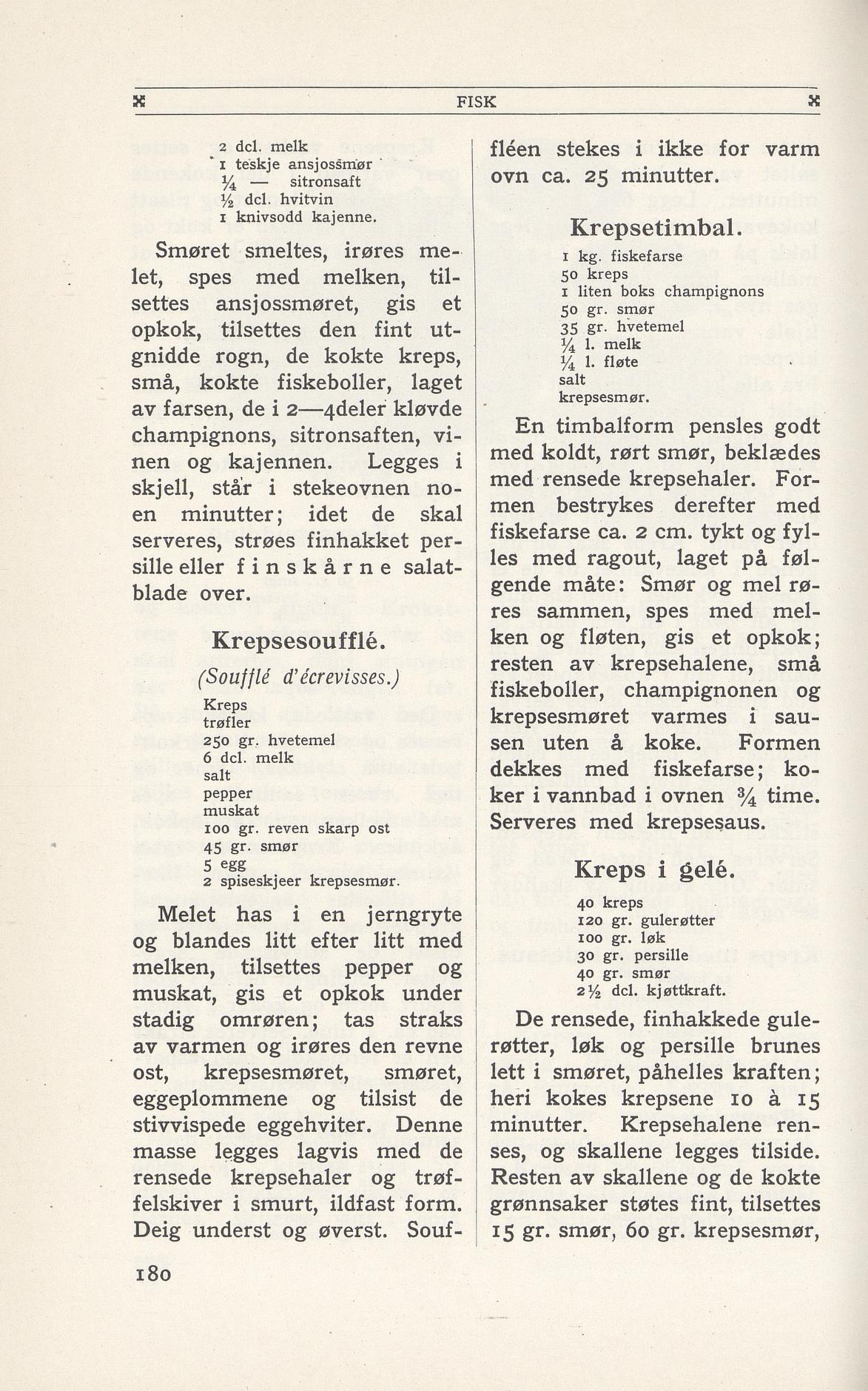
1 kg. fiskefarce kg fiskefarse. 50 krebs stk kreps (kokte, halene renset). 1 liten boks champignons sjampinjonger (ca. 200 g, avrent). 50 gr. g smør (pluss smør til formen). 35 gr. hvetemel 1/4 l. melk 1/4 l. fløte g hvetemel. 2,5 dl melk. 2,5 dl fløte. salt krebsesmør. En (etter smak). krepsesmør. krepsesaus (til servering). Pensle en timbalform pensles godt med koldt kaldt, rørt smør, beklædes smør og kle den med rensede krebsehaler. Formen bestrykes derefter med fiskefarce krepsehaler.. Stryk fiskefarse i et ca. 2 cm. cm tykt lag innvendig i formen.. Rør sammen smør og fyldes mel, spe med ragout, laget paa følgende maate: Smør melk og mel røres sammen, spædes med melken fløte og fløten, gives gi det et opkok; oppkok. Salt etter smak.. Vend inn resten av krebsehalerne, smaa krepsehalene, små kokte fiskeboller, champignonsen sjampinjongene og krebsesmørret vendes i sausen krepsesmøret uten at koke. Formen dækkes å koke videre.. Fyll raguen i formen og dekk med fiskefarce; koker et lag fiskefarse.. Sett formen i vandbad en langpanne med varmt vann og la timbalen koke i ovnen 1/2 time. Serveres ved ca. 160 °C i ½ time til den er fast.. Hvelv timbalen ut på et fat og server med krebsesaus. krepsesaus.

Note on Modernised

Mål modernisert til dl/l og gram; «vandbad» forklart som langpanne med varmt vann. OCR-feilen «vannes» er rettet til «vendes».

Community interpretations

Be the first to share your own version.

See interpretations →

Frequently asked questions

How long should the crayfish timbale cook?
It cooks in a water bath in the oven for about half an hour. Count on around 2 hours in total, including cleaning the crayfish and making the ragout and forcemeat.
What do I need for 8 servings?
1 kg fish forcemeat, 50 crayfish, 1 small can of mushrooms, 50 g butter, 35 g wheat flour, 1/4 l milk, 1/4 l cream, salt and crayfish butter.
How is the mold assembled?
Brush the timbale mold well with cold-creamed butter, arrange cleaned crayfish tails as a lining, then spread fish forcemeat about 2 cm thick inside. Fill with the ragout (butter and flour thinned with milk and cream, brought to a boil, then folded together with the rest of the crayfish tails, small fish balls, mushrooms and crayfish butter – without cooking). Finally cover with fish forcemeat.
What is it served with?
The timbale is served with crayfish sauce. The recipe is from Henriette Schønberg Erken's "Stor kokebok" (1914), p. 152.

Equipment for this dish

Advertisement

We may earn a commission if you buy through these links. It does not affect the price.

Related recipes

More dishes in the same category from the archive

Read also

Kommentarer

Ingen kommentarer ennå. Bli den første til å dele!