Skip to content

English Fishcakes

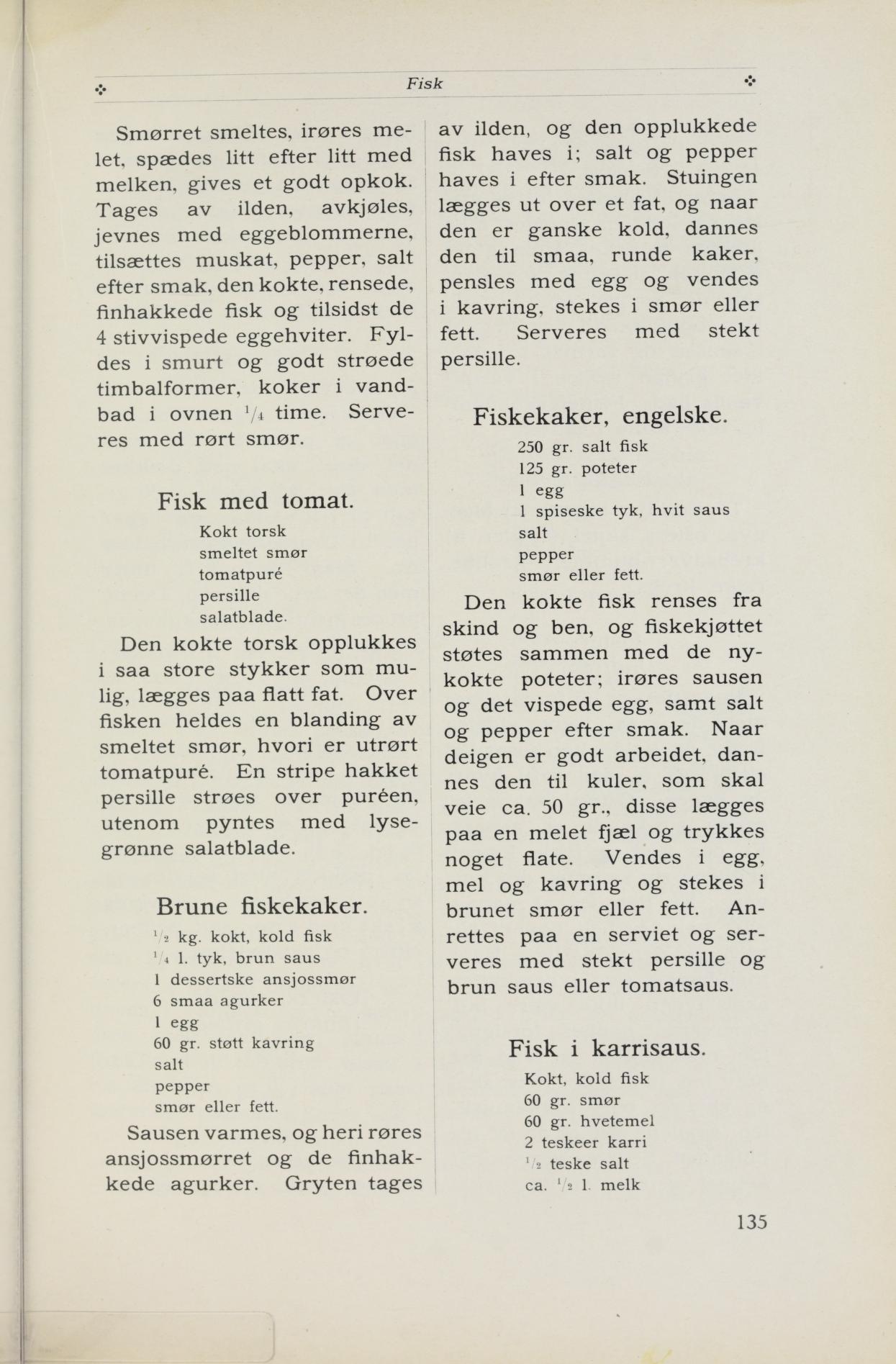
Erken 1914, p. 135: English fishcakes made of cooked salt fish mashed with freshly boiled potatoes, bound with white sauce and egg, shaped into flat 50 g cakes, breaded, and fried. Served with fried parsley and brown sauce or tomato sauce.

Source: Henriette Schønberg Erken, Stor kokebok, 1914-utg. s. 135 (falt i det fri)

Be the first to rate

About the dish

"English fishcakes" is Erken's version of British fishcakes, made of cooked salt fish and freshly boiled potatoes. The dish appears in the fish chapter of "Stor kokebok" (1914) among the dishes for using cooked fish.

How to make it

  1. 1

    Clean the fish

    Clean the cooked salt fish of skin and bones.

  2. 2

    Mash fish and potatoes

    Mash the fish flesh together with the freshly boiled potatoes into an even mass.

  3. 3

    Mix the dough

    Stir in the thick white sauce and the beaten egg. Season to taste with salt and pepper and work the dough well.

  4. 4

    Shape the cakes

    Shape the dough into balls of about 50 g, place them on a floured board, and press them slightly flat.

  5. 5

    Bread and fry

    Turn the cakes in egg, flour, and rusk crumbs and fry them in browned butter or fat until golden brown on both sides.

  6. 6

    Serve

    Arrange on a napkin and serve with fried parsley and brown sauce or tomato sauce.

Changes from the original

Egg and flour for breading are listed as a separate item in the ingredient list. The salt fish is specified as cooked salt fish (soaked). The amount of frying fat and parsley is estimated.

In stores now

Clean, minimally processed groceries matched to the ingredients — approximate prices.

Product data and prices via Kassalapp. Prices are updated daily and may vary.

Time machine – what changed?

Pick two editions and see what Henriette Schønberg Erken added, removed or changed between them.

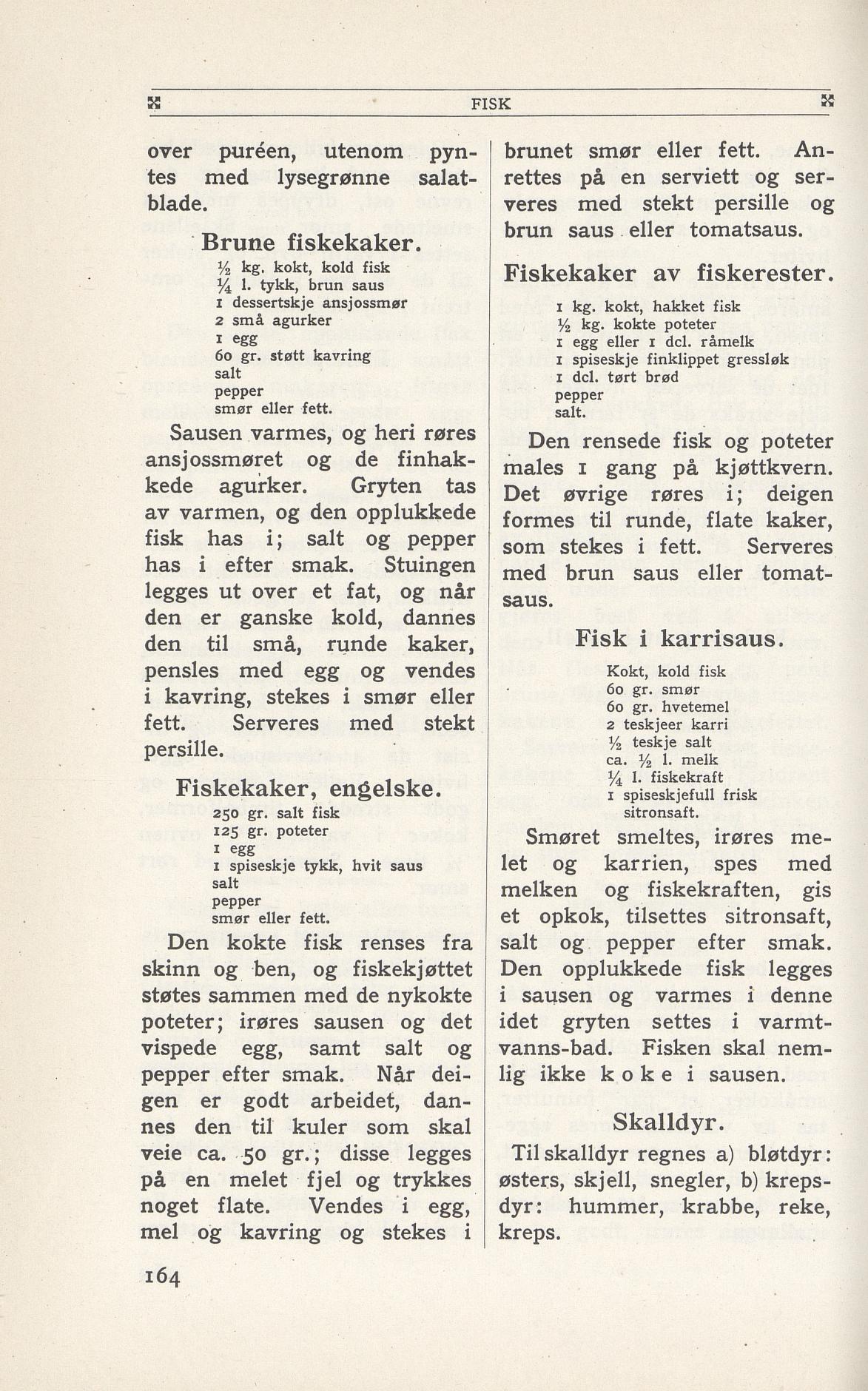
Modernised → 1949 (proofread, p. 164)~69% of the text changedremovedadded
250 g kokt saltfisk (godt utvannet). gr. salt fisk 125 g gr. poteter (nykokte). 1 stk egg (vispet, til deigen). 1 spiseskje tykk tykk, hvit saus. saus salt (etter smak). pepper (etter smak). 1 stk egg (til panering). 3 spiseskjeer hvetemel (til panering). 75 g støtt kavring (til panering). 75 g smør eller stekefett (til steking). 1 håndfull persille (til stekt persille). Rens den fett. Den kokte saltfisken for fisk renses fra skinn og ben.. Stapp eller mos ben, og fiskekjøttet støtes sammen med de nykokte potetene til en jevn masse.. Rør inn den tykke hvite poteter; irøres sausen og det vispede egget. Smak til med egg, samt salt og pepper og arbeid deigen godt.. Form efter smak. Når deigen er godt arbeidet, dannes den til kuler på som skal veie ca. 50 g, legg dem gr.; disse legges på en melet fjøl fjel og trykk dem litt flate.. Vend kakene trykkes noget flate. Vendes i egg, mel og kavring og stek dem stekes i brunet smør eller fett til de er gyllenbrune på begge sider.. fett. Anrettes på en serviett og serveres med stekt persille og brun saus eller tomatsaus.
Note on Modernised

Egg og mel til panering er ført opp som eget punkt i ingredienslisten. Saltfisken er presisert som kokt saltfisk (utvannet). Mengde stekefett og persille er anslått.

Community interpretations

Be the first to share your own version.

See interpretations →

Frequently asked questions

Which fish is used in these English fishcakes?
The recipe uses 250 g of cooked salt fish. The fish is cleaned of skin and bones before the flesh is mashed together with freshly boiled potatoes.
How big should the fishcakes be?
The dough is shaped into balls of about 50 grams each, which are placed on a floured board and pressed slightly flat.
What are the cakes breaded and fried in?
They are turned in egg, flour, and rusk crumbs (breadcrumbs) and fried in browned butter or fat.
What is it served with?
The cakes are arranged on a napkin and served with fried parsley and brown sauce or tomato sauce. The recipe is from Henriette Schønberg Erken's "Stor kokebok" (1914), p. 135, and makes 3 servings.

Related recipes

More dishes in the same category from the archive

Read also

Kommentarer

Ingen kommentarer ennå. Bli den første til å dele!