Erken's festive recipe for a boned, truffle-larded turkey filled with finely ground chicken forcemeat stirred with cream over ice; browned and simmered in bouillon, covered, for 1½–2 hours, then roasted light brown in the oven and served with salad, peas, tomatoes, and French potatoes.
Source: Henriette Schønberg Erken, Stor kokebok, 1914-utg. s. 275 (falt i det fri)
Be the first to rate
About the dish
A festive dish from the turkey chapter of Stor kokebok (1914). The turkey is boned, larded with truffle, hung to age, and filled with a finely ground chicken forcemeat chilled over ice – a technique drawn from French cuisine (the quenelle/forcemeat method). Served in a classic French-inspired presentation with French potatoes and vegetables.
How to make it
1
Clean and bone the turkey
Pluck, singe, open, wash, and dry the turkey well. Carefully cut out the breastbone from the inside, or lay the turkey on its breast and cut the skin through along the back and carefully loosen the bone.
2
Lard and age
Lard the breast and thighs with finely cut strips of truffle. Hang the turkey in a cool place for 2–5 days depending on the season.
3
Make the chicken forcemeat (the day before)
Scrape the chicken meat free of sinews and membranes, mix it with salt and white pepper, and pass it six times through a meat grinder. Then pound or process it with the flour to a fine, smooth paste.
4
Stir in the eggs
Whisk the egg yolks and egg white together and stir them into the forcemeat little by little. Let the forcemeat stand cold until the next day.
5
Stir in the cream
Set the forcemeat in a bowl over ice. Stir in the cold cream a teaspoon at a time, stirring constantly, and finally mix in the diced truffles. Season with salt and pepper.
6
Stuff and truss
Dry the turkey with a damp cloth, rub it with salt and pepper, and fill it with the chicken forcemeat. Sew the turkey up, shape it neatly, cover the breast with the pork slices, and tie it up with thread.
7
Brown and simmer
Brown the butter in a pot, place the turkey in with the breast up, and add the gizzard alongside. Add the bouillon and let it simmer under a tight lid for 1½–2 hours.
8
Finish roasting in the oven
When the turkey is almost done, pour off the stock and remove the pork slices. Melt butter and pour it over the turkey breast, pour half the stock back into the pot, and set it in a hot oven (about 200 °C (390 °F)). Finish roasting and baste often with the pan juices. The turkey should only be light brown.
9
Plating
Carve the turkey neatly and arrange it on a warm platter so it looks whole. Garnish with salad, peas, tomatoes, parsley, and French potatoes.
Changes from the original
Measurements have been converted to modern units (dl/tsp/tbsp), "flesk" is given as fresh side pork in slices, and the amount of cream in the chicken forcemeat is interpreted as 1 liter of heavy cream, as the text indicates. Bouillon has been kept; the cooking and roasting times have been kept as in the original, but with a modern oven temperature suggested. The ingredients have been split into turkey and chicken forcemeat for clarity.
📖1914
Original 1914 recipe
Verbatim from the first edition of the Big Cookbook.
Foto: Faksimile: Nasjonalbiblioteket
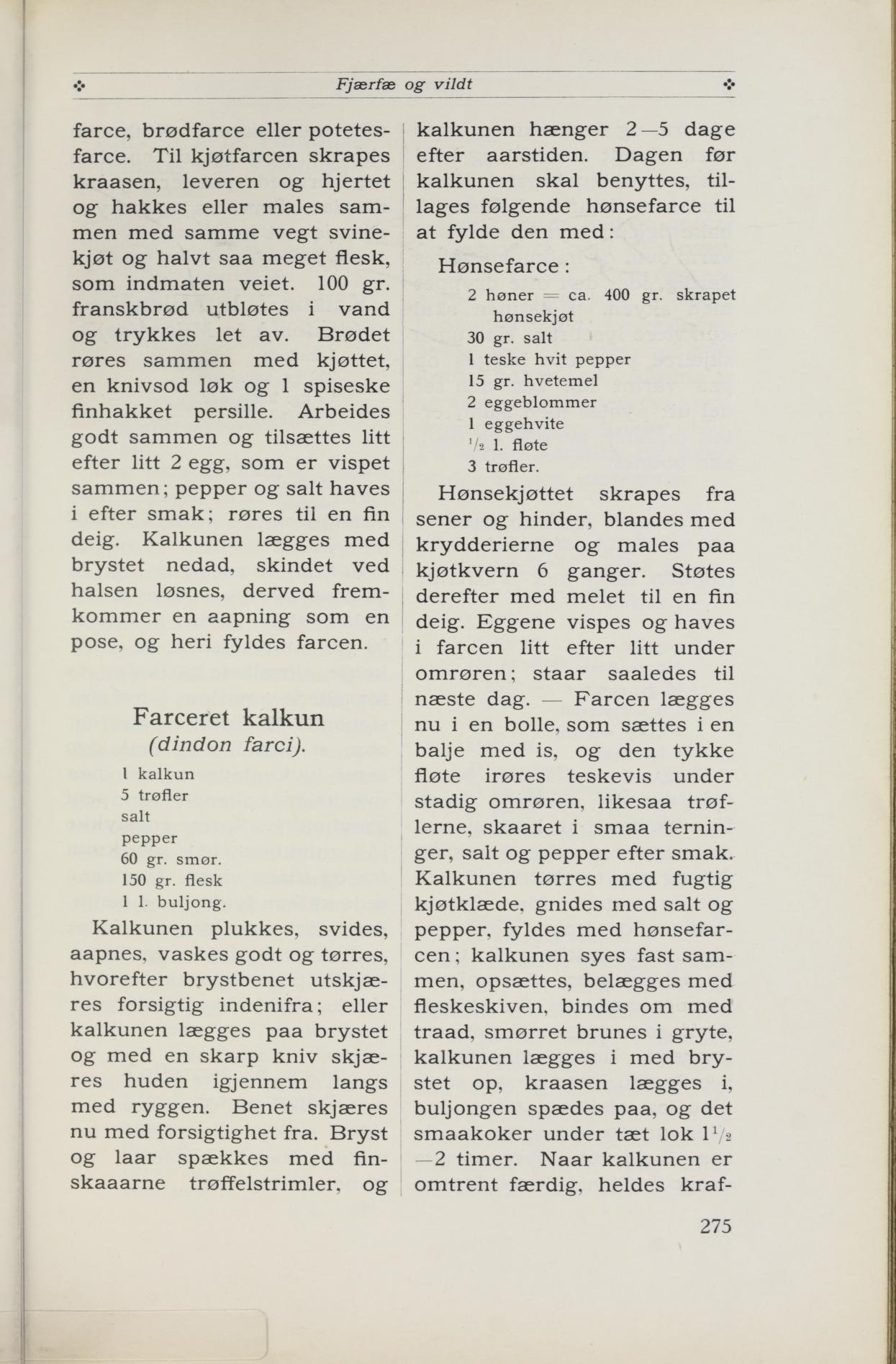
ProofreadPage 275
1 kalkun
5 trøfler
salt
pepper
60 gr. smør
150 gr. flesk
1 l. buljong.
Hønsefarce:
2 høner = ca. 400 gr. skrapet hønsekjøt
30 gr. salt
1 teske hvit pepper
15 gr. hvetemel
2 eggeblommer
1 eggehvite
1 l. fløte
3 trøfler.
Kalkunen plukkes, svides, aapnes, vaskes godt og tørres, hvorefter brystbenet utskjæres forsigtig indenifra; eller kalkunen lægges paa brystet og med en skarp kniv skjæres huden igjennem langs med ryggen. Benet skjæres nu med forsigtighet fra. Bryst og laar spækkes med finskaarne trøffelstrimler, og kalkunen hænger 2—5 dage efter aarstiden. Dagen før kalkunen skal benyttes, tillages følgende hønsefarce til at fylde den med:
Hønsekjøttet skrapes fra sener og hinder, blandes med krydderierne og males paa kjøtkvern 6 ganger. Støtes derefter med melet til en fin deig. Eggene vispes og haves i farcen litt efter litt under omrøren; staar saaledes til næste dag. — Farcen lægges nu i en bolle, som sættes i en balje med is, og den tykke fløte irøres teskevis under stadig omrøren, likesaa trøflerne, skaaret i smaa terninger, salt og pepper efter smak.
Kalkunen tørres med fugtig kjøtklæde, gnides med salt og pepper, fyldes med hønsefarcen; kalkunen syes fast sammen, opsættes, belægges med fleskeskiven, bindes om med traad, smørret brunes i gryte, kalkunen lægges i med brystet op, kraasen lægges i, buljongen spædes paa, og det smaakoker under tæt lok 1½—2 timer. Naar kalkunen er omtrent færdig, heldes kraften fra, og fleskeskiven tages bort. Smelt smørret og held det over kalkunbrystet. Halvparten av kraften heldes tilbake igjen, gryten sættes i varm ovn, og kalkunen stekes færdig, idet den ofte dryppes med skyen. Kalkunen skal kun være lysebrun. Kalkunen skjæres pent op, lægges op paa varmt fat, saa den ser hel ut; pyntes med salat, erter, tomater, persille og franske poteter.
📖1949
Revised 1949 recipe
From the revised edition of the Big Cookbook.
Foto: Faksimile: Nasjonalbiblioteket
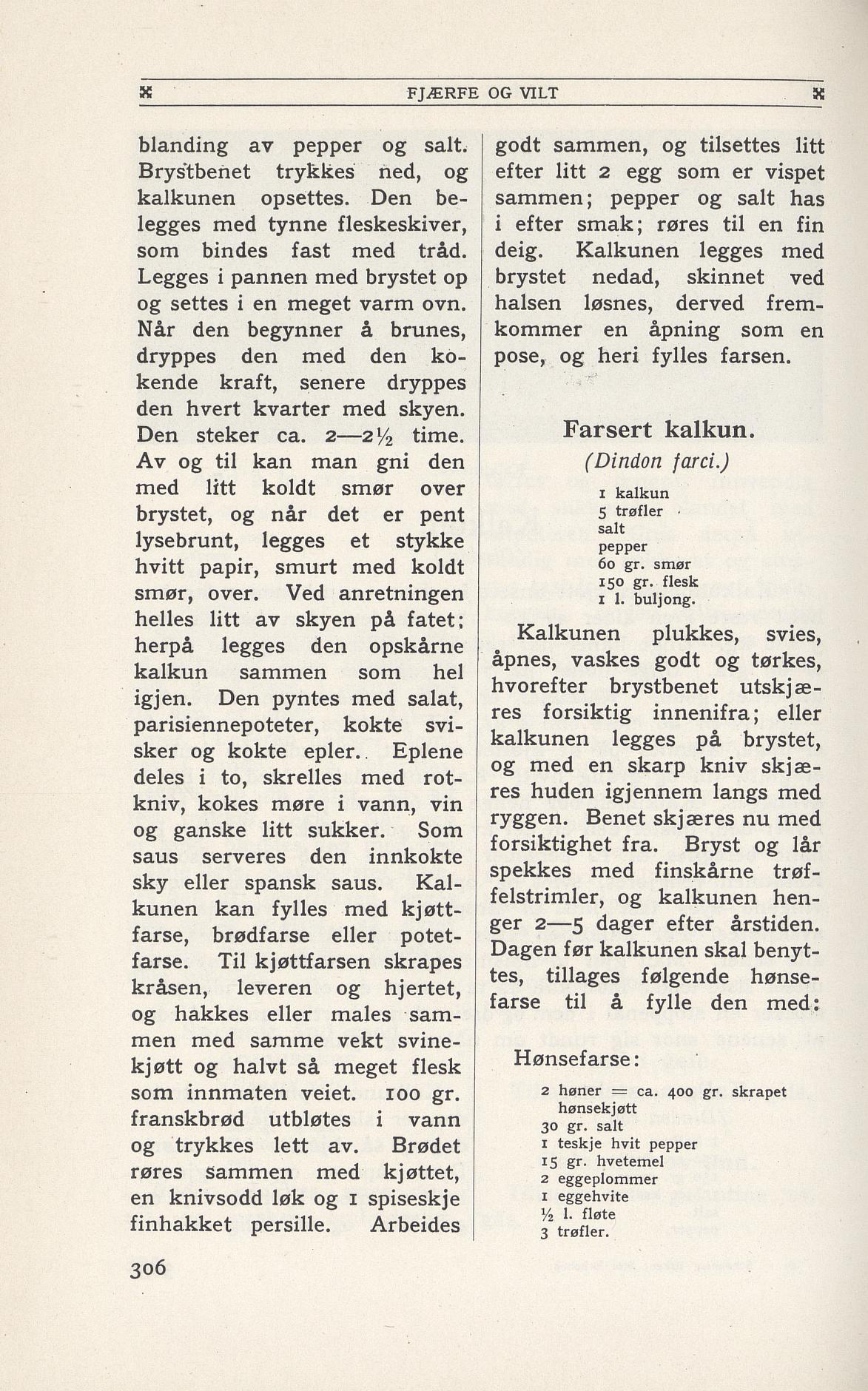
ProofreadPage 306
Farsert kalkun
(Dindon fard.)
1 kalkun
5 trøfler
salt
pepper
60 gr. smør
150 gr. flesk
1 1. buljong.
Kalkunen plukkes, svies, åpnes, vaskes godt og tørkes, hvorefter brystbenet utskjæres forsiktig innenifra; eller kalkunen legges på brystet, og med en skarp kniv skjæres huden igjennem langs med ryggen. Benet skjæres nu med forsiktighet fra. Bryst og lår spekkes med finskårne trøffelstrimler, og kalkunen henger 2—5 dager efter årstiden. Dagen før kalkunen skal benyttes, tillages følgende hønsefarse til å fylle den med:
Hønsefarse:
2 høner = ca. 400 gr. skrapet hønsekjøtt
30 gr. salt
1 teskje hvit pepper
15 gr. hvetemel
2 eggeplommer
1 eggehvite
1/2 1. fløte
3 trøfler.
Hønsekjøttet skrapes fra sener og hinner, blandes med krydderiene og males på kjøttkvern 6 ganger. Støtes derefter med melet til en fin deig. Eggene vispes og hases i farsen litt efter litt under omrøren; står således til næste dag. — Farsen legges nu i en bolle som settes ien balje med is, og den tykke fløte irøres teskjevis under stadig omrøren, likeså trøflene, skåret i små ternninger, salt og pepper efter smak. Kalkunen tørkes med fuktig kjøttklæde, gnis med salt og pepper, fylles med hønsefansen; kalkunen syes fast sammen, opsettes, belegges med fleskeskiven, bindes om med tråd, smøret brunes i gryte, kalkunen legges i med brystet op, kråsen legges i, buljongen spes på, og det småkoker under tett lokk 1 1/2—2 timer. Når kalkunen er omtrent ferdig, helles kraften fra, og fleskeskiven tas bort. Smelt smøret og hell det over kalkunbrystet. Halvparten av kraften helles tilbake igjen, gryten settes i varm ovn, og kalkunen stekes ferdig, idet den ofte dryppes med skyen. Kalkunen skal kun være lysebrun. Kalkunen skjæres pent op, legges op på varmt fat, så den ser heel ut; pyntes med salat, erter, tomater, persille og franske poteter.
In stores now
Clean, minimally processed groceries matched to the ingredients — approximate prices.
1949 (proofread, p. 306) → Modernised~80% of the text changedremovedadded
Farsert kalkun (Dindon fard.) 1 stk kalkun (plukket og renset). 5 stk trøfler (til spekking). 2 ts salt pepper (til innsiden og utsiden). 1 ts pepper. 60 gr. smør g smør. 150 gr. flesk g sideflesk (i tynne skiver til å dekke brystet). 1 1. l buljong. Kalkunen plukkes, svies, åpnes, vaskes godt 400 g hønsekjøtt (skrapet av 2 høner, fri for sener og tørkes, hvorefter hinner). 30 g salt (til hønsefarsen). 1 ts hvit pepper. 15 g hvetemel. 2 stk eggeplommer. 1 stk eggehvite. 1 l kremfløte (godt kald). 3 stk trøfler (i små terninger, til farsen). Plukk, svi, åpne, vask og tørk kalkunen godt. Skjær brystbenet utskjæres forsiktig innenifra; ut fra innsiden, eller legg kalkunen legges på brystet, brystet og med en skarp kniv skjæres skjær huden igjennem gjennom langs med ryggen. Benet skjæres nu med forsiktighet fra. Bryst ryggen og løs benet forsiktig fra.. Spekk bryst og lår spekkes med finskårne trøffelstrimler, og trøffelstrimler. Heng kalkunen henger 2—5 kjølig i 2–5 dager efter årstiden. Dagen før kalkunen skal benyttes, tillages følgende hønsefarse til å fylle den med: Hønsefarse: 2 høner = ca. 400 gr. skrapet hønsekjøtt 30 gr. salt 1 teskje hvit pepper 15 gr. hvetemel 2 eggeplommer 1 eggehvite 1/2 1. fløte 3 trøfler. Hønsekjøttet skrapes fra alt etter årstiden.. Skrap hønsekjøttet fritt for sener og hinner, blandes bland det med krydderiene salt og males på kjøttkvern 6 ganger. Støtes derefter hvit pepper og kjør det seks ganger gjennom kjøttkvern. Støt eller kjør det deretter med melet til en fin deig. Eggene vispes fin, glatt deig.. Visp eggeplommer og hases eggehvite sammen og rør dem inn i farsen litt efter litt under omrøren; står således om litt. La farsen stå kaldt til næste dag. — Farsen legges nu neste dag.. Sett farsen i en bolle som settes ien balje med is, og over is. Rør inn den tykke fløte irøres teskjevis kalde fløten teskje for teskje under stadig omrøren, likeså trøflene, skåret i små ternninger, omrøring, og bland til sist inn trøffelterningene. Smak til med salt og pepper efter smak. Kalkunen tørkes pepper.. Tørk kalkunen med et fuktig kjøttklæde, gnis klede, gni den med salt og pepper, fylles pepper og fyll den med hønsefansen; hønsefarsen. Sy kalkunen syes fast sammen, opsettes, belegges form den pent opp, dekk brystet med fleskeskiven, bindes fleskeskiver og bind om med tråd, tråd.. Brun smøret brunes i en gryte, legg kalkunen legges i med brystet op, opp og legg kråsen legges i, ved. Spe på buljongen spes på, og la det småkoker småkoke under tett lokk 1 1/2—2 timer. i 1½–2 timer.. Når kalkunen er omtrent nesten ferdig, helles hell av kraften fra, og fleskeskiven tas bort. ta bort fleskeskivene. Smelt smøret smør og hell det over kalkunbrystet. Halvparten kalkunbrystet, hell halvparten av kraften helles tilbake igjen, i gryten settes og sett den i varm ovn, ovn (ca. 200 °C). Stek ferdig og kalkunen stekes ferdig, idet den drypp ofte dryppes med skyen. Kalkunen skal kun bare være lysebrun. Kalkunen skjæres lysebrun.. Skjær kalkunen pent op, legges op opp og legg den på varmt fat, så fat slik at den ser heel ut; pyntes hel ut. Pynt med salat, erter, tomater, persille og franske poteter.
Note on Modernised
Mål er omregnet til moderne enheter (dl/ts/ss), «flesk» er angitt som fersk sideflesk i skiver, og fløtemengden i hønsefarsen er tolket som 1 liter kremfløte slik teksten angir. Buljong er beholdt; steke- og koketider er beholdt som i originalen, men med moderne ovnstemperatur foreslått. Ingrediensene er delt i kalkun og hønsefarse for oversiktens skyld.
The turkey is plucked, singed, opened, washed well, and dried. The breastbone is carefully cut out from the inside, or you lay the turkey on its breast, cut the skin through along the back, and carefully loosen the bone from there.
How long should the turkey hang before it is used?
After the breast and thighs are larded with finely cut strips of truffle, the turkey hangs 2–5 days depending on the season. The chicken forcemeat is made the day before the turkey is to be used.
What is the chicken forcemeat made of?
About 400 g of scraped chicken meat (from 2 hens), 30 g salt, 1 teaspoon white pepper, 15 g wheat flour, 2 egg yolks, 1 egg white, 1 liter of cream, and 3 truffles. The meat is first scraped free of sinews and membranes.
How many servings and how much time should one figure?
The recipe is intended for 10 servings, with a total time of around 5 hours (300 minutes) – plus the hanging time of 2–5 days. It is taken from Henriette Schønberg Erken's Stor kokebok (1914), p. 275.