Skip to content

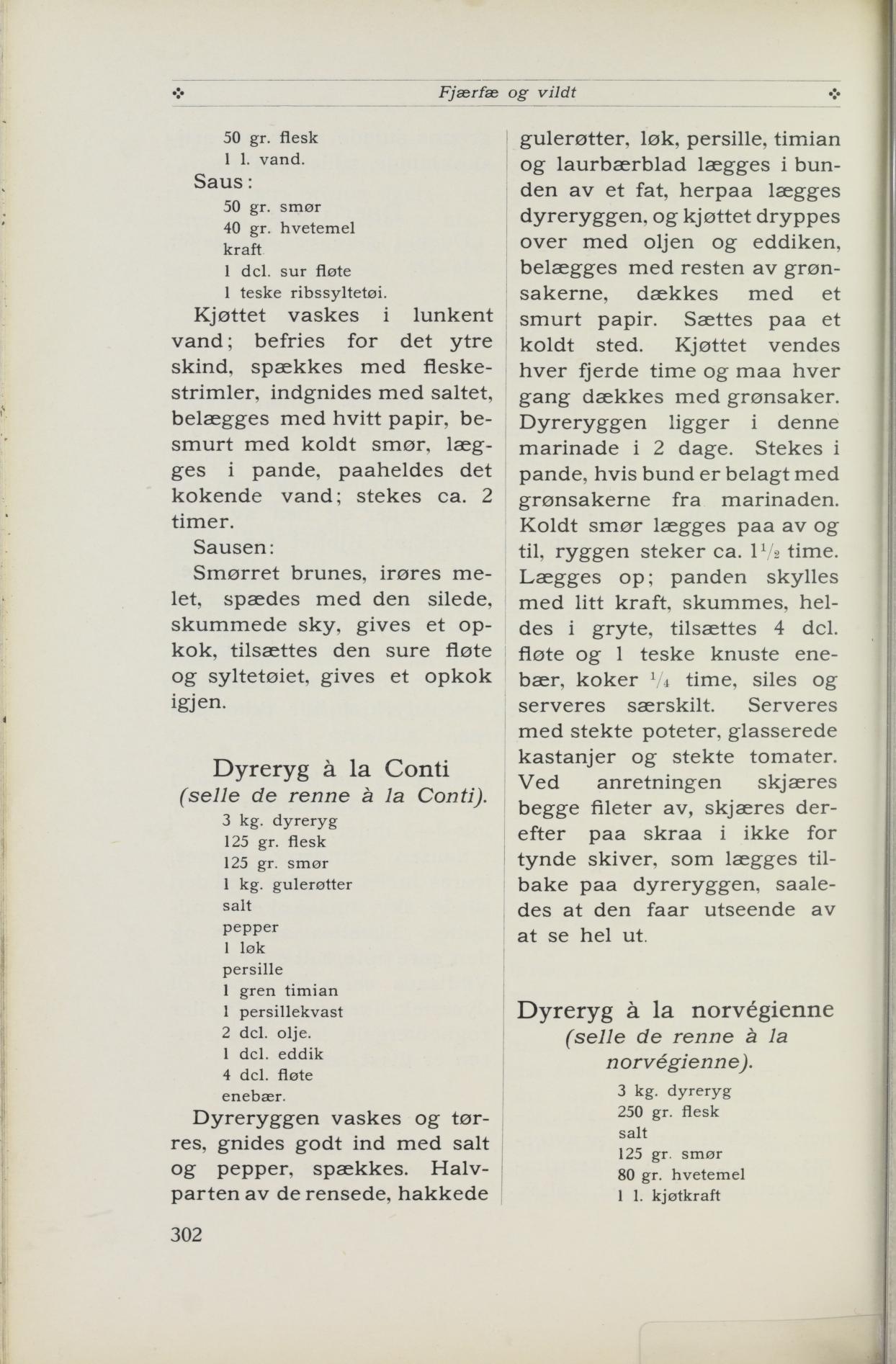
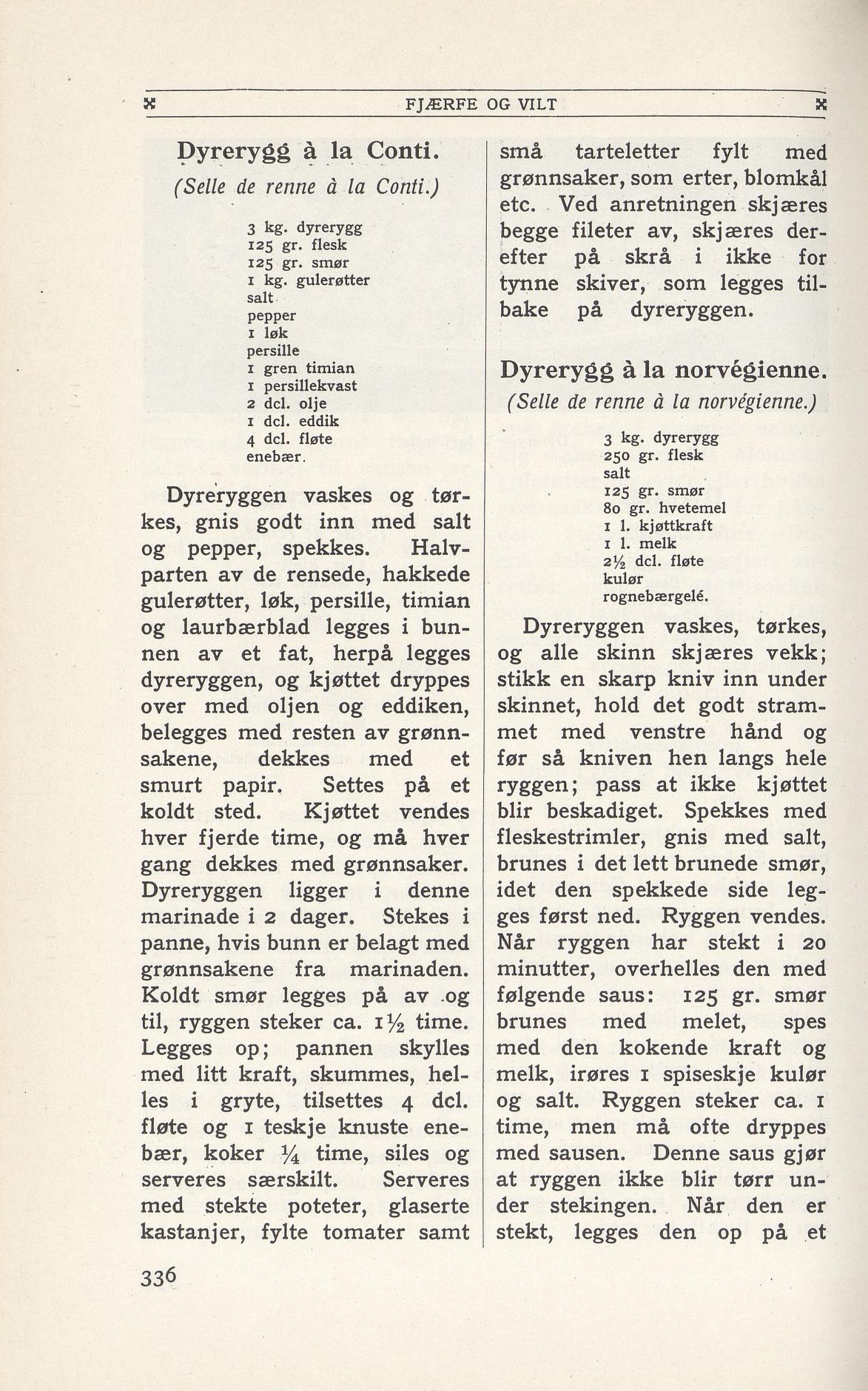
Saddle of Venison à la norvégienne (selle de renne à la norvégienne)

Saddle of venison à la norvégienne from Erken 1914: a 3 kg saddle is cleaned of membranes, larded with pork fat, browned in butter and roasted about 1 hour while basted with a brown sauce of 125 g butter, 80 g flour, 1 l stock and 1 l milk with gravy browning. The sauce is strained and finished with cream and rowanberry jelly; served with cinnamon-poached pears and butter-fried bananas.

Source: Henriette Schønberg Erken, Stor kokebok, 1914-utg. s. 302 (falt i det fri)

Be the first to rate

About the dish

A "Norwegian" version of venison roast in the game chapter of "Stor kokebok" (1914). Its hallmark is the abundant brown flour sauce poured over the saddle during roasting so the meat doesn't dry out, and the garnish of pears poached with cinnamon and lemon peel plus butter-fried bananas — bananas were a luxury item in Norwegian party kitchens around 1914.

How to make it

  1. 1

    Clean the saddle

    Wash and dry the saddle of venison. Cut away all membranes: slip a sharp knife under the membrane, keep it taut with your left hand and run the knife along the whole saddle. Take care not to damage the meat.

  2. 2

    Lard and brown

    Lard the saddle with strips of pork fat and rub it with salt. Brown it in the lightly browned butter, larded side down first, then turn it.

  3. 3

    The basting sauce

    After 20 minutes of roasting: brown 125 g butter with the flour, add boiling stock and milk, and stir in 1 tbsp gravy browning and salt.

  4. 4

    Roasting

    Pour the sauce over the saddle and continue roasting about 1 hour (about 175 °C (345 °F)). Baste often with the sauce so the meat doesn't dry out.

  5. 5

    Garnish

    Poach the pears in water with a little cinnamon and lemon peel, without sugar. Slice the bananas and fry them in butter.

  6. 6

    Plating

    Place the saddle on an oblong platter and arrange the pears and bananas around it. Strain the sauce, skim it, add cream and rowanberry jelly and serve it alongside.

Changes from the original

"Del." is interpreted as deciliters, and the measures are given in modern units. The amount of butter in the sauce is the same 125 g listed in the ingredient list. The amounts of pears, bananas, cinnamon and lemon peel are not given in the original and are estimated. The gravy browning can be replaced with caramel color; the roasting is specified with an oven temperature.

In stores now

Clean, minimally processed groceries matched to the ingredients — approximate prices.

Product data and prices via Kassalapp. Prices are updated daily and may vary.

Time machine – what changed?

Pick two editions and see what Henriette Schønberg Erken added, removed or changed between them.

Modernised → 1949 (proofread, p. 336)~79% of the text changedremovedadded
3 kg dyrerygg. kg. dyrerygg 250 g gr. flesk (skåret i strimler til spekking). salt. salt 125 g gr. smør (til bruning og saus). 80 g hvetemel. 1 l kjøttkraft. gr. hvetemel 1 l melk. 2,5 dl fløte. l. kjøttkraft 1 ss l. melk 2½ dl. fløte kulør (sukkerkulør). 2 ss rognebærgelé. 4 stk pærer (kokt i vann med kanel og sitronskall, uten sukker). 2 stk bananer (oppskåret og ristet i smør). Vask Dyreryggen vaskes, tørkes, og tørk dyreryggen. Skjær bort alle hinner: skinn skjæres vekk; stikk en skarp kniv inn under hinnen, skinnet, hold den det godt strammet strammет med venstre hånd og før så kniven hen langs hele ryggen. Pass på ryggen; pass at kjøttet ikke skades.. Spekk ryggen kjøttet blir beskadiget. Spekkes med fleskestrimler og gni den inn fleskestrimler, gnis med salt. Brun den salt, brunes i det lett brunede smøret med smør, idet den spekkede siden ned først, og vend den så.. Etter side legges først ned. Ryggen vendes. Når ryggen har stekt i 20 minutters steking: brun minutter, overhelles den med følgende saus: 125 g gr. smør brunes med melet, spe speses med den kokende kraft og melk, rør inn irøres 1 ss spiseskje kulør og salt.. Hell sausen over ryggen og stek videre salt. Ryggen steker ca. 1 time (ca. 175 °C). Drypp time, men må ofte dryppes med sausen, slik sausen. Denne saus gjør at kjøttet ryggen ikke blir tørt.. Kok pærene i vann tørr under stekingen. Når den er stekt, legges den op på et avlangt fat, omgis med pærer kokt med litt kanel og sitronskall, uten sukker. Skjær bananene sitronskall i skiver vannet, ikke sukker, og rist dem med opskårne bananer, ristet i smør.. Legg ryggen på et avlangt fat og legg pærer og bananer rundt. Sil sausen, skum den, tilsett smør. Sausen siles, skummes, tilsettes fløte og rognebærgelé og server den til. rognebærgelé.

Note on Modernised

«Del.» er tolket som desiliter, og målene er oppgitt i moderne enheter. Smørmengden i sausen er den samme 125 g som er oppført i ingredienslisten. Mengder pærer, bananer, kanel og sitronskall er ikke oppgitt i originalen og er anslått. Kulør kan erstattes med sukkerkulør; stekingen er presisert med ovnstemperatur.

Community interpretations

Be the first to share your own version.

See interpretations →

Frequently asked questions

How long should the saddle of venison roast?
The saddle is browned in lightly browned butter, and after 20 minutes of roasting the sauce is poured over. It then roasts about 1 hour, with frequent basting. The total time is about 2 hours.
How do I remove the membrane (skin) on the saddle?
Wash and dry the saddle. Slip a sharp knife under the skin, keep it taut with your left hand and run the knife along the whole saddle, so the meat isn't damaged.
What does the sauce consist of?
125 g butter is browned with 80 g flour, thinned with 1 l boiling meat stock and 1 l milk, and stirred up with 1 tablespoon gravy browning and salt. In addition, 2 1/2 dl cream is used.
What is served with it?
Rowanberry jelly is part of the dish, a classic from Henriette Schønberg Erken's "Stor kokebok" (1914), p. 302. The saddle is larded with strips of pork fat (250 g) before roasting.

Related recipes

More dishes in the same category from the archive

Read also

Kommentarer

Ingen kommentarer ennå. Bli den første til å dele!